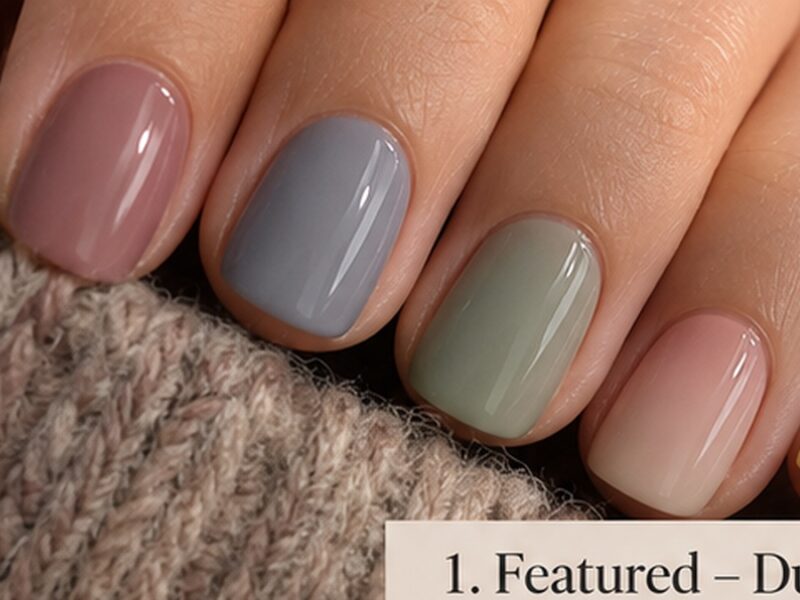
Put a clean lavender swatch next to the same lavender with a drop of grey worked into it, and the two stop looking related. The first one belongs in April. The second looks like something you’d find on the inside of a mussel shell, or on a wool scarf that’s been through a few winters. That small amount of smoke, beige or brown is the whole trick. It keeps the lightness of a pastel but takes away the sugar, and in low October light it reads as a real color rather than a leftover from summer. On short BIAB nails, where there’s not much surface to work with, that undertone does most of the talking.
Mauve That Leans Brown, Not Berry
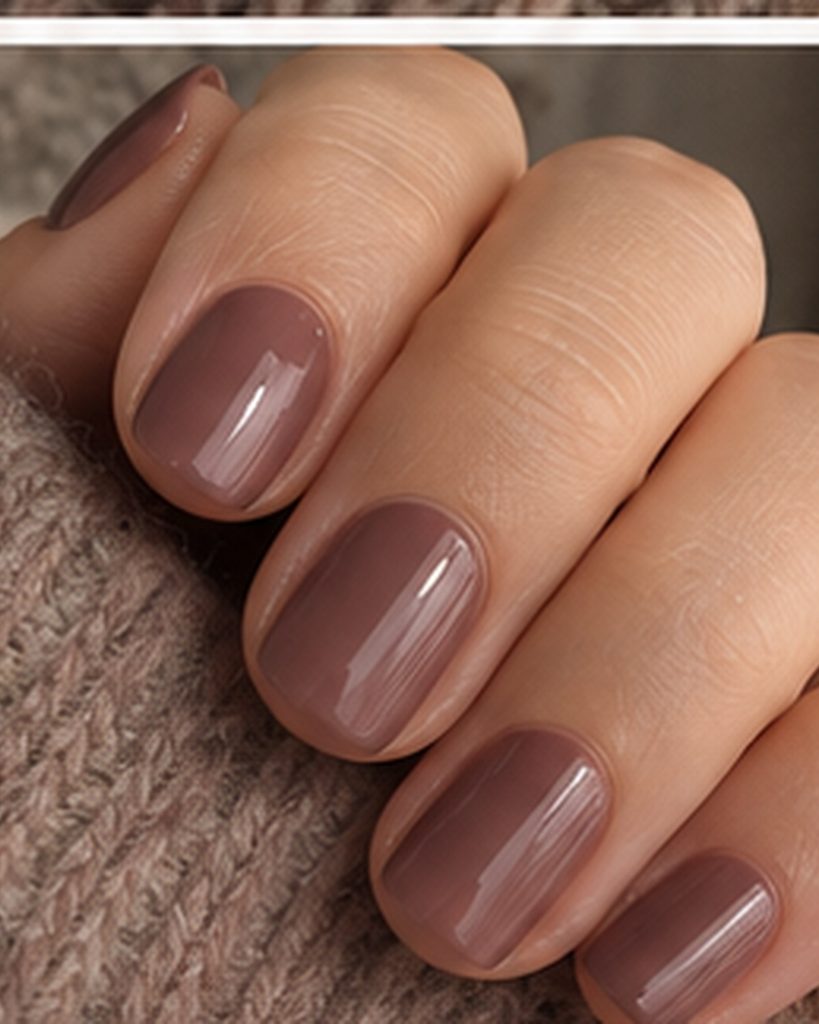
The safest starting point, and still one of the best. The mauve you want here has more in common with dried rose petals than with fresh ones: pink pulled down by a warm brown, with a slight grey haze over the top. A berry-leaning mauve looks sharper and more evening-ready. The brown version looks like it belongs with camel coats and knitwear.
Worn as a full color on soft square nails, it needs nothing else. Two thin coats over a natural builder base give enough depth without turning chalky.
I’d keep it glossy. Matte pushes this shade toward a flat, almost plaster-like finish that ages the whole hand.
Grey-Blue Over a Sheer Milky Base
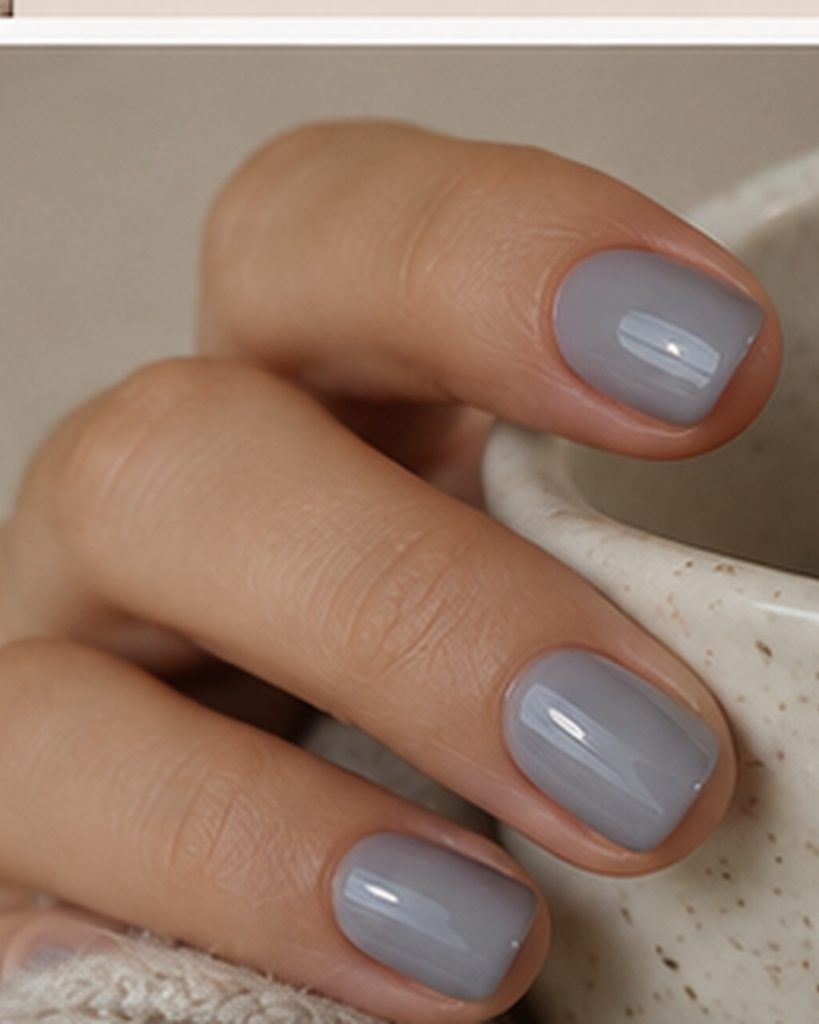
This is the one people tend to underestimate. Grey-blue, think a winter sky an hour before rain, sits close enough to a neutral that it works with almost everything, but it still registers as a color from across a table.
The cleaner way to wear it on short nails is as a sheer wash rather than full coverage. A milky builder base underneath softens it further and stops the blue looking cold against the skin. Because a sheer finish shows every ridge and patch of lifted cuticle, the prep work underneath matters more here than in any opaque design in this list.
No chrome. A pearl powder over grey-blue drifts straight into icy territory, which is a December look, not an October one.
Faded Sage With a Dusty Blue Cast
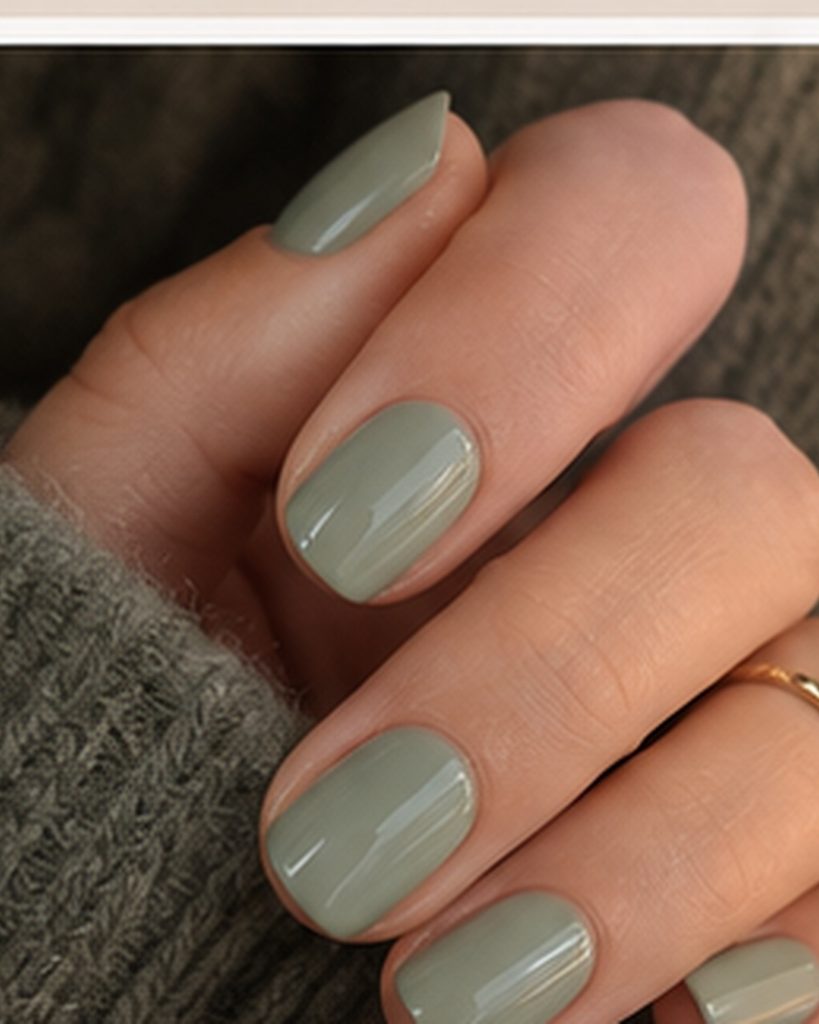
Plain sage can look too fresh, almost minty, on short nails. The version that works for autumn has a faint blue-grey cast running through it, the color of eucalyptus leaves rather than new grass. That cooler undertone is what separates it from spring green.
This one suits a short almond shape slightly better than a square. The curve keeps the color from looking blocky.
Worn alone it’s quiet. If you want a second element, a single nail in a deeper moss tone on the ring finger is enough. Two accent nails would start to look like a theme.
Clay Pink Micro French on a Barely-There Base
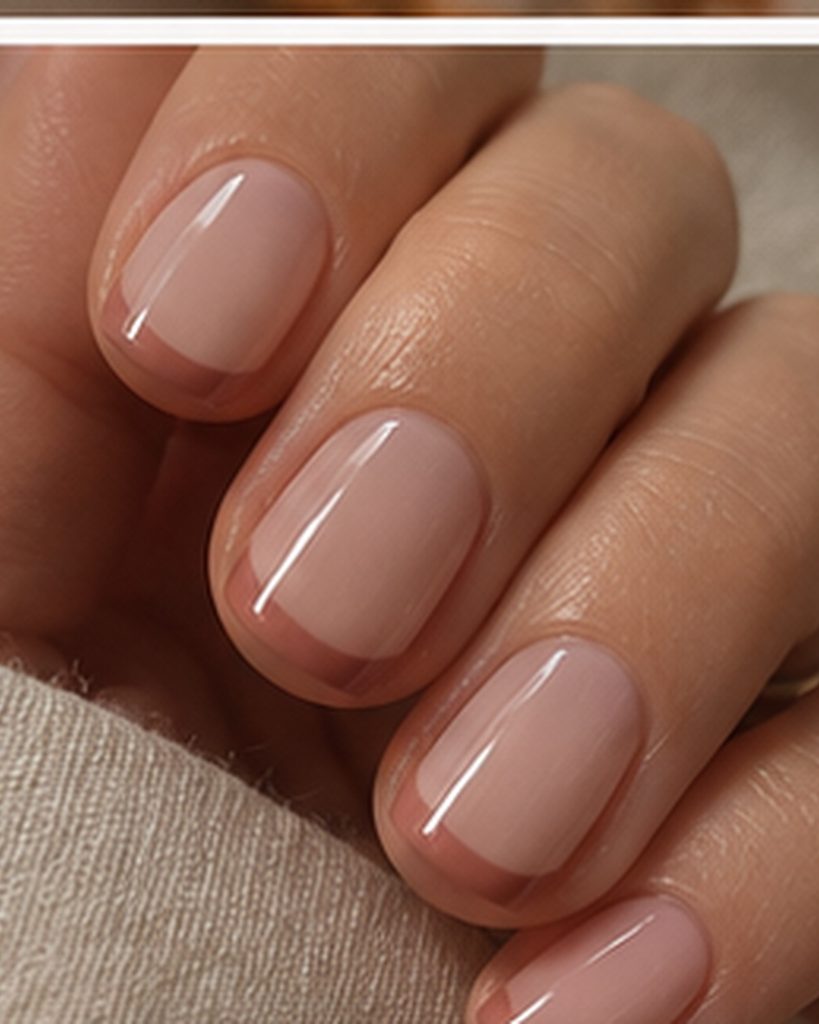
Micro French on short nails only works if the tip line is genuinely thin, somewhere close to a millimetre. Go thicker and the nail looks shorter than it is, which defeats the purpose of a short BIAB set in the first place.
Clay pink is the right shade for it: a terracotta pink diluted with beige until it looks like unglazed pottery. Against a sheer pink builder base, the tip reads as warm and slightly earthy instead of sweet. A baby pink tip on the same base would look bridal; the clay undertone is what moves it into autumn.
Since a thin tip sits right on the free edge, any lifting there shows immediately as a pale gap under the color. If that’s been a recurring problem, it’s worth working through the usual causes of builder gel lifting before committing to a design that puts all the detail on the edge.
Mushroom Lilac With a Faint Cat Eye
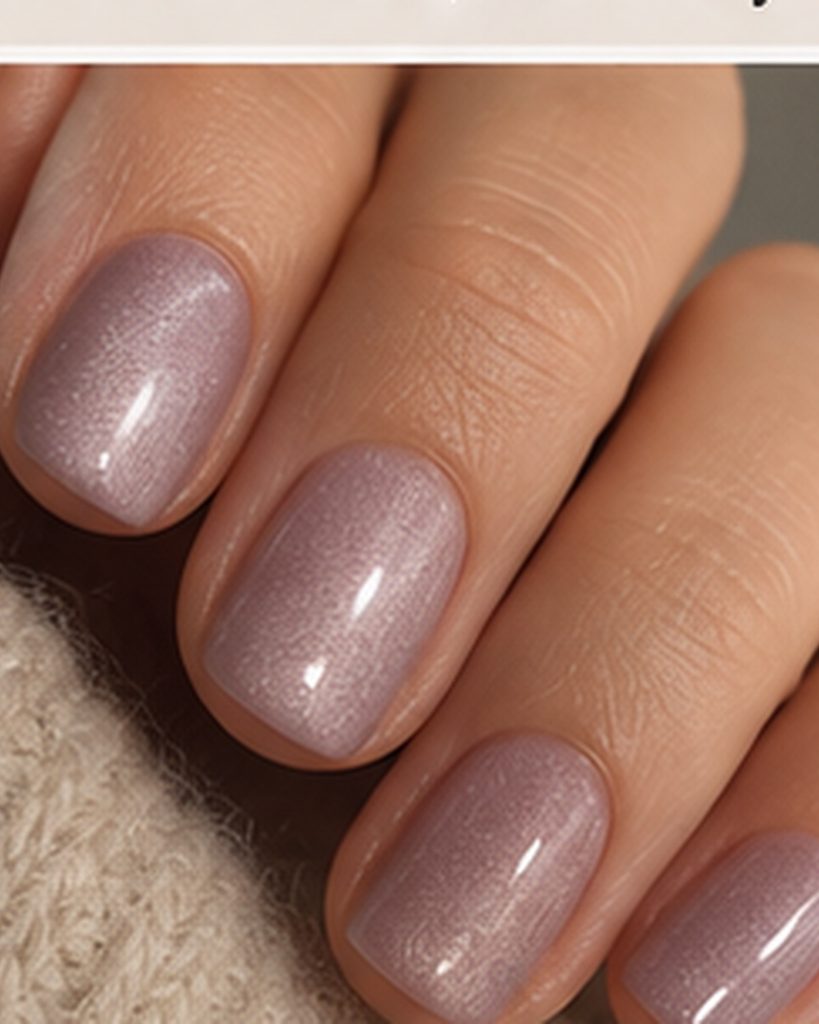
Lilac on its own is the riskiest shade here. It slides toward spring very easily. The fall version is what I’d call mushroom lilac: lavender softened with grey and a touch of taupe, so it looks closer to a dried hydrangea than a fresh one.
This is one of the few designs in this list where a reflective finish actually helps. A soft, diffuse cat eye gel in a silver or champagne shimmer, pulled into a wide, blurry band rather than a sharp line, gives the flat color some movement in daylight. Keep the magnet effect loose. A tight, bright stripe of shimmer looks too graphic on a nail bed this small.
A cleaner lilac would push this back toward Easter; the grey is doing the real work.
Smoky Butter Yellow, Just on Two Nails
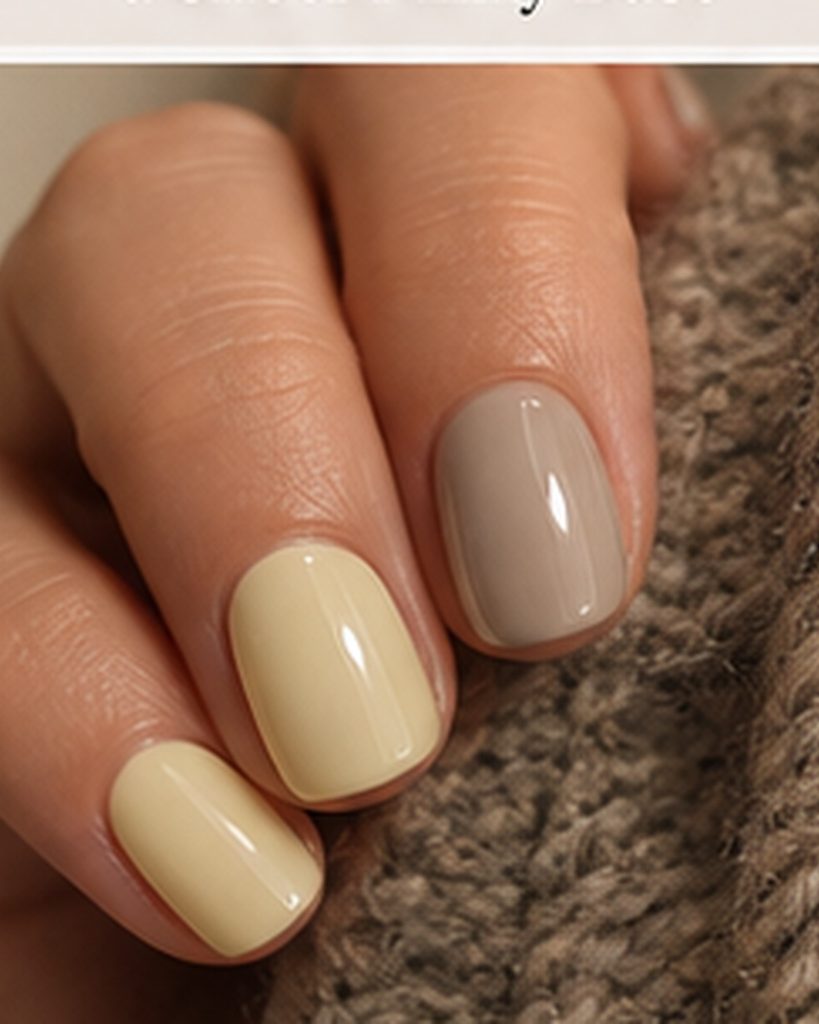
Butter yellow toned down with cream and a little grey is closer to old piano keys than to lemon. It’s a lovely shade but a hard one to wear on all ten nails without looking washed out, especially as skin loses its summer color.
The better approach is a restrained two-color set: smoky butter yellow on the index and ring fingers, a warm greige on the rest. The greige anchors the yellow and stops it looking like a novelty.
Avoid pairing it with white. White makes this yellow look dirtier rather than softer.
Muted Apricot With a Fine Line at the Cuticle
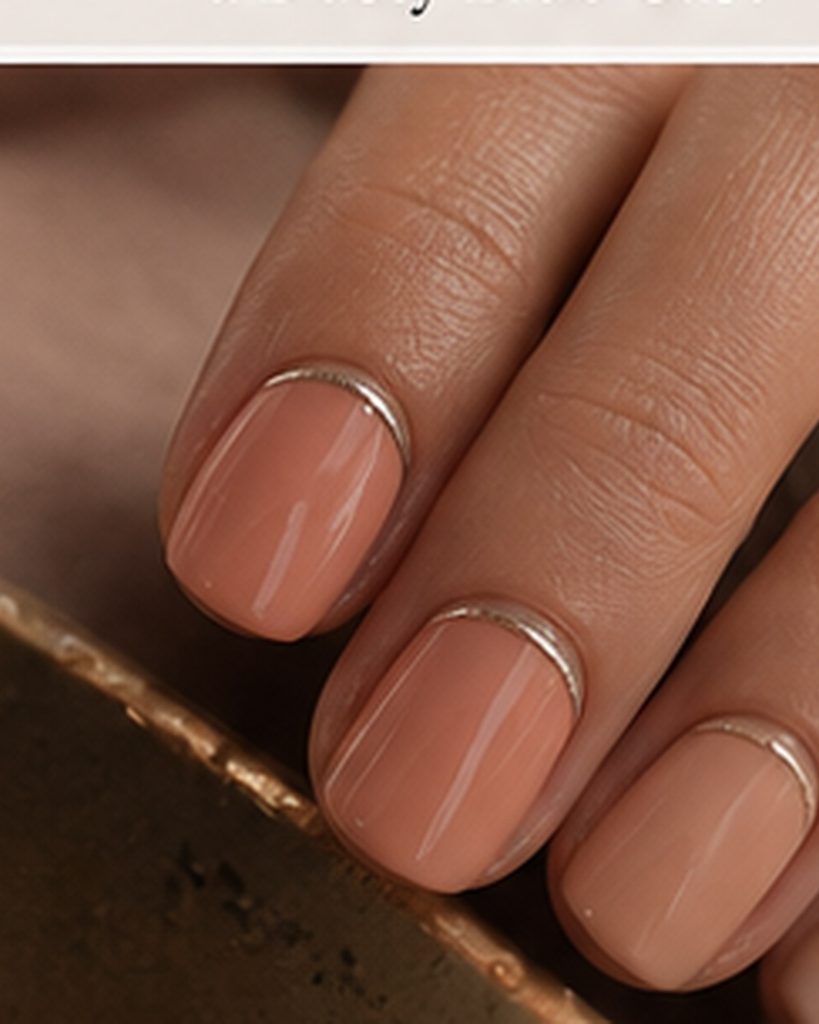
The apricot version only works if it stays beige enough. Push it too orange and the dusty-pastel idea disappears; you end up with a pumpkin manicure that’s just been watered down. What you’re after is apricot diluted with beige and a bit of grey, something like the inside of a dried apricot rather than the skin of a fresh one.
As a full color it’s already enough, but a very fine line, hair-thin, in a deeper rust shade traced just above the cuticle area gives it a frame. This is the most detailed design in the list, and it needs a steady hand and a proper liner brush. If the line wobbles, it draws the eye to the wobble rather than the color, so a clean, unlined version is better than a shaky lined one.
For anyone doing these at home, the shape and thickness of the overlay underneath decide how well a fine line sits. A thick, lumpy apex makes even line work look uneven, which is one reason the differences between BIAB and traditional builder gel matter more for detailed work than for solid color.
Tonal Dusty Rose, Light to Dark Across the Hand
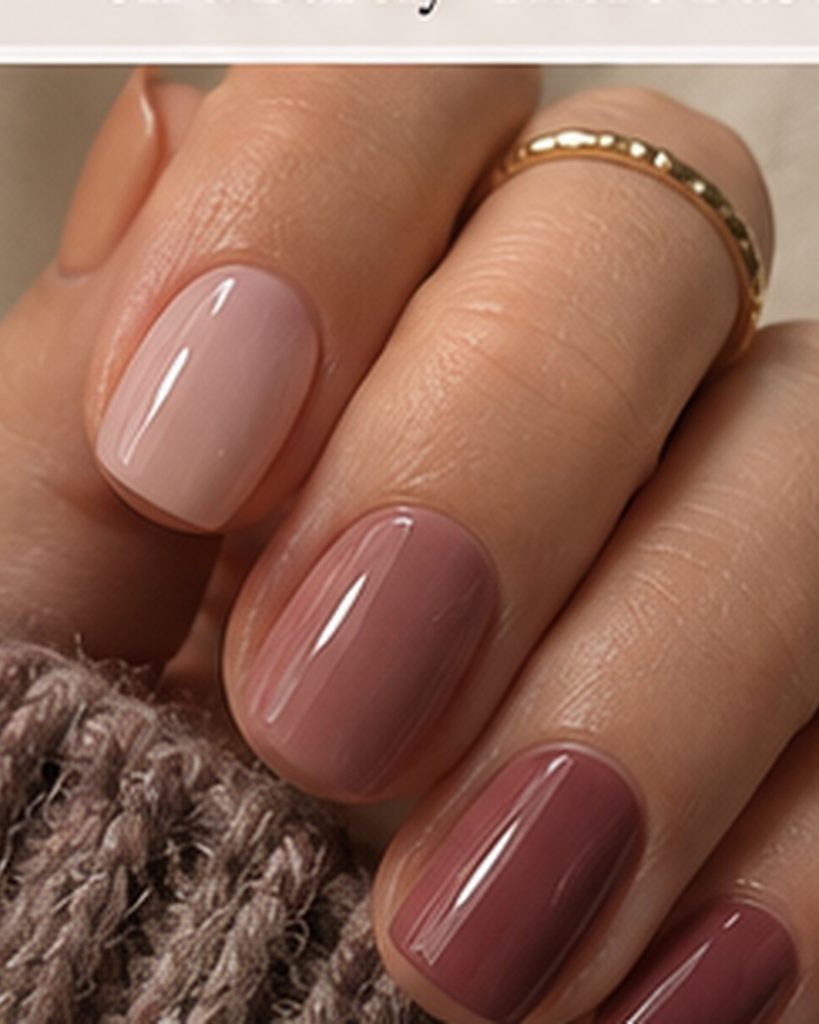
The last idea is less about one shade and more about how they sit together. Five tones of the same dusty rose, from a pale pink-beige on the thumb to a deeper rose with a brown undertone on the little finger, applied as a gradient across the hand.
It’s a straightforward set to do. Each nail is a single solid color, so nothing in it needs fine detail or extra structure. If you’re putting together your own kit for this kind of work, the BIAB starter kit comparison covers which bases sit cleanly under colored gel.
The trick is spacing the tones evenly. If two neighbouring nails are too close in shade, the gradient looks like a mistake instead of a choice. Swatch all five next to each other on a nail wheel before starting, and you’ll usually find one shade that needs swapping for something a step darker.