You saw a Russian manicure on your feed, couldn’t find anyone nearby offering it, and booked a Ukrainian manicure instead. Two hours later you’re looking at a finish that seems almost identical: a tidy cuticle line, gel sitting close to the skin, not a flooded edge in sight. So was it the same service with a different name? Partly. The Ukrainian manicure vs Russian manicure question is less about two rival techniques and more about how salons label a family of dry, precision-prep methods. Some real differences exist, but they tend to sit with the individual technician rather than the country in the name. This guide separates the two, so you can tell what you’re actually being sold.
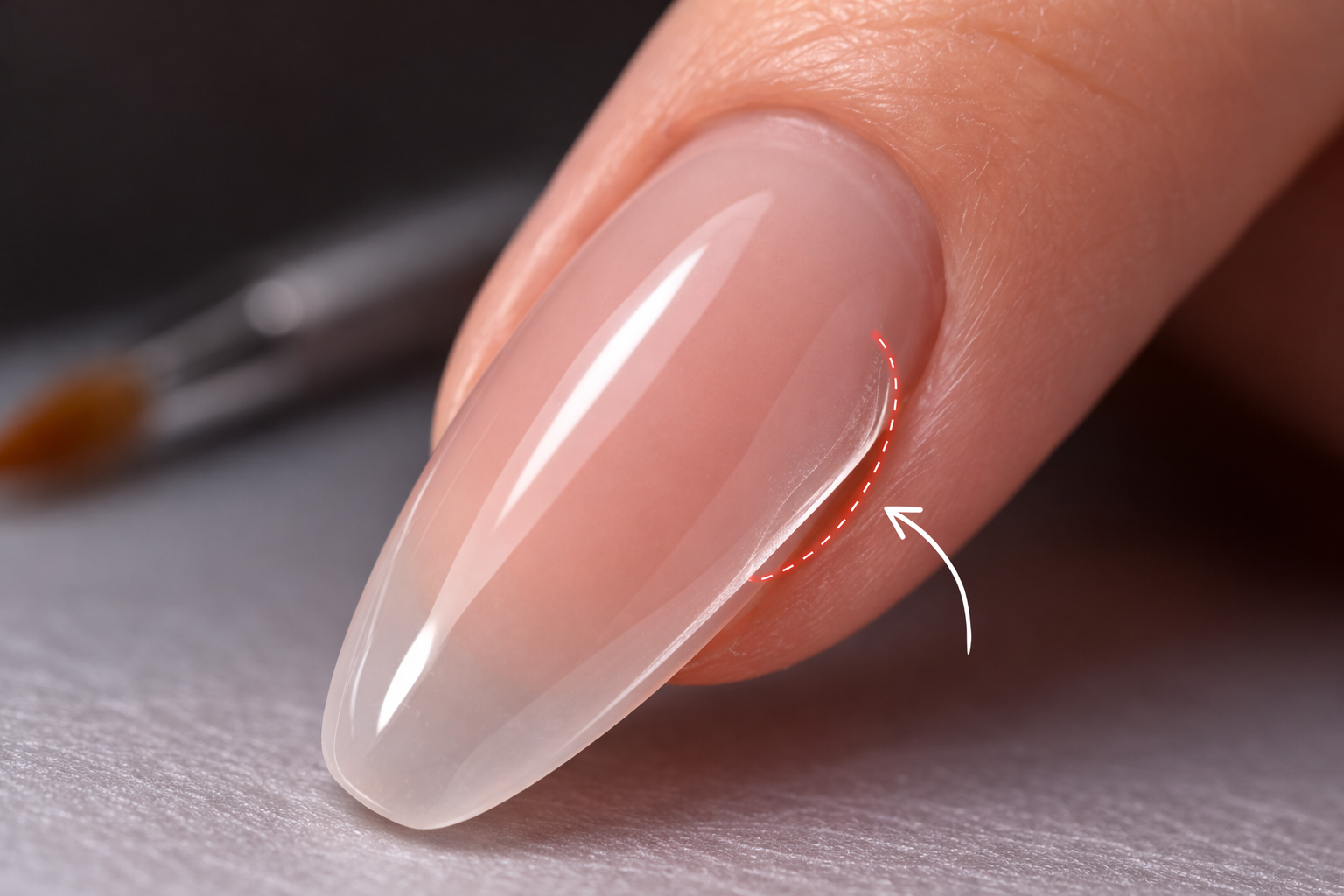
Quick answer: Ukrainian and Russian manicures are overlapping, not standardized, techniques. Both are usually dry, use an electric file around the cuticle, and place gel very close to the nail fold. The most commonly cited difference is that some technicians describe the Russian method as working gel slightly under the lifted fold, while Ukrainian services stop just short of it. In practice, tools, depth of cuticle work, and gel structure vary more between technicians than between the two labels.
The Short Answer: They’re More Similar Than You Think
Neither name refers to a certified, regulated protocol. There’s no governing body defining where a Russian manicure ends and a Ukrainian one begins. Both terms grew out of Eastern European salon training and spread internationally through social media and diaspora-run salons, which is why you’ll often see them used interchangeably, or lumped together as a “European” or “Slavic” manicure.
The people doing the work tend to agree on this. In a recent Hello! Magazine piece, a technician at London’s BrowChuk described the two as overlapping, particularly in detailed cuticle prep and professional e-file work, and stressed that the Ukrainian manicure is defined by preparation and precision rather than by any particular gel. A session manicurist quoted by Refinery29 called it closest to the Russian manicure, with one stated distinction: no polish worked under the cuticle area.
That second point is the one difference you’ll see repeated most often. Just keep in mind it’s a description of how certain professionals work, not a rule.
What Is a Ukrainian Manicure?
A Ukrainian manicure is usually a dry gel manicure, meaning no soaking bowl and no softening of the skin in water. The technician removes dead cuticle tissue from the nail plate, often with an e-file and fine bits, sometimes finishing with nippers or scissors for any lifted, non-living tags. The gel goes on in thin, controlled layers and stops a hair’s width from the skin.
Many salons that use the label also emphasize a structured overlay: a base or builder layer shaped to give the nail a gentle apex, then color, then top coat. That’s where it starts to look a lot like a BIAB-style structured manicure, and frankly some menus treat the two as the same service with different branding.
Scissors, though, aren’t universal. Some Ukrainian-trained techs rely mostly on the file. Others prefer a combined approach. You won’t know which until you ask.
What Is a Russian Manicure?
The Russian manicure is the older and more widely discussed of the two in English-language media. It’s also a dry, e-file-led manicure, with the technician using a sequence of bits to lift and clean the cuticle area before applying gel.
Where it gets a reputation for being “deeper” is the nail fold itself. Some educators describe the Russian method as opening a small pocket at the proximal nail fold, using the file at an angle, so gel can be placed further toward the base of the nail. One German product educator’s explainer describes using several bits per appointment plus scissors for the cuticle. Which tells you something useful: the popular idea that a Russian manicure is “drill only, no scissors” doesn’t hold up either.
As with the Ukrainian label, none of this is fixed; how deep a technician goes depends on their training and judgment, not on the name of the service. Results can be very clean and the regrowth gap takes longer to show. The trade-off is that this kind of work happens right next to living, protective skin, so skill matters a great deal.
Ukrainian vs Russian Manicure: Side-by-Side Comparison
| Factor | Ukrainian manicure | Russian manicure |
|---|---|---|
| Cuticle preparation | Detailed removal of dead tissue on the plate | Detailed removal; some techs work further into the fold |
| Main tools | E-file, often with nippers or scissors | E-file with several bits; scissors in some methods |
| Dry vs wet | Usually dry | Usually dry |
| Manual trimming | Varies by technician | Varies by technician |
| Gel application | Close to the skin, typically not under it | Very close; sometimes described as slightly under the lifted fold |
| Nail structure | Often a structured base or builder layer | Varies; structure isn’t part of the definition |
| Finished look | Clean, natural cuticle line | Clean line, sometimes with less visible regrowth early on |
| Appointment time | Usually longer than a standard gel manicure | Usually longer than a standard gel manicure |
| Maintenance | Regular salon refills or removal | Regular salon refills or removal |
| Safety considerations | Depends on file control and how much skin is removed | Same, with added risk if the fold is worked aggressively |
What Actually Changes During the Appointment?
Forget the flags for a moment and look at the service as a series of decisions. Two manicures with different names can share almost every step and still feel different, because each step has a range.
How far the cuticle work goes
Every precision manicure removes dead cuticle tissue stuck to the nail plate. That part is cosmetic housekeeping. The real variable is whether the technician also works the living skin of the nail fold, lifting it, thinning it, or trimming it. That’s the step that changes both the look and the risk.
Where the gel stops
This is one distinction described by some nail professionals, although it isn’t a universal rule. Gel placed right up to the skin gives a clean edge. Gel tucked slightly under a lifted fold hides more regrowth, at least for a while. Both can look identical on day one. The difference shows in week two.
There’s a trade-off here that promotional content rarely mentions. Working gel under the fold means the living skin has to be lifted first, and uncured gel sits closer to that skin. Gel products contain (meth)acrylates, and published dermatology research identifies them, HEMA in particular, as common causes of allergic contact dermatitis from nail cosmetics, affecting both clients and technicians. Clean placement short of the skin reduces that contact. So “under the fold” isn’t just a style choice; it’s one that deserves a reason.
Whether there’s structure underneath
A glossy finish can be a thin gel polish or a properly built overlay with an apex. They photograph the same. They don’t wear the same, especially on longer nails. If you’ve read our piece on why the apex matters on gel nails, you’ll know structure is often what decides how a manicure grows out.
Why Two Salons Can Offer the Same Manicure Under Different Names
Salon menus show the labeling problem better than any definition. Here are two real, publicly listed examples, described from their online booking pages as of October 2026. Menus change, so treat these as snapshots rather than endorsements.
Dark Beauty Salon, Luxembourg
The salon’s booking profile says its team is made up of Ukrainian women specializing in “Russian” manicure, quotation marks included. Yet the services themselves aren’t called Russian or Ukrainian at all. They’re listed as a combined manicure, with add-ons for gel polish, reinforcement, and extensions. The pedicure menu even separates a junior technician option, noting the cuticle work is less in depth. That one line says a lot: the depth of cuticle work is treated as a skill level, not a national method.
Naturally Nails Beauty Lounge, East Greenwich, Rhode Island
This menu uses “Russian manicure” as a headline, then splits it into variants marked Russian modified. One is a basic gel manicure that the salon explicitly says adds no structure. Another is a structured gel service with advanced cuticle work, offered only by a specific technician. Same label, very different services underneath.
Put the two side by side and the pattern is clear. A Ukrainian team sells a “combined manicure” while describing their specialty as Russian. An American salon sells “Russian” but treats structure and cuticle depth as separate, adjustable options. Neither is misleading anyone. They’re just using the names as shorthand, and the shorthand doesn’t travel cleanly from one menu to the next.
The practical takeaway: read the service description, not the title. Words like combined, structured, builder, reinforcement, and modified tell you more than Russian or Ukrainian ever will.
Does One Manicure Last Longer?
Not reliably, no. Wear time depends on prep quality, the products used, whether the free edge is capped, your natural nail’s flexibility, and what your hands do all day. Salon claims of four or five weeks exist for both labels, but those come from marketing and individual experience, not controlled comparison.
Gel placed under the fold can make regrowth less visible, which people often read as “lasting longer.” Visual longevity and adhesion aren’t the same thing, though. A manicure can look fresh at week four and still be lifting at the sidewalls. For most people, structure and prep do more for retention than the name on the menu. Our guide to making BIAB last longer covers the factors that actually move the needle.
Which Method Is Gentler on Natural Nails?
Neither, inherently. The risk lives in specific actions: overfiling the nail plate, cutting or aggressively thinning living skin, and using tools that aren’t properly cleaned.
The cuticle exists for a reason. MedlinePlus, from the U.S. National Library of Medicine, notes that the cuticle seals the space between the nail and skin, and that trimming it weakens that seal and can let germs in, leading to paronychia, an infection around the nail. Dermatologists have made the same point for years, describing the cuticle as a kind of gasket between fold and plate.
Two structures get blurred in salon marketing. The cuticle is the thin layer of dead tissue that clings to the nail plate. The proximal nail fold is the living skin above it, and the seal between the two is what keeps germs out. Clearing dead tissue off the plate is grooming. Cutting, thinning, or prying open the living fold breaks that seal, and MedlinePlus lists trimming or pushing back the cuticle among the injuries that lead to paronychia. That’s why the useful question isn’t “Russian or Ukrainian” but “how much living skin will be touched.”
A careful Russian manicure can be gentler than a rushed Ukrainian one, and vice versa. Thin, sore, or red skin after an appointment is a signal worth taking seriously, whatever the service was called.
The Questions Worth Asking Before You Book
This is the part that’s useful regardless of label. Five questions, and the answers tell you more than any menu description.
- Do you remove only dead cuticle, or do you also trim the living skin around the nail? You want a clear answer, not “we clean everything.”
- How are your e-file bits and metal tools cleaned between clients? Look for sterilization, not just a wipe. Single-use files should be single-use.
- Where do you stop the gel, and does it ever touch my skin? Gel left on skin is a known route to acrylate allergy. If a tech works under the fold, ask how they keep product off living tissue and what they do if it floods.
- Is there a structured base or builder layer, or is it gel polish only? This affects strength, look, and price.
- How do you remove it next time? Careful filing or soak-off are both fine. Peeling or heavy drilling on the natural plate isn’t.
Which One Should You Choose?
Short natural nails: either label works. Prioritize a tech who files lightly and doesn’t thin the plate, since short nails have less to spare. Our notes on why builder gel breaks on short nails are worth a look.
BIAB or builder gel wearers: look for whichever salon talks about structure and infills, not just cuticle work. That’s often a Ukrainian-labeled menu, but not always.
Sensitive or easily irritated cuticles: ask for a lighter service that removes only dead tissue and keeps gel short of the skin. You give up a little visual longevity. Worth it.
You want the cleanest possible finish: either can deliver it. Judge the technician’s portfolio close up, especially regrowth photos, rather than the method name.
Frequently Asked Questions
Is a Ukrainian manicure the same as a Russian manicure?
Not exactly, but they overlap heavily. Both are usually dry, e-file-based, and precise around the cuticle. The difference most often described is that Russian-method gel may sit slightly under the nail fold, while Ukrainian gel stops just short. Individual technique varies widely.
Does a Russian manicure cut the cuticle?
It can. Some versions use only an e-file, while others use scissors or nippers as well. Ask your technician whether they remove only dead tissue or also trim living skin, since cutting living skin raises infection risk.
Are e-file manicures safe?
They can be when done by a trained technician with properly cleaned bits and light pressure. The main risks are overfiling the nail plate and damaging the skin of the nail fold. Skill and hygiene matter more than the tool itself.
Why is a Ukrainian or Russian manicure more expensive?
Both take longer than a standard gel manicure because the prep is more detailed. Price also reflects training, products, and whether a structured overlay is included. Prices vary a lot by city and salon.
Can I get a Ukrainian manicure with BIAB?
Yes. The Ukrainian label describes the prep and precision, not a specific product, so many technicians use BIAB or builder gel as the base layer.