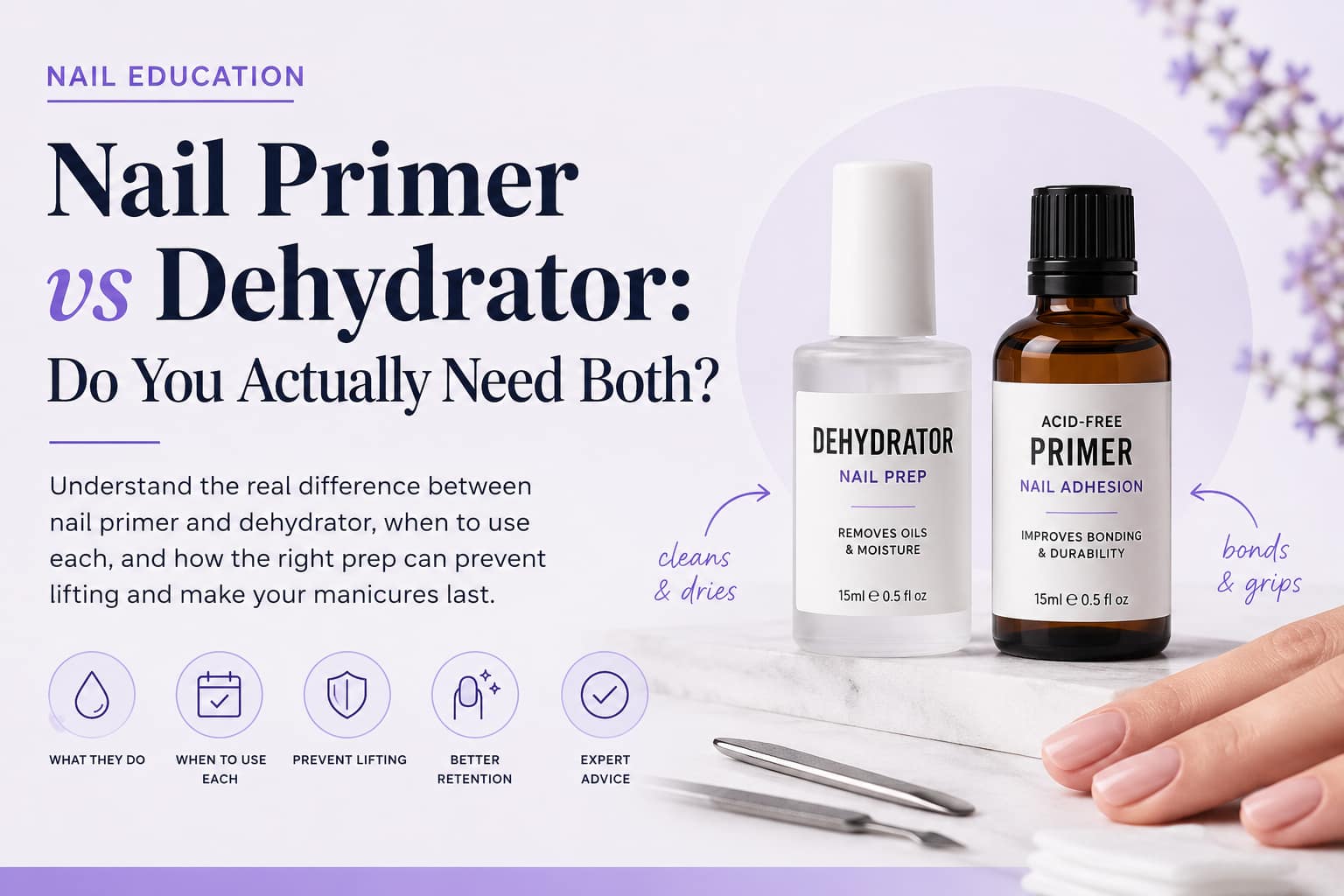
Nail Primer vs Dehydrator: Do You Actually Need Both?
A dehydrator removes surface moisture and oils to help any nail product bond — it’s the one step you genuinely shouldn’t skip. A nail primer is only essential for acrylics or extremely oily nails. For most gel and BIAB users, a dehydrator alone is sufficient. Using both together gives maximum retention, but it’s not always necessary for every nail type or system.
If you’ve stood in front of a nail supply shelf (or lost an hour scrolling iGel Beauty at midnight), you’ve probably wondered: nail primer vs dehydrator — what’s actually different, and do I really need to buy both? I asked myself the exact same thing when I first started doing my own gel manicures. I assumed they were basically the same product with different branding.
Spoiler: they are not. And using the wrong one, or skipping the right one, is one of the top reasons nails lift. I’ve tested both in isolation, together, and with multiple product systems over the past two years, so I can tell you with real confidence what actually matters — and what’s just upselling.
What Nail Dehydrator and Primer Actually Do
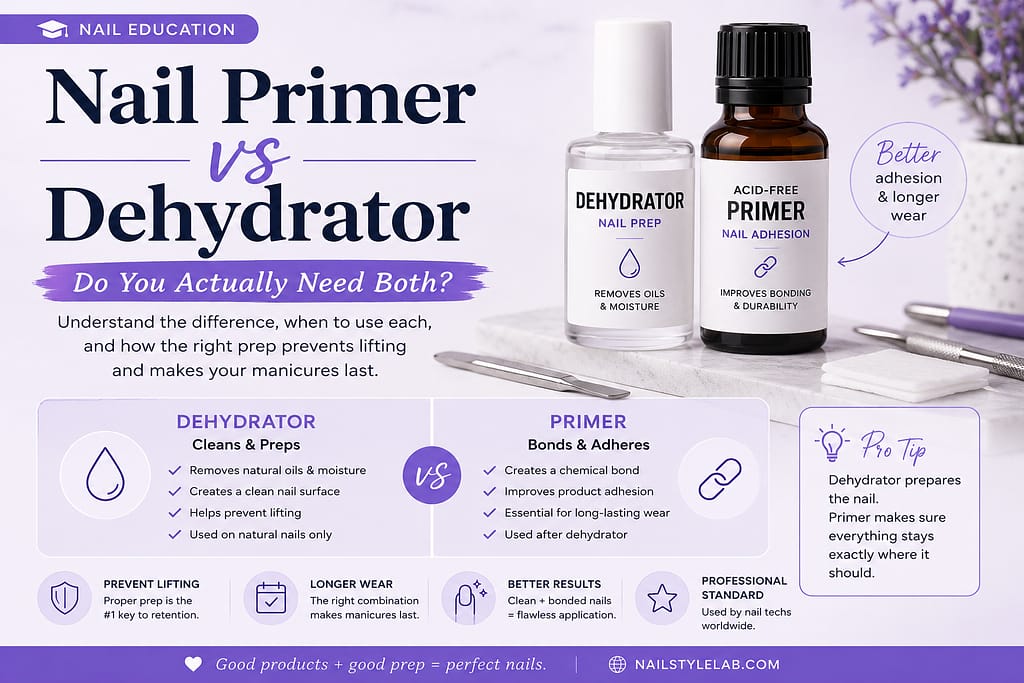
Let’s get the science right before we get into opinion. These two products solve two completely different problems, even though they’re often sold as a pair.
Nail Dehydrator
A dehydrator is typically an isopropyl alcohol or acetone-based solution that removes surface oils and residual moisture from the nail plate. When you apply gel, acrylic, or BIAB directly onto a nail that still has natural oils on it, those oils act as a barrier — the product can’t properly grip the nail. A dehydrator clears that barrier. It evaporates within seconds and leaves behind a clean, slightly tacky surface ready for bonding.
Apply dehydrator with a lint-free wipe rather than a brush. Brushes can re-introduce oils from the ferrule or handle. One quick swipe, no back-and-forth — let it air dry for 10–15 seconds before moving on.
Nail Primer
A primer works deeper. There are two types: acid primer (etches the nail plate slightly to increase surface area) and non-acid primer (creates a chemical bridge between the nail plate and the enhancement product). Acid primers are more aggressive and primarily used in traditional acrylic systems. Non-acid primers are gentler and appropriate for gels.
Acid primers should be kept away from skin — direct contact can irritate or burn the skin if misused, especially with repeated exposure. If you’re DIY-ing at home, stick to non-acid formulas to be safe. Always let primer dry completely (it should go from wet to a chalky matte finish) before applying product.
The Numbers Behind Nail Lifting
Lifting is the #1 complaint among gel and BIAB wearers — and it’s almost always a prep issue. Here’s what the numbers tend to look like in practice.
Nail Primer vs Dehydrator: Side-by-Side Comparison
| Feature | Dehydrator | Acid Primer | Non-Acid Primer |
|---|---|---|---|
| Primary action | Removes oils & moisture | Etches nail plate | Chemical adhesion bridge |
| Safe for skin contact | Yes | No | Minimise |
| Essential for acrylics | Yes | Recommended | Optional |
| Essential for gel/BIAB | Yes | Not needed | Oily nails only |
| Drying time | 10–15 seconds | 30–60 sec (chalky) | 20–40 seconds |
| DIY-friendly | Yes | Professional use | Yes |
| Avg. cost (per bottle) | $6–$12 | $10–$18 | $8–$15 |
Many professional nail brands bundle a dehydrator and non-acid primer together in a “prep duo” because they know most technicians use both sequentially. Buying them separately from the same brand almost always costs more. If you’re going to use both, look for system-matched kits from the same manufacturer.
My Personal Experience Testing Both
I started exclusively using a dehydrator (no primer) for gel manicures on myself for about four months. My nails are naturally on the drier side — no excess oil issues — and honestly? My gels lasted two to three weeks without any lifting issues. For gel-only wearers with normal to dry nails, this tracks perfectly.
Then I tried builder gel (BIAB) for the first time and followed the exact same prep routine. First application lasted great. Second fill? I got edge lifting on my dominant hand by day eight. I added a non-acid primer to the routine, and the problem completely disappeared. My BIAB now routinely goes three weeks without any lifting at all.
If you have naturally oily nails, work with your hands, use acrylics, or apply BIAB/builder gel systems, using both a dehydrator and a non-acid primer gives you the best chance of long-lasting wear. If you do standard gel polish on dry nails with careful prep, a dehydrator alone may be entirely sufficient.
When Do You Actually Need Both Nail Primer and Dehydrator?
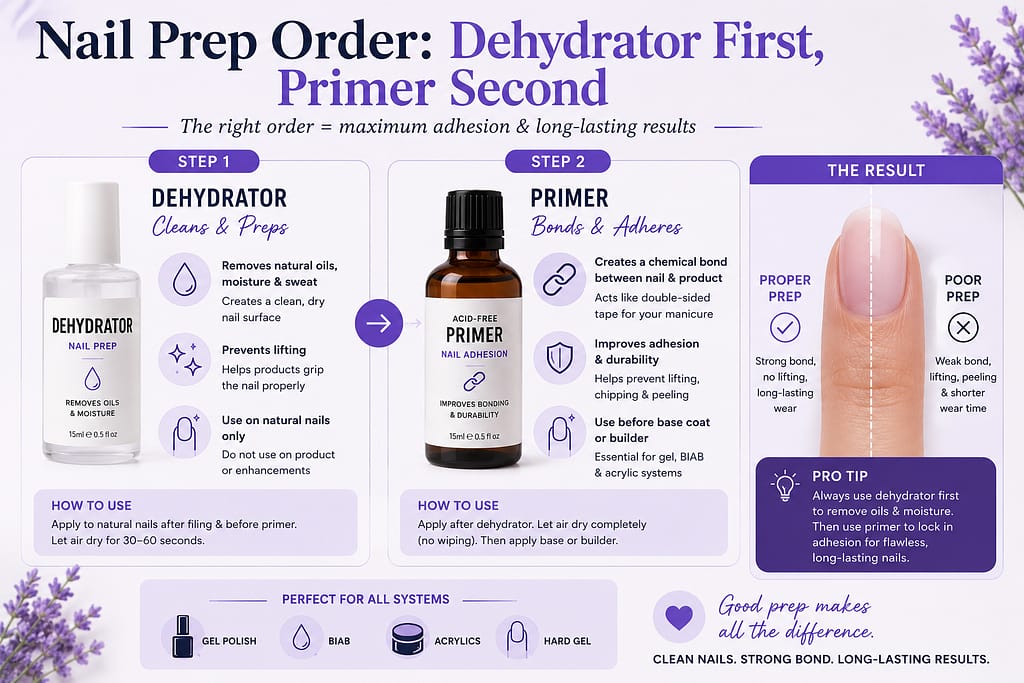
Here’s the honest answer, broken down by system and nail type.
Acrylic Nails
Yes — use both, every time. Acrylic monomer requires a well-primed surface for a chemical bond to form. Without primer, even perfectly dehydrated nails will lift within days. This is the one system where skipping primer is a genuine mistake regardless of nail type. Acid primer is standard in salon settings; non-acid is the safer DIY alternative.
Gel Polish
Dehydrator: yes, always. Primer: usually not necessary, unless you have very oily nails or a history of gel lifting despite correct prep. Most gel polish systems are designed to cure and bond to a clean, oil-free surface — which a good dehydrator provides on its own. Adding primer can help at the edges if you get tip lifting.
Builder Gel / BIAB
Dehydrator: yes. Non-acid primer: strongly recommended. Builder gel sits thicker on the nail and handles more mechanical stress than regular gel polish. The primer gives the additional chemical grip that helps the product survive daily use. This is where I personally noticed the biggest difference.
Never apply dehydrator over primer — the order matters. Always dehydrator first, let it evaporate, then primer. Applying dehydrator over dried primer can actually break down the primer’s bond and undo your prep entirely.
Both products must be applied to a nail that has already been properly shaped, buffed, and had the shine removed. No amount of dehydrator or primer will compensate for skipping the mechanical prep steps. Products need both a chemically clean and physically prepared surface to adhere correctly.
Which Products to Use by Nail System
| Nail System | Dehydrator | Non-Acid Primer | Acid Primer | Notes |
|---|---|---|---|---|
| Acrylic | Essential | Optional | Recommended | Professional use preferred |
| Gel Polish | Essential | Oily nails | Not needed | Most systems don’t require primer |
| Builder Gel / BIAB | Essential | Recommended | Not needed | Significant retention improvement |
| Dip Powder | Essential | Check brand | Not standard | Brand-specific prep kits common |
| Hard Gel Extensions | Essential | Recommended | Sometimes | Follow brand guidelines closely |
Further Reading & Research
If you want to dig into the chemistry side of nail adhesion, two resources I’ve found genuinely useful: the NAILS Magazine nail health archive covers adhesion science in detail from a professional technician perspective, and Scratch Magazine’s education section publishes regular breakdowns of prep protocols used by top UK competition nail techs — both are worth bookmarking.
Final Verdict: What You Actually Need
Frequently Asked Questions
Do I need both nail primer and dehydrator?
Not always. A dehydrator is the more universally essential product — it removes moisture and oils so your enhancement bonds to the natural nail. A primer is only strictly necessary for acrylic systems or very oily nails with gels. For most gel and BIAB users, a good dehydrator alone is sufficient.
What is the difference between nail primer and dehydrator?
A dehydrator strips surface moisture and excess oils from the nail plate. A primer chemically bonds to the nail plate to create a stronger adhesion surface for acrylics or gels. They work at different stages and through different mechanisms.
Can I use nail primer without a dehydrator?
Technically yes, but it’s not recommended. If the nail surface is still oily or moist when you apply primer, the primer cannot bond effectively. Dehydrator is always applied first to clean the surface — then primer follows.
Does nail dehydrator damage nails?
No, a quality dehydrator is considered safe for regular use. It evaporates quickly and does not permanently strip the nail. However, overuse without proper aftercare (cuticle oil, hydration) can leave the nail plate feeling brittle over time.
Is nail primer the same as base coat?
No. A base coat provides a smooth layer between the natural nail and polish. A nail primer chemically etches or bonds with the nail plate for structural adhesion. They are not interchangeable.