What are blonde tortie nails?
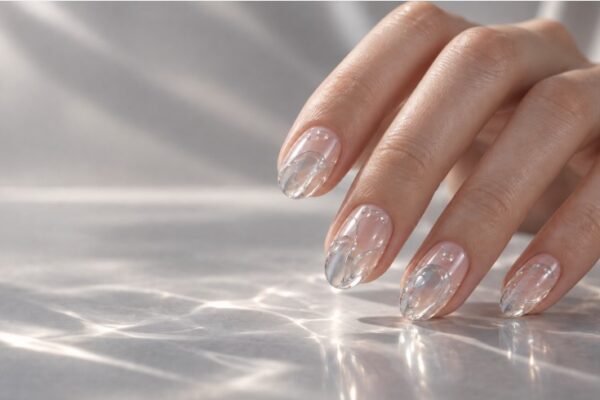
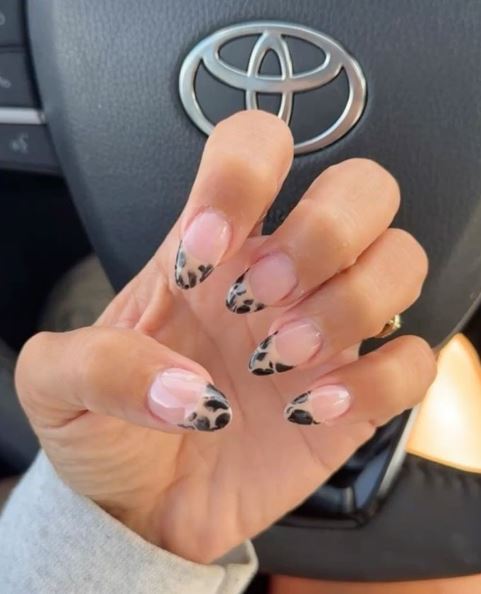
Blonde tortie nails are the light version of the tortoiseshell pattern: a milky or pale yellow base with brown and black speckles floating over it. Classic tortie leans on amber and dark chocolate, so the whole nail reads warm and deep. The blonde version keeps the same loose swirl but lifts the base towards vanilla, and most of the nail then reads as a neutral. Nail techs call it transitional for that reason. It suits the last warm weeks of September and still looks right in November.
The name borrows from blonde tortoiseshell accessories rather than from hair. Glasses frames, claw clips and belt buckles have used the pale, translucent version of the material for years, and the nail design copies that look. A milky base with dark speckles is how a 2022 client write-up described the finished set after a salon visit.
The pattern comes from layering tinted, see-through gel so that each colour bleeds slightly into the one beneath it. Most techs get that bleed with blooming gel, a clear product that lets colour dropped onto it spread outwards before curing. Edges soften, nothing sits in a hard outline, and the speckles look as if they formed on their own.
Why are blonde tortie nails trending this autumn?
Blonde tortie and tortie cat eye are named as standout transitional looks in HONA’s September 2026 trend report, alongside chocolate browns, sangria reds and milky builder gel finishes. It sits inside the season’s wider colour story rather than standing alone, which is the same story our Autumn BIAB Nails 2026 guide covers shade by shade.
The wider tortoiseshell pattern had a strong year first. Mirellé’s 2026 trend piece credits WWD with naming tortie tips a top fall look, then points to Dua Lipa wearing it across several appearances rather than once. In the same piece, 2026 is described as the year tortoiseshell moved past its classic brown reputation into blonde bases, jewel tone pairings and short-nail versions.
Pale bases also line up with the milky and coconut manicure looks HONA lists for the same month. A client who has worn a sheer white all summer can move to blonde tortie without changing the base shade, which makes it an easy first step into autumn colour.
Which colours do you need for the blonde base?
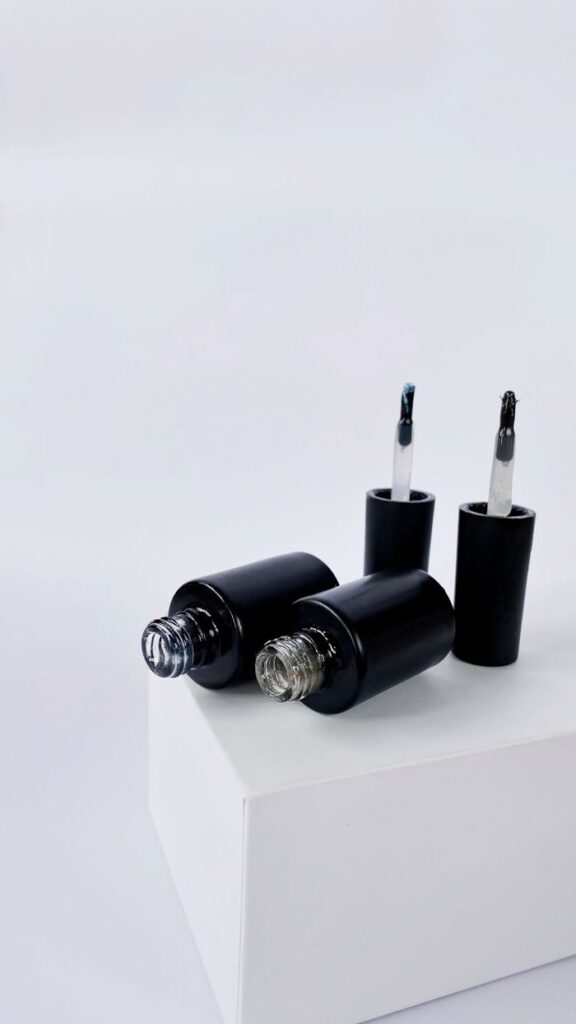
You need three colours plus a blooming gel, according to the recipe nail tech Amy shared in The Gel Bottle’s Tortie Kit collaboration. Vanilla forms the base, Glass Yellow adds warmth and Jet Black makes the speckles. Every one of those shades is a standard gel polish rather than a specialist product, so the shopping list is short.
Glass gel is the term for a tinted gel that stays see-through after curing, so the layer underneath still shows. Glass Yellow does the job that amber does in a classic tortie, but because it is far paler the finished nail keeps its milky character instead of turning honey coloured. Skip it and the set can look flat and grey; use amber instead and you are back to a classic tortie.
Salons sometimes reach for a slightly longer list. The 2022 write-up linked above records the tech picking out four colours, a milky white, a brown, a black and a nude, plus blooming gel. The nude and the milky white together do what Vanilla does on its own in Amy’s recipe, and the brown supplies a middle tone between base and black.
Vanilla base or milky white base?
Vanilla gives a warmer, slightly yellow blonde, while milky white gives a cooler, cleaner one. The speckle colours stay the same in both, so the base is the only variable. Against Vanilla the black has less contrast and the pattern looks softer from a distance. Against milky white the contrast is higher, so the same speckles stand out more and need to be placed with more care. I would pick Vanilla for a set that has to sit with an autumn wardrobe. Milky white suits a client who already wears a coconut manicure and wants the change to feel small.
Salon request phrasing: ask for “blonde tortie over BIAB with a Vanilla base”. Naming the base shade gives the tech a bottle to reach for instead of a mood to guess at.
Building the pattern with builder gel
Prep comes first. The Gel Bottle’s 2024 tortoiseshell guide shapes the nail with a 220/240 file and takes the shine off with a 100/180 buffer before any base coat goes on. Tortie is a layered design, and every layer is another place for lifting to start if the prep underneath was rushed. Our nail prep guides cover the cuticle work in detail, and that area matters most here because a light base makes any gap noticeable.
The sequence runs from light to dark. In the 2022 client account the tech applied blooming gel and dropped light brown spots into it. A second layer of blooming gel followed, with a darker brown placed slightly off centre from each first spot. A milky, almost see-through shade went over that, and black dots were added last.
Builder gel, or BIAB, gives the nail its structure and its apex. The tortie design can sit on top of a cured builder layer or underneath a clear one. Building the colour first and flooding a clear layer over it is called encapsulating the design, and it protects the speckles from the file at the next appointment. Building on top of the finished structure is quicker but leaves the art exposed.
Keep the spots uneven and off centre. Evenly spaced dark shapes stop reading as tortoiseshell and start reading as leopard print, and a blonde base makes that shift more obvious than a dark one would. Two or three larger spots and a scatter of small dots per nail is enough.
Can you get the effect without blooming gel?
Yes, by dropping colour into a layer of gel that has not been cured yet. Techs sharing this method on TikTok cure a base, then a layer of glass yellow mixed with chocolate. A second mixed layer goes on and stays uncured while chocolate blobs are dropped into it and left to spread. After curing, smaller black blobs go at the edges of the chocolate, then glass yellow, clear BIAB and top coat finish the nail.
Uncured gel spreads the colour in the same way blooming gel does, only less, so the speckles stay tighter and more defined. Whether that is better or worse depends on how soft you want the pattern to look. Neither version is wrong, and the uncured method saves buying one extra bottle.
Swap chocolate for a lighter brown and cut the amount of glass yellow if you want the blonde version of this method. The clips I have seen use it for a classic autumn tortie, so the ratios need shifting rather than the technique.
Blonde tortie vs classic tortie vs tortie cat eye
The three styles share the same light-to-dark layering, then separate on base tone and finish. Cat eye adds one extra step, a magnetic gel over the pattern.
| Element | Blonde tortie | Classic tortie | Tortie cat eye |
|---|---|---|---|
| Base shade | Vanilla, milky white, pale yellow | Glass Yellow, sometimes over Vanilla | Soft neutral base under the pattern |
| Dark accent | Light brown spots, black dots | Chocolate and Jet Black | Same spots, with a magnetic finish over them |
| Amy’s Gel Bottle recipe | Vanilla, Glass Yellow, Jet Black, plus blooming gel | Glass Yellow, Chocolate, Jet Black, plus blooming gel | Tortie colours plus a magnetic gel |
| Finish | Glossy, sheer, reads as neutral | Glossy, warm, reads as colour | Glossy with a moving light stripe |
| Season it is linked with | September into autumn, per HONA 2026 | Autumn and winter | Autumn transitional, per HONA 2026 |
| Works on short nails | Yes, one of the 2026 expansions Mirellé notes | Yes, but the pattern needs room | Yes, the stripe needs a clean centre |
Amy’s two recipes share Glass Yellow and Jet Black, so a tech who stocks the classic set only needs one extra bottle, Vanilla, for the blonde. The Gel Bottle’s 2024 guide works differently: it starts on a Vanilla base and adds Chocolate, Glass Yellow and Jet Black on top, four colours in total. That version sits between the two recipes in the table, and it shows the blonde and the classic are points on a range rather than separate designs.
Tortie cat eye drags a magnet across the magnetic gel before curing, which HONA describes as neutral bases, tortoiseshell detail and a glossy cat eye finish in one set. If the stripe comes out weak, the causes are the same ones covered in our guide to cat eye nails not working. Kinetics’ Fall 2026 report pulls the pattern another way, mixing cacao tortie with muted sage, negative space and metallic gold on a French tip.
Full set, French tip or accent nail on short nails?
On short nails I would start with an accent nail, because one or two patterned fingers give the eye a place to rest. A short nail has room for perhaps two larger spots before the pattern crowds itself, so a full set on all ten nails can look busy from a distance. Mirellé’s 2026 piece notes that short tortoiseshell holds up well to daily hand use, so the format itself is not the issue; density is.
A French tip in blonde tortie is the middle option. The pattern sits on the free edge only, the base stays plain Vanilla, and the smile line keeps the speckles contained. On a squoval or short almond it reads neat rather than busy; our nail shapes guide covers which of those holds up better on a short natural nail.
A full set works on short nails when the spots stay small and the black is used sparingly. Save the larger brown shapes for the thumb and ring finger, where there is more surface, and keep the rest to fine dots. Pale gaps between spots read as part of the design on a blonde base, so uneven placement is forgiven more readily than it would be on chocolate.
What should you ask your nail tech for?
Ask for a blonde tortie over builder gel, and name the base shade before the tech opens a bottle. Vanilla, milky white or coconut all point towards the right pot, while “light tortie” on its own can still produce a honey base.
Decide on coverage before the appointment. Full set, French tip or accent nail are the three formats, and the section above covers which suits a short nail. Bring a photo of the density you want, since “a few spots” means different things to different techs.
Say whether you want the design encapsulated. That choice decides what the tech can do with the pattern at your next infill, and it is easier to make at the start than at the end.
How do you look after a blonde tortie set between infills?
Treat it as you would any builder gel set, because the pattern layers are thin glass gels rather than a separate structure. Your infill schedule stays the one your tech set for the BIAB underneath. The extra layers do add thickness, and a tech will usually build the BIAB a little thinner to allow for them.
Encapsulated designs can be kept at the infill. The tech files the top layer, fills the gap at the cuticle, and re-tops the nail, so the speckles stay where they were. Art built on top of the structure is usually filed away at that point and either rebuilt or replaced with a plain colour.
The pale base is kinder to regrowth than a dark tortie. A gap at the cuticle under a Vanilla base is far less visible than the same gap under chocolate, so the set looks tidy for longer between appointments.
Frequently asked questions
Are blonde tortie nails the same as milky tortie nails?
Yes, both names describe a tortoiseshell pattern built over a pale, sheer base instead of amber. Some techs use “milky tortie” when the base is white and “blonde tortie” when it leans yellow, but the technique and the dark speckles are identical. Ask for the base shade by name if the difference matters to you.
Do blonde tortie nails work with BIAB?
They do, and builder gel is the structure most tutorials for the look are built on. The tortie layers sit on a cured builder layer or under a clear one, and the builder gel supplies the strength and the apex. Nothing about the pattern changes the builder gel routine, so lifting and infill timing behave as they would under a plain colour.
Which colours make a blonde tortie?
Vanilla, Glass Yellow and Jet Black, plus a blooming gel, according to the recipe nail tech Amy shared with The Gel Bottle. Vanilla is the base, Glass Yellow adds warmth without turning the nail honey coloured, and black forms the speckles. Some techs add a light brown between the base and the black so the pattern has a middle tone.
Can you do blonde tortie nails on short nails?
Yes, and short versions are one of the ways the tortie pattern expanded in 2026, according to Mirellé’s coverage of the trend. The comparison above shows how the speckle count drops as the patterned area shrinks. A French tip or a single accent nail keeps the look readable on a short nail without crowding it.
Is blonde tortie an autumn only look?
No, because the pale base is what people wear in spring and summer, and only the dark speckles read as autumn. HONA’s September 2026 report lists it as a transitional trend precisely because it bridges the two seasons. Clients who want it to feel more autumnal can push the speckles towards chocolate, and those who want it lighter can keep them small and black.