A standard French manicure is built from two solid layers: an opaque pink or nude base and an opaque white tip. Jelly French nails change how those layers relate. The base is translucent, so the natural nail, the free edge, and sometimes the faint lines of the nail bed show through it. The tip stays dense.
That difference matters more than it sounds. Light passes through a jelly layer and reflects back off the nail underneath, so the base reads as depth instead of flat color. The opaque tip sits on top of that depth like a solid edge on glass. Two shades that look ordinary side by side in the bottle can look quite different once one of them is see-through.
The eight pairings below use that effect in different ways. A few are quiet and tonal, and a few have real contrast.
| Pairing | Contrast | Best shapes |
|---|---|---|
| Sheer cherry + oxblood | Tonal, deep | Short almond, squoval |
| Milky pink + dusty rose | Low, soft | Short, natural length |
| Jelly peach + brick | Warm, medium | Square, soft square |
| Smoky taupe + espresso | Tonal, muted | Medium oval |
| Sheer lavender + butter yellow | Soft, complementary | Short–medium round, oval |
| Translucent beige + navy | High, graphic | Long square, coffin; micro French on short |
| Glassy burgundy + cream | High, reversed | Medium almond |
| Sea-glass green + cocoa | Muted, earthy | Short square, squoval |
1. Sheer Cherry Base + Oxblood Tip
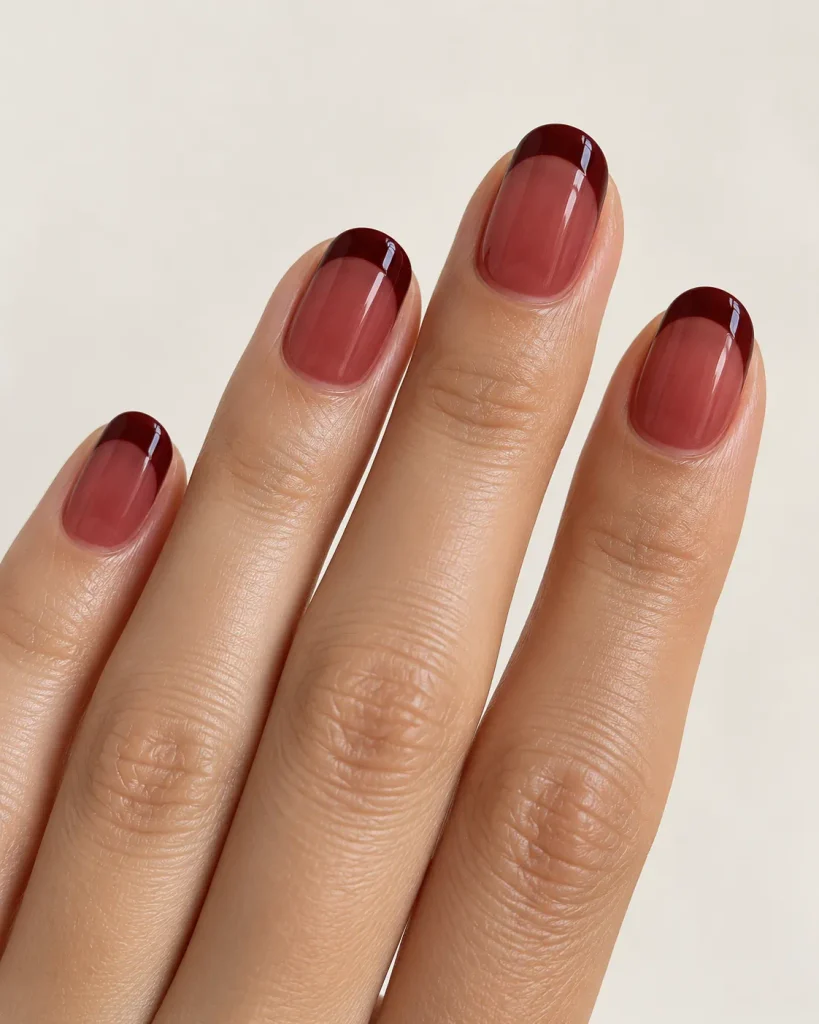
Red holds its hue well when thinned out, which makes sheer cherry an easy jelly shade to wear. One coat gives a pinkish-red wash with the nail line clearly visible. Two coats push it toward stained-glass red.
The oxblood tip stays in the same color family and is only darker and browner. It’s tonal, but the edge doesn’t disappear. In dim light the tip looks almost black. In sunlight it turns wine-red, so the edge seems to change slightly as the hand moves.
Short almond and squoval shapes handle this best. On long stilettos, the dark tip starts to look like a dip-dyed ombré rather than a French. I’d keep the smile line fairly deep, around a third of the free edge, so the oxblood has enough room to register against the red.
2. Milky Pink Jelly + Dusty Rose Tip
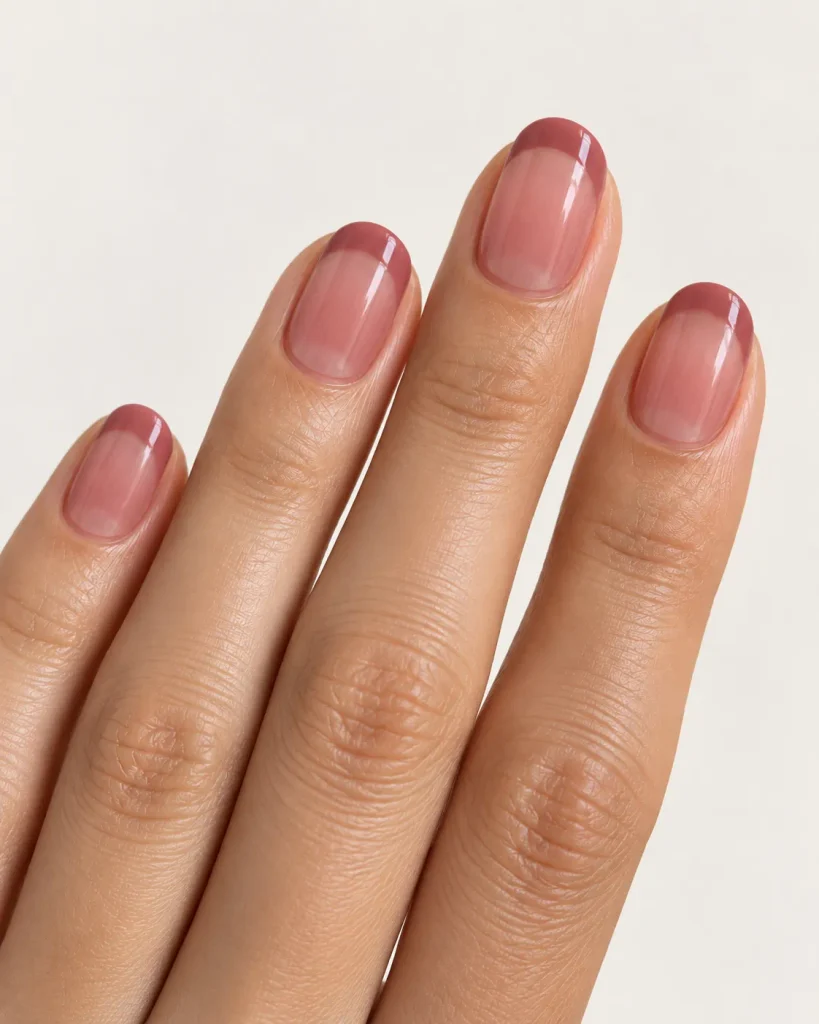
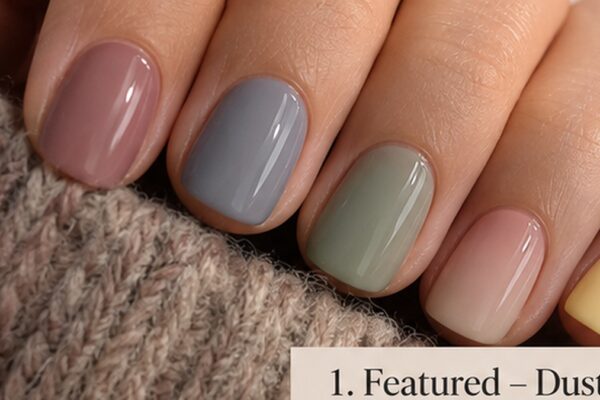
This is the closest to a traditional French, and from a distance it can pass for well-kept bare nails. A milky pink jelly isn’t fully clear. Its slightly blurred opacity softens ridges and uneven tip color while the pink of the nail bed still comes through.
Dusty rose is only one step darker. The contrast is low enough that the tip looks more like a shadow along the edge than a stripe of color. That makes it a good choice for short, natural-length nails, where a bright white tip can look harsh.
Dusty roses vary a lot. Some have a grey or mauve base, and some lean beige. Next to a warm milky pink, the greyer versions can look slightly muddy, so swatch the two together first.
Two coats of base is usually right. A third starts to cancel the translucency, and then you’re wearing two cremes.
3. Jelly Peach + Brick Tip
Warm on warm.
Jelly peach goes on like tinted glass: bright, orange-pink, and glossy. Over pale nail beds it can shift toward coral. On deeper skin tones it often looks more golden.
The brick tip keeps the peach from looking too sweet. On its own, jelly peach reads as summery and a little sugary. With a clay-red edge, the combination looks closer to glazed terracotta, with a matte-looking earthy color sitting over something shiny and warm.
This pairing suits late summer and early autumn more than any other season. It also looks warmer in daylight than under cool white LEDs, where the brick can flatten toward plain brown. Square and soft-square shapes suit its slightly earthy mood. Keep the tip thin, because brick is a heavy color and a wide band can overwhelm the peach underneath.
4. Smoky Taupe Jelly + Espresso Tip
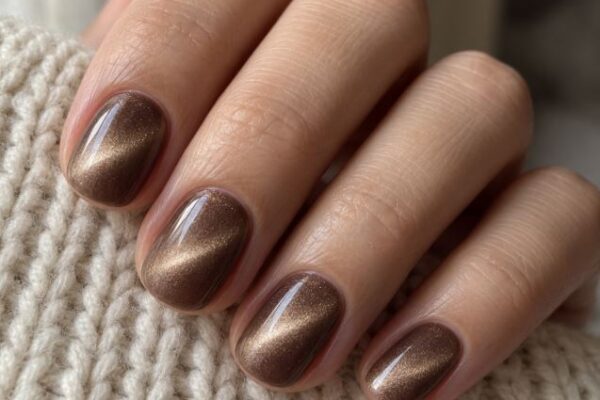
Smoky taupe isn’t a common jelly shade, which is part of its appeal. It’s a translucent grey-brown, similar to a tinted sunglass lens. You can still see the nail, but everything under it looks muted.
The espresso tip is the same idea at full opacity. The result is tonal, low in saturation, and a little moody. For someone who likes the structure of a French manicure but finds pink and white too sweet, this is the pairing I’d suggest first.
It depends on gloss. With a satin or worn-down top coat, taupe and espresso together can look dusty. With a high-shine finish, the jelly picks up reflections and the tip looks like polished dark wood.
Medium-length ovals are the safest shape. On very short nails the espresso tip shrinks into a thin dark line at the edge, and people can mistake it for dirt under the nail.
5. Sheer Lavender + Butter Yellow Tip
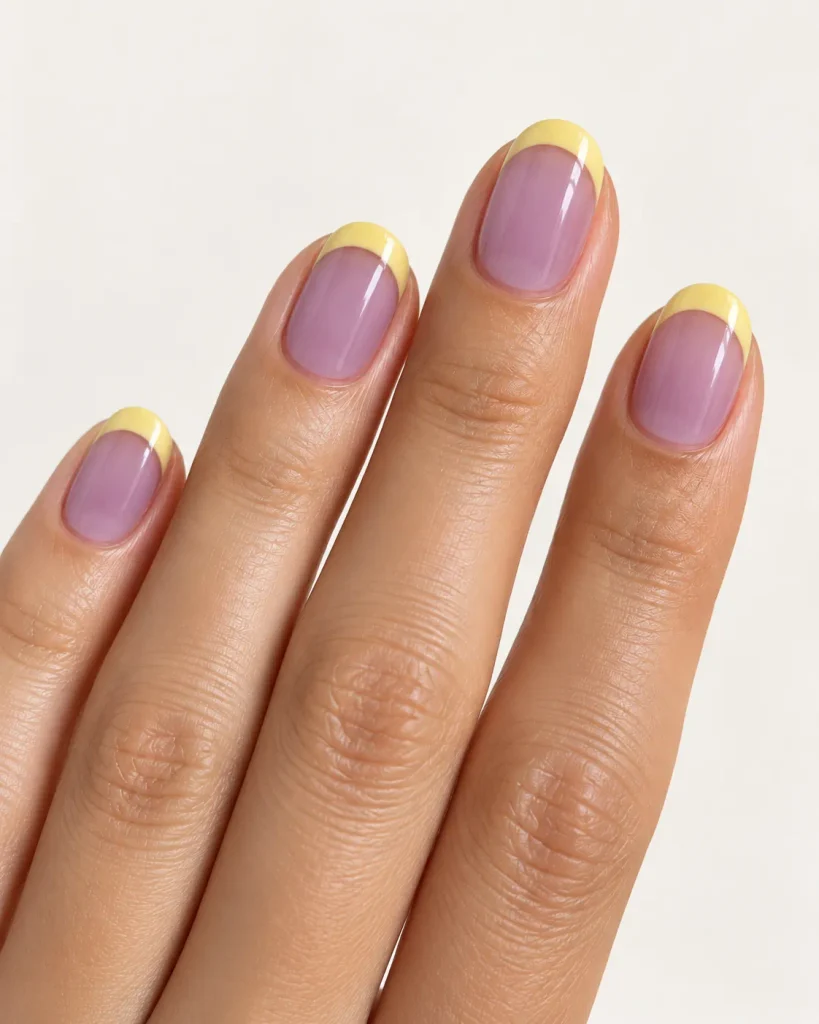
Lavender and yellow sit almost opposite each other on the color wheel, so this sounds like a loud combination. It isn’t, because both shades are soft. The sheer lavender gives a cool, faintly violet haze over the nail. Butter yellow is pale and creamy, closer to custard than lemon.
The two colors pull on each other. The yellow looks warmer next to lavender than it does alone, and the lavender looks slightly bluer. The contrast isn’t obvious in a photo, but you see it in person.
This is clearly a spring manicure. I wouldn’t try to make it work in December.
Butter yellow polishes are often streaky, so plan on two thin coats for the tip, or a thin white layer under the tip only if your yellow is especially sheer. Keep the lavender to one or two coats. More than that and it tends to turn chalky, which takes away the glassy effect.
Rounded or oval nails at short to medium length suit it best. Sharp points push it toward a candy look.
6. Translucent Beige + Navy Tip
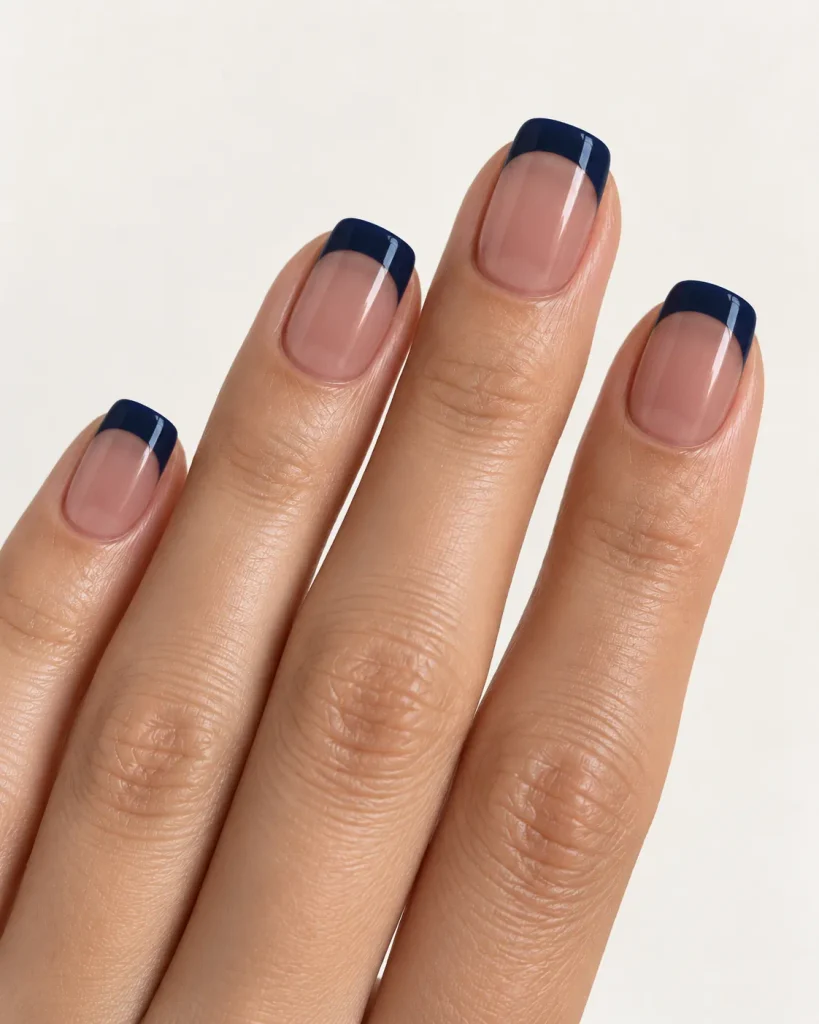
Of all the jelly shades here, beige is the most neutral. One coat barely changes the nail. Two coats even out discoloration and leave a clean, slightly warm, glass-like finish.
The navy tip is what makes this one graphic. Dark blue against a see-through neutral makes a crisp, almost tailored edge. From across a room navy reads as black. Up close, the blue shows, especially in daylight.
The smile line has to be precise. Any wobble shows immediately against a pale base, so this isn’t the pairing to freehand in a hurry. A thin, deep tip suits long square or coffin shapes. A micro French, where the navy is only a sliver along the edge, works better on short nails.
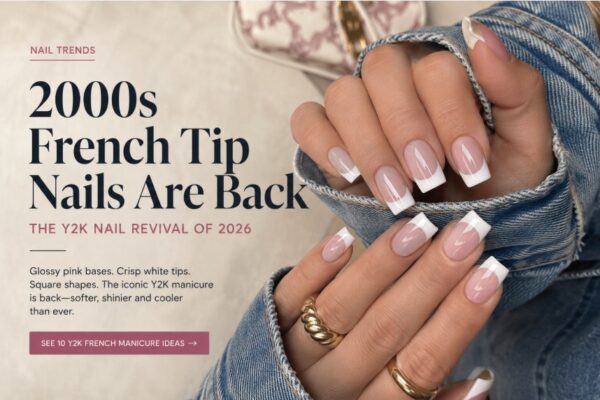
This combination also suits a straighter, chunkier tip line like the ones in 2000s French tip nails. The neutral base keeps that bolder shape from looking dated.
7. Glassy Burgundy + Cream Tip
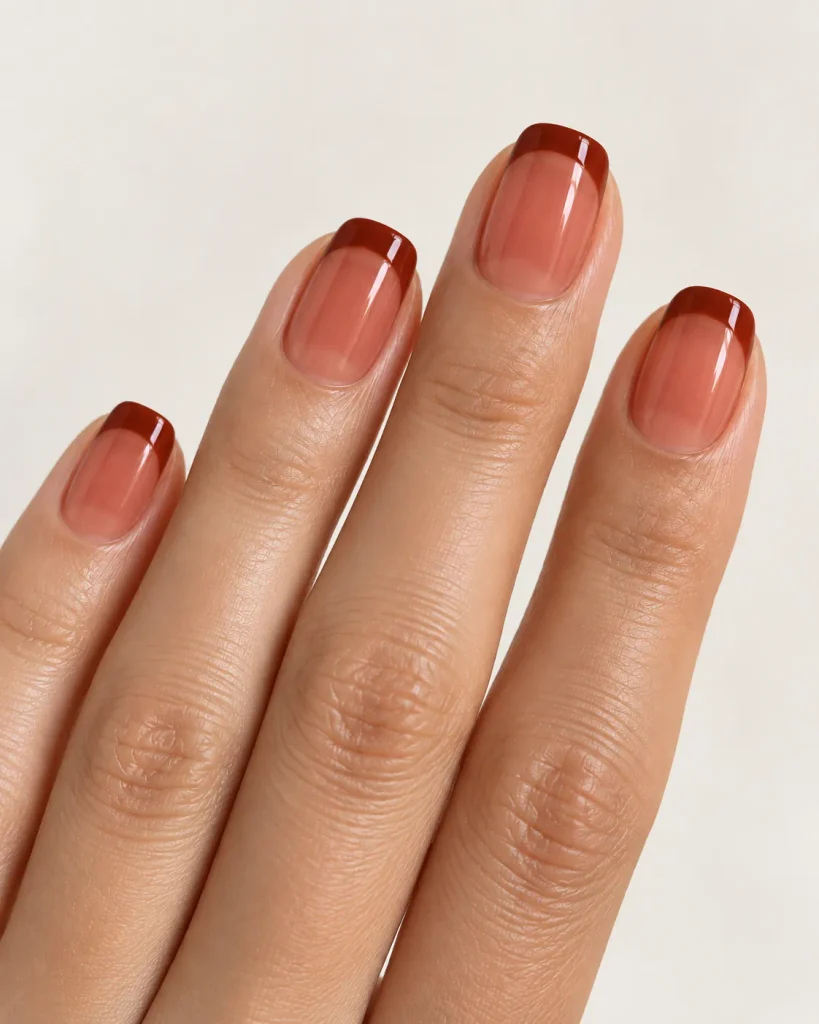
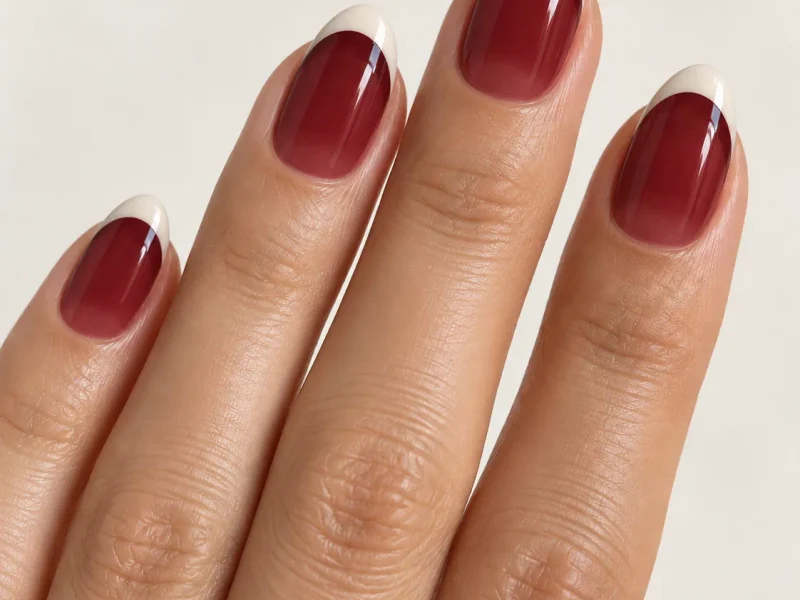
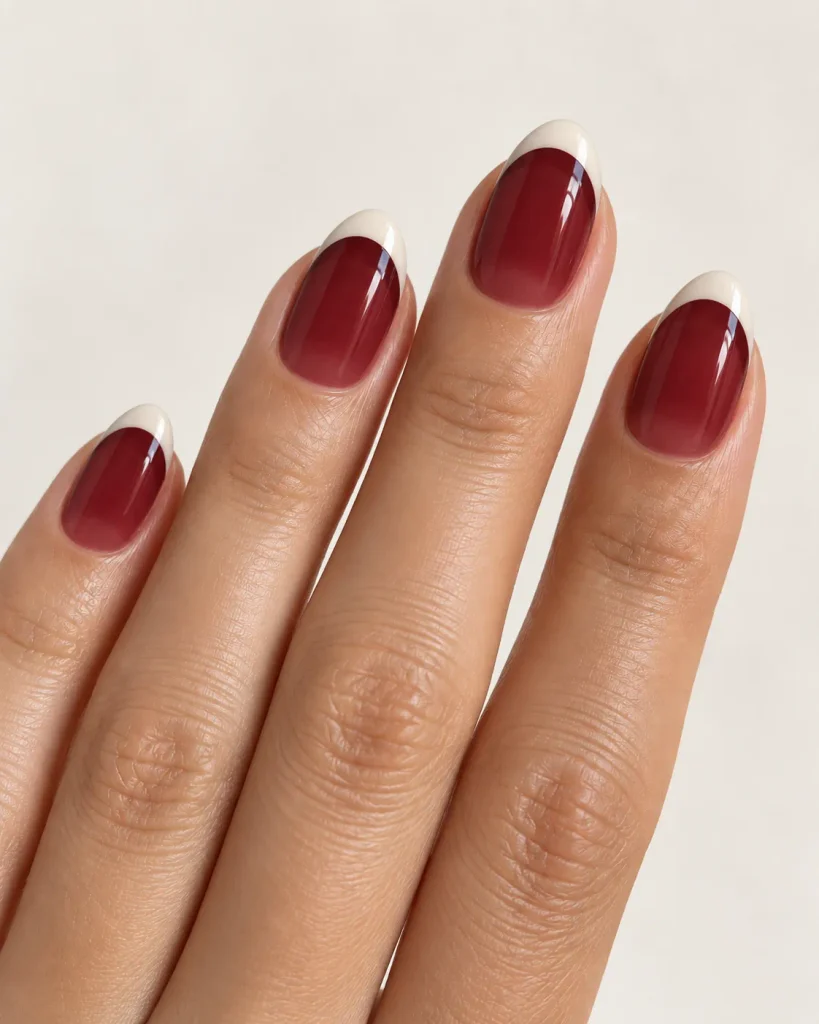
This one reverses the usual order: the dark shade is the translucent layer and the light shade is the solid one.
A glassy burgundy has enough transparency that it doesn’t look like a flat dark creme. It looks darkest near the cuticle and a little brighter toward the tip, where less of the nail bed sits behind it. The cream tip then cuts across that depth with a solid, soft off-white.
Cream works better than stark white here. Pure white against burgundy can look costume-like, especially on longer nails. Cream keeps the contrast strong without making the edge harsh.
Cream painted over a dark jelly needs two or three coats to hide the red underneath, and it can still turn slightly pink at the edges. It’s easier to paint the tip on the bare nail first, let it set, and then apply the burgundy only up to the smile line.
For a wetter-looking finish, you can keep a sheer chrome layer on the burgundy only, similar to the approach behind glazed chrome jelly nails. The cream tip should stay plain so the two finishes stay distinct.
This is a colder-weather manicure. Medium almond is the most flattering shape for it.
8. Sea-Glass Green Jelly + Cocoa Tip
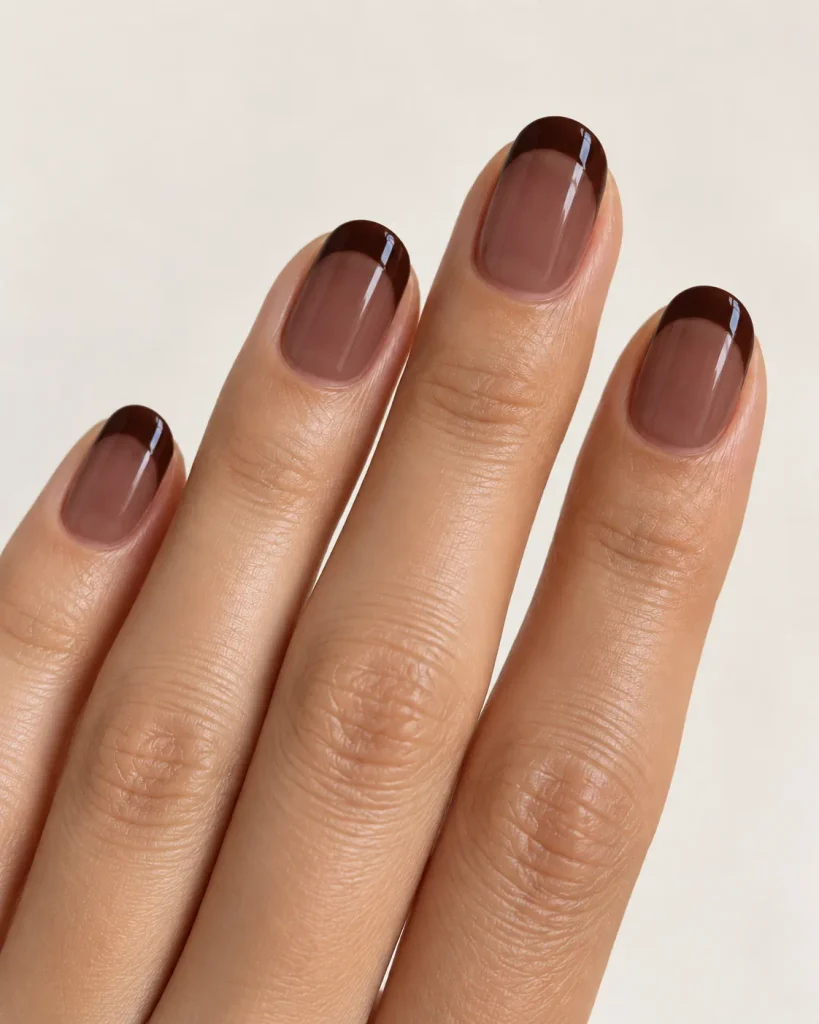
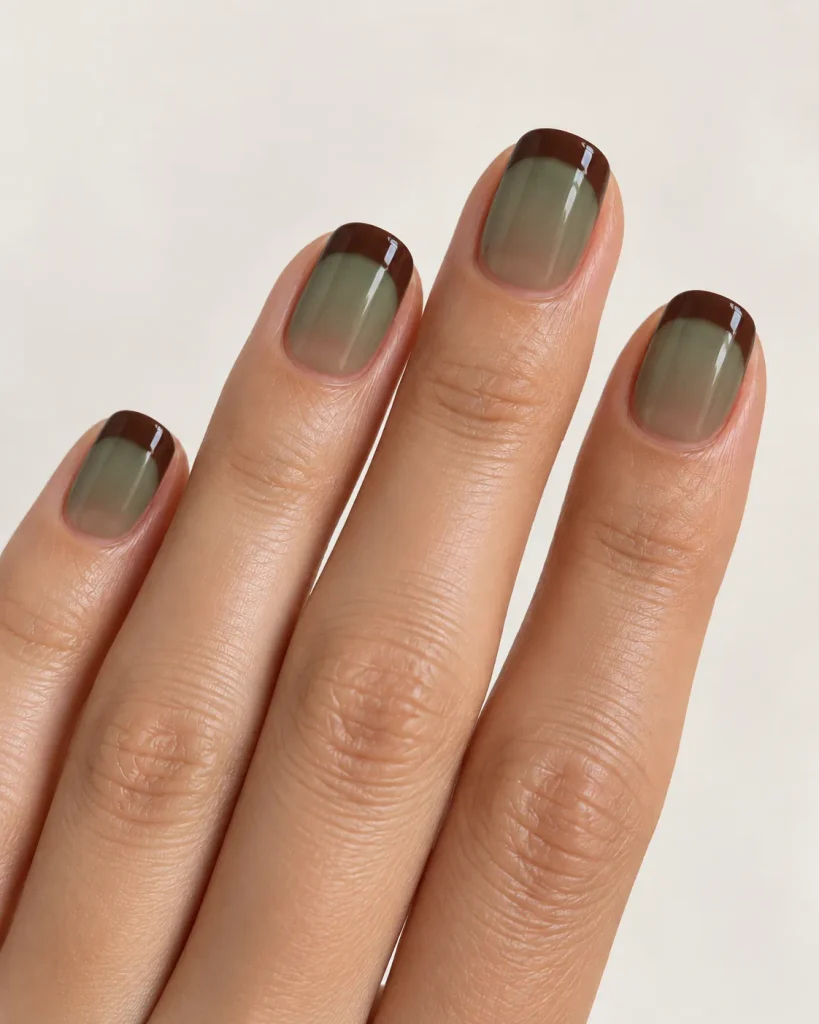
This is the least expected pairing on the list and also one of the easiest to wear. Sea-glass green is a pale, slightly grey green jelly, like frosted beach glass. Over the nail it gives a watery tint rather than a bold green.
Cocoa is a soft, milky brown with less weight than espresso and less red than brick. Together, the two look like moss against bark. Green-and-brown sounds like an odd French tip color combination, but because both shades are muted, neither one dominates.
On very cool skin, the green can lean minty. On warmer or olive skin, it moves toward sage, and the cocoa tip looks richer next to it. Test one nail before painting all ten.
Short square or squoval shapes work well. The mood is closer to autumn than spring, though the green keeps it from feeling heavy.
Building Your Own Sheer-and-Opaque Pairing
Most successful jelly French nails follow one simple rule. The base should stay translucent enough to show depth, and the tip needs enough opacity or enough tonal difference to look deliberate.
If the base gets too thick, you lose the glass effect and end up with a regular two-tone French. If the tip is too close to the base in both color and density, the edge blurs and looks like the polish is wearing off.
Start with a jelly shade you like. Then choose a tip that is either clearly more opaque, clearly different in depth, or both. Swatch them together on one nail before committing.
Maximum contrast isn’t necessary for an interesting result. A quiet pairing like taupe and espresso can hold attention longer than navy on beige because you notice more of it the longer you look.