This article contains affiliate links. As an Amazon Associate, we earn from qualifying purchases at no additional cost to you.
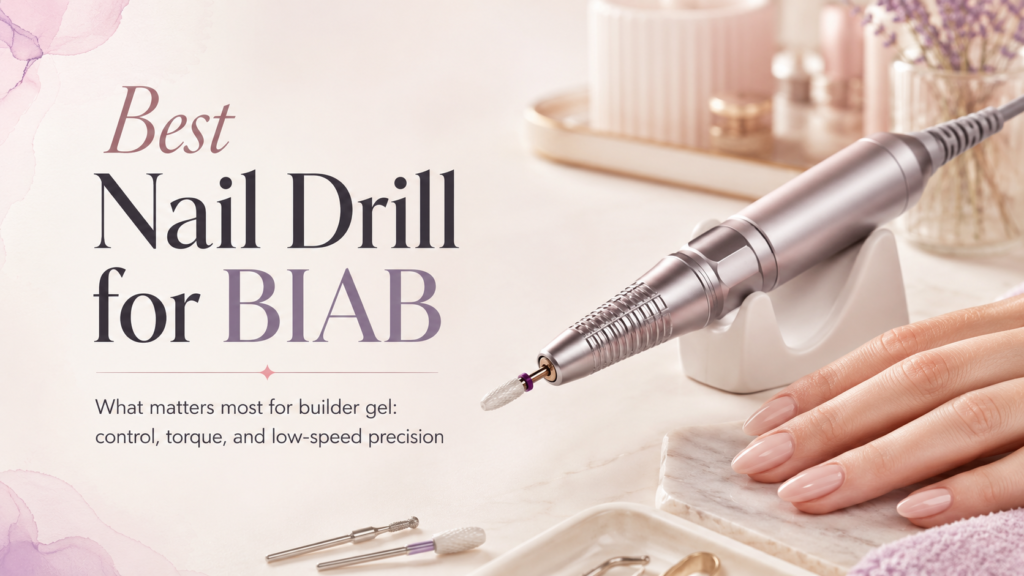
The best nail drill for BIAB is not the one with the biggest RPM number on the box. I’ve been writing about nails for about ten years, and of all the equipment questions that land in my inbox, this is the one people get wrong most consistently — because the number printed largest on the packaging is the number that matters least for soft gel.
Builder gel in a bottle behaves nothing like acrylic under a bit. Acrylic is brittle: it shears off as a fine powder and clears the surface on its own. Cured builder gel is tough and slightly elastic. At high speed a bit doesn’t cut it — it drags it, which generates heat and clogs the flutes within seconds. So the machine you want isn’t the fastest one. It’s the one that holds a low speed without flinching when you lean on it.
This guide covers six e-files that come up repeatedly in BIAB conversations, ranked by how well their design suits soft gel work specifically. Every one of them has something wrong with it, and I’ve said what.
⚠️ Before anything else: nail drills are one of the most heavily counterfeited categories in beauty. Clone handpieces carrying convincing branding are widespread, and they’re behind most of the “my new drill overheated and died in six weeks” posts you’ll see in nail groups. Buy from the brand’s official storefront or a seller offering a real warranty — not from whichever listing undercuts it by a few pounds.
🏆 Best Nail Drill for BIAB: Quick Picks
| Drill | Max RPM | Type | Best For |
|---|---|---|---|
| MelodySusie Scarlet 300 | ~30,000 | Desktop, corded | Best overall for BIAB infills |
| Makartt JD700 Pro | ~30,000 | Desktop, corded | Best value workhorse |
| KUPA MANIPro Passport | ~35,000 | Portable, battery | Best professional / mobile |
| Medicool Pro Power 30K | ~30,000 | Desktop, corded | Best for all-day salon use |
| Makartt F5 Cordless | ~30,000 | Cordless handheld | Best cordless for home use |
| Beurer MP62 | ~5,600 | Compact handheld | Gentle starter (prep only) |
What Is the Best Nail Drill for BIAB Right Now?
For most people doing BIAB, the MelodySusie Scarlet 300 is the drill to buy: its motor is known for holding speed well at the lower RPMs where soft gel actually gets worked, and the handpiece is built with enough thermal headroom to stay comfortable through a full set. If you’re working professionally or travelling to clients, the KUPA MANIPro Passport is the upgrade worth saving for — lower runout, quieter, and designed to be serviced rather than replaced.
Why BIAB Needs Different Specs Than Acrylic
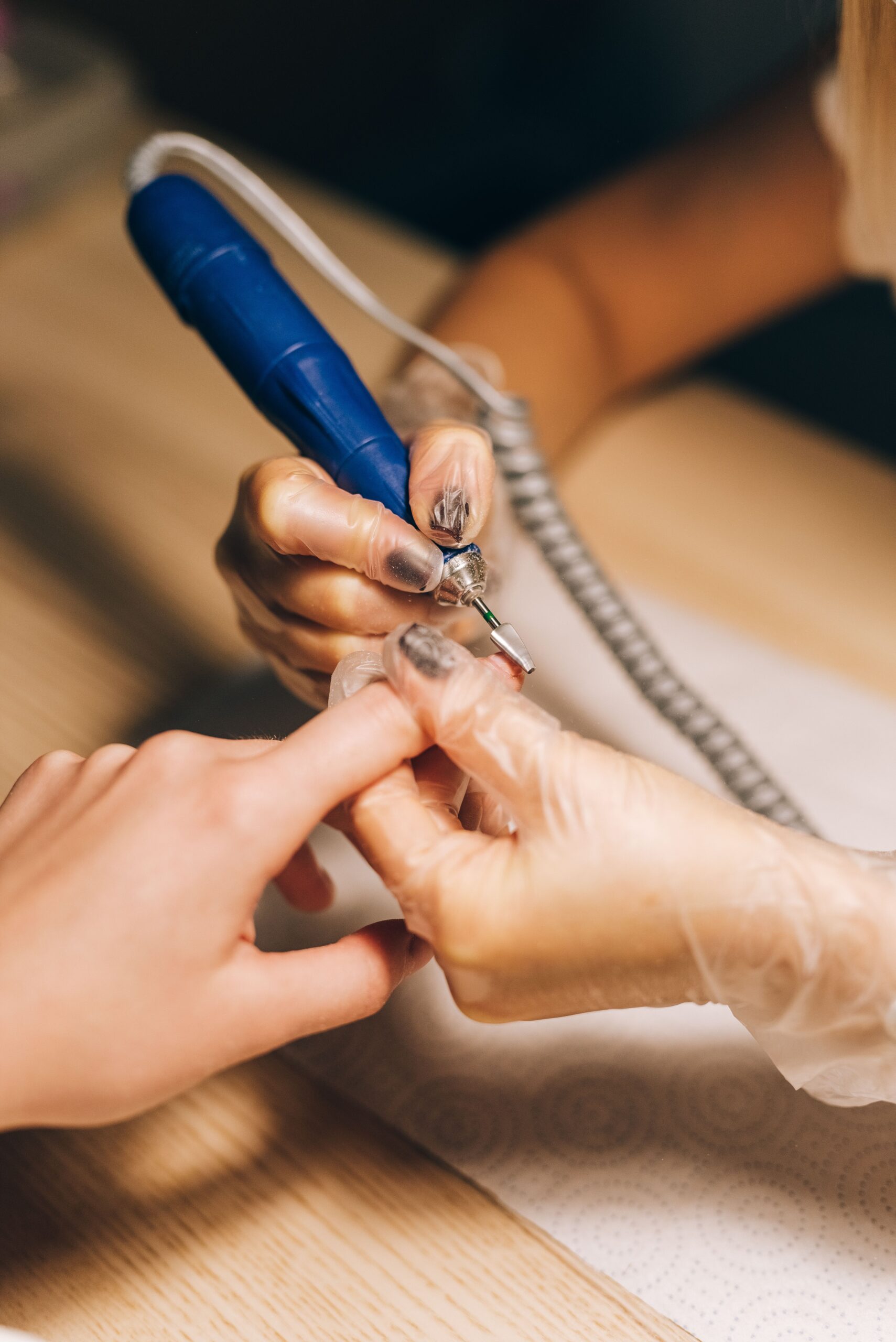
Most buying guides rank drills by maximum RPM. For builder gel that ranking is close to meaningless, because you will almost never work above 15,000 RPM. The specifications that decide whether a set goes smoothly are these four:
- Torque at low RPM. Set a drill to 8,000 RPM and apply working pressure. A good motor holds. A weak one bogs down, and that momentary stall is exactly what leaves a gouge in the product — or worse, in the nail plate underneath.
- Runout. Spin a bit and watch the very tip. If it traces a small circle instead of sitting still, the machine has runout. You’ll feel it as vibration through the client’s fingertip and see it as a bevel that never quite cleans up.
- Handpiece heat. Heat in the handpiece is heat in your hand, and it’s a proxy for how hard the motor is working. A handpiece that’s noticeably warm after ten minutes will be unpleasant after forty.
- True forward and reverse. Essential for left-handed techs and for working both sidewalls cleanly. Some budget models advertise it and deliver a switch that changes almost nothing.
💡 Working ranges for BIAB: roughly 5,000–8,000 RPM for cuticle prep with a small ceramic or diamond bit, 10,000–15,000 for reducing bulk from an old apex, and 6,000–10,000 for refining shape before a rebalance. Light pressure, constant movement. If you can smell heat, the speed is too high or the hand is too heavy.
The 6 Best Nail Drills for BIAB, Compared
1. MelodySusie Scarlet 300
The Scarlet 300 gets recommended more than any other machine in beginner BIAB circles, and the reason is unglamorous: it’s consistently reported to hold speed well in the lower range where soft gel work happens. Load a medium barrel bit, set it around 8,000 RPM, and press into an old apex — this class of motor is built to maintain speed under load rather than dipping. That single behaviour is most of what separates a usable e-file from a frustrating one.
The handpiece is on the chunky side. People with small hands sometimes find it a stretch, but the extra diameter gives the motor thermal room, which is why owner reports on long-term heat build-up are comparatively rare here. Bit changes are twist-lock, which is more secure under load than the push-in collets you find on cheaper units.
Its weaknesses are real, though minor. The foot pedal is bundle-dependent, and the included one has a small dead zone before the motor engages. Speed control is analogue, so if you want to know you’re at precisely 7,500 RPM you’ll be estimating — which, in practice, most techs end up doing by ear anyway.
2. Makartt JD700 Pro
If the budget stops around the £45–55 mark, this is the sensible landing spot. Makartt has iterated on this platform for years, and the refinements show in details that don’t make the spec sheet: a genuinely flexible handpiece cable instead of the stiff coil that fights you all session, and enough resolution at the bottom of the speed dial that 6,000 RPM is a position you can find rather than hunt for.
It runs slightly louder than the Scarlet and transmits marginally more vibration. At this price that’s a fair trade. The real caveat is the bundled bit set — the sanding bands are serviceable, but the included ceramic bits are soft and lose their bite quickly. Budget another £20 for one fine barrel bit and one small ceramic cuticle bit, and this becomes a properly capable kit.
3. KUPA MANIPro Passport
This is the machine you buy when a drill stops being a purchase and becomes a tool. Battery-powered and genuinely portable, the Passport’s defining characteristic is how little runout it has — the tip of a fine bit sits still enough that you can bring it right up to a cuticle line without chatter. For BIAB rebalancing, where an apex is reduced a fraction of a millimetre at a time, that stability is the difference between a nail that looks filed and one that looks poured.
Just as importantly, it’s serviceable. Handpieces are replaceable, wear parts are available, and KUPA operates a repair pathway rather than a replacement one. For anyone billing hours, the arithmetic is straightforward: one Passport outlasts several budget machines, and it doesn’t take a client day down with it when something wears out.
Balanced against that: the price is several times the Makartt’s, which is genuinely difficult to justify for someone doing their own nails every three weeks. Battery life covers a normal working stretch but not an unbroken full day, so a busy schedule means docking it between clients. And the slimmer handpiece divides opinion — some techs find it precise, others find it tiring to grip over long sessions.
If you’re weighing this against everything else here, the honest framing is that you’re not buying more power. You’re buying lower vibration, a repair path, and the freedom to work anywhere. Whether that’s worth the gap depends entirely on whether nails are your income or your evening.
4. Medicool Pro Power 30K
Medicool is the brand still bolted to salon tables that have been in service for a decade, and that longevity is the entire proposition. The Pro Power 30K has a dial, a switch and a handpiece. No display, no app, no styling. What it has is a motor rated for continuous duty, which is better suited to long salon sessions — the stretch where cheaper motors can begin to drift in speed or build heat in the handpiece.
For BIAB it also punches above its price on low-end torque, rivalling machines that cost considerably more. The trade-offs are ergonomic and aesthetic: the cord is stiffer than ideal, the design is dated, and it is in no sense portable. If you want an attractive machine for a home setup, look elsewhere. If you want one still running in 2032, this is the answer.
5. Makartt F5 Cordless
Cordless handhelds trade torque for freedom, and it’s worth being clear about which side of that trade you’re on. The F5 is well-behaved for its class, but under sustained pressure on a thick apex it will slow where a corded machine won’t. What it’s very good at is maintenance work — tidying regrowth, shortening lengths, a quick rebalance. It’s light, the speed steps are discrete rather than a vague dial, and a charge comfortably covers a set or two.
Two irritations: charging happens through the handpiece itself, so there’s no swappable spare battery, and the LED display is brighter than a dim room wants.
6. Beurer MP62
Included deliberately, because a good share of people searching for a BIAB drill actually want something far gentler than a 30,000 RPM machine — and buying a professional e-file as a first tool is how nail plates get thinned. The MP62 tops out around 5,600 RPM. It will not remove builder gel efficiently, and it isn’t meant to. It handles cuticle work, light surface prep and callus care safely in hands that have never held a drill.
The limitation matters: attempting a full apex reduction with it takes so long that most people compensate by pressing harder, which is precisely the habit worth avoiding. Treat it as a stepping stone, not a solution.
Scored Against Each Other
The same six machines rated on the four characteristics that decide soft gel performance. Scores are out of 10 and reflect design analysis and long-run owner reporting rather than laboratory measurement.
| Drill | Low-speed torque | Vibration control | Heat management | Value |
|---|---|---|---|---|
| MelodySusie Scarlet 300 | 8 | 8 | 8 | 9 |
| Makartt JD700 Pro | 7 | 7 | 7 | 9 |
| KUPA MANIPro Passport | 9 | 9 | 9 | 6 |
| Medicool Pro Power 30K | 9 | 8 | 9 | 7 |
| Makartt F5 Cordless | 6 | 6 | 7 | 8 |
| Beurer MP62 | 4 | 8 | 9 | 7 |
Five Questions to Ask Before You Buy
- Am I removing BIAB or maintaining it? Full removal and apex reduction want corded torque. Regrowth tidying and shortening are comfortable on a cordless.
- Will this be used on other people? If yes, buy serviceable. A machine with replaceable handpieces survives commercial hours; a sealed one becomes landfill.
- Is the reverse function real? Test it on arrival. Reverse should sound and feel identical to forward, simply spinning the other way. If it’s noticeably weaker, the switch is decorative.
- How does it behave at its slowest setting? Press a bit against a scrap piece of cured gel at minimum speed. If it stalls, return it. This one test reveals more than every figure on the box.
- Which bits will I actually use? The drill is half the purchase. A fine or medium barrel bit for surface reduction and a small ceramic bit for cuticle work cover most BIAB needs. Kit bits are almost always the weak link.
✦ The detail most guides skip: bit grit matters more for BIAB than the machine does. Coarse diamond bits — the ones marketed for acrylic removal — grab soft gel and tear it, leaving pits that then need filling. Medium and fine grits cut cured builder gel cleanly. If a drill feels like it’s fighting you, swap to a fine barrel bit before concluding the machine is the problem. A surprising number of “bad drill” complaints are bad bit complaints.
Getting More Out of Whichever You Buy
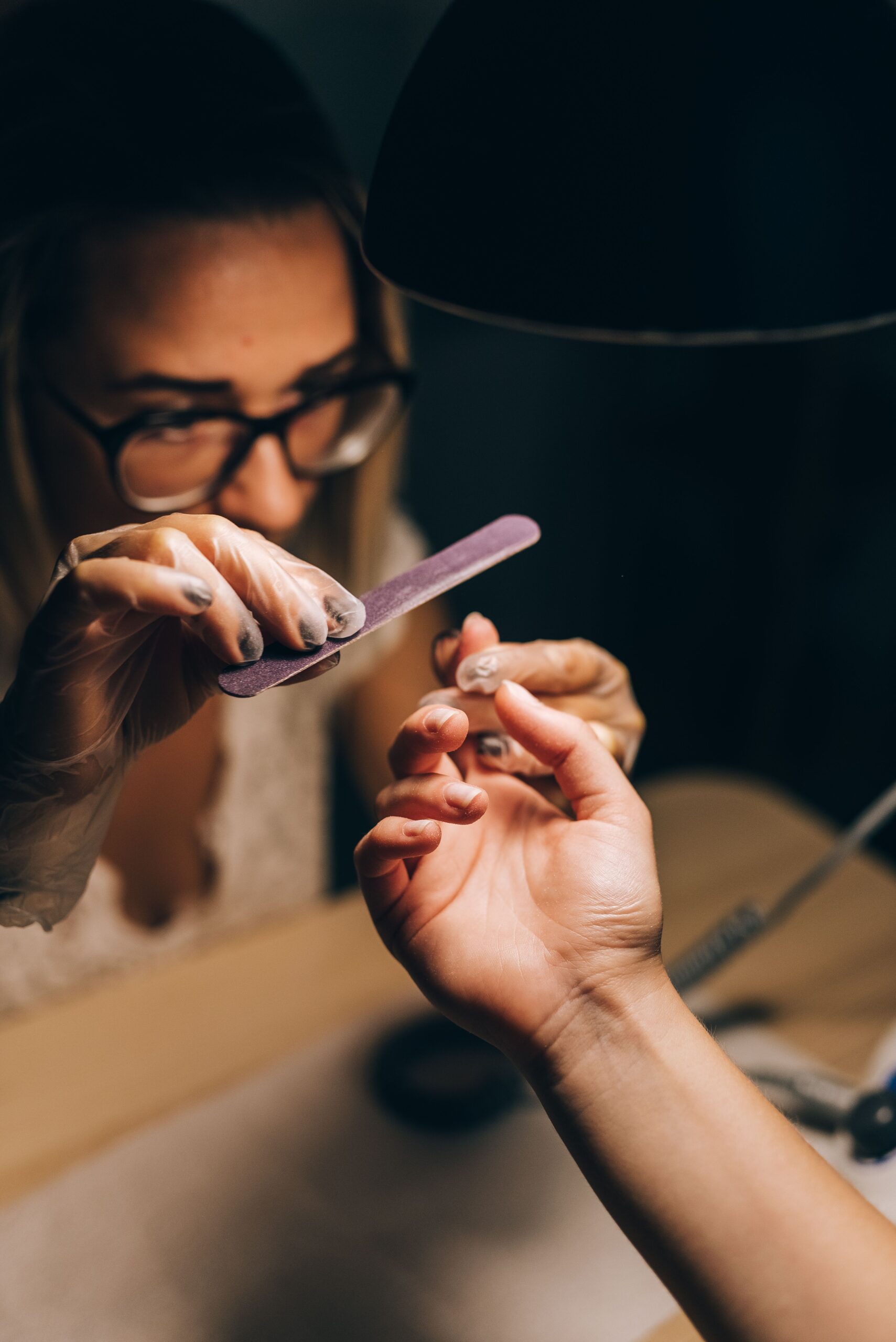
Judge speed by sound, not by the dial
Dial markings drift and mean less once a bit is loaded. A drill cutting cleanly holds a steady, even note; one that’s labouring drops in pitch under pressure. That drop is friction, and friction is heat going into the nail plate.
Keep the bit moving
Heat spikes come from a stationary bit far more than a fast one. Light passes, constant travel across the surface. Three light passes beat one heavy pass every time, and the resulting surface is flatter.
Clean bits properly
Gel residue baked into the flutes destroys the cut and creates a hygiene problem if you’re working on clients. Brush bits out after every use and disinfect between clients. A bit that looks glazed has stopped cutting and started rubbing.
Know when to stop
You should never be filing natural nail. When reducing BIAB, stop while a thin, even layer of product remains — that layer is what you rebalance onto. Warmth felt through the fingertip means the bit has reached the plate. Lift off immediately; heat rings and thinning are cumulative and take months to grow out.
If you’ve never used an e-file: spend your first few sessions on nail tips glued to a practice hand — not on your own nails and not on a friend’s. An e-file is a skill tool, not a shortcut, and the damage from learning pressure on a live nail plate is slow to appear and slow to reverse. Plastic is cheap. Practise there first.
Keep Reading
Final Verdict
The single most useful thing to take from this: buy for low-speed control, not top speed. Good BIAB finishes happen under 15,000 RPM with a fine bit and constant movement. The machine’s only job is to hold that speed without arguing. Once you have one that does, everything else is practice — and practice costs nothing.
💡 A practical spare worth keeping: a handpiece cable, or a spare handpiece if the budget allows. Motors rarely fail first — the cable does, at the flex point nearest the handpiece, and it tends to go mid-set. A cheap spare in the drawer turns a ruined appointment into a two-minute pause.
This article contains affiliate links. If you buy through them, NailStyleLab may earn a small commission at no extra cost to you. Product selections are made on the criteria described above and are not influenced by commission rates.