Is Your Nail Prep Safe? A Guide to HEMA Sensitivity and Prep Alternatives
If you’ve spent any time in nail communities lately, you’ve probably seen the acronym HEMA come up — and not in a flattering way. HEMA sensitivity in nail products has become one of the most discussed safety topics in the professional and DIY nail space, and for good reason. Allergic reactions to gel products are on the rise, and the culprit is often hiding in plain sight: right inside your primer or base coat.
Reports of contact dermatitis linked to nail acrylates have increased notably over the past decade. A 2021 study published in Contact Dermatitis found that nail acrylates — including HEMA — are now among the top causes of occupational allergic contact dermatitis in Europe.[1] The British Association of Dermatologists flagged the trend as early as 2017, warning that reactions were appearing not just in nail technicians but increasingly in home users.[2]
The reason it’s gotten worse recently isn’t mysterious: the DIY gel nail boom brought UV gel systems into millions of homes where improper cure times, skin flooding, and repeated skin exposure create the perfect conditions for sensitization. This guide explains what HEMA is, how to spot a reaction, and — most importantly — how to protect yourself whether you’re a tech or doing your nails at your kitchen table.
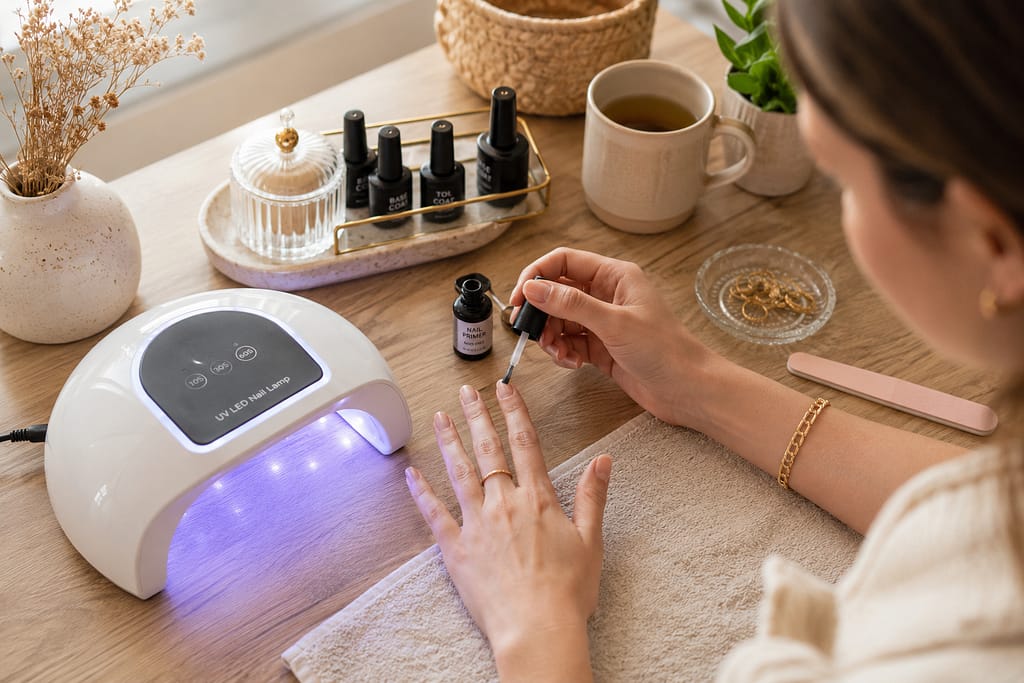
Primer and dehydrator are applied to bare, freshly filed nails — meaning your nail plate’s protective barrier is at its thinnest. Any uncured product that contacts the skin here has direct access to the epidermis, which is how sensitization begins.
What Is HEMA in Nail Products?
HEMA stands for 2-hydroxyethyl methacrylate — a methacrylate monomer used as a bonding agent in UV/LED gel systems. It works by creating a strong chemical bridge between the nail plate and the gel product, which is exactly why it’s so effective for adhesion and exactly why it’s potentially dangerous.
Methacrylates are small molecules with a low molecular weight, which means they can penetrate skin relatively easily — far more easily than many other cosmetic ingredients. When HEMA sits on skin (especially when uncured or partially cured), it’s absorbed into the epidermis, where the immune system can register it as a foreign threat and mount a response. That response is called allergic contact dermatitis — and once it’s triggered, it’s permanent.
HEMA appears in many gel polishes, builder gels, primers, and base coats. It’s not always labeled prominently, which is why reading the INCI list matters.
Sensitization doesn’t happen overnight. You might use HEMA-containing products for months or years with zero issues — and then suddenly develop a reaction. The immune system’s “threshold” varies per person, but once crossed, even tiny exposures can trigger a response.
Signs of HEMA Sensitivity
Reactions don’t always look the same, and they don’t always appear immediately. Some people react within hours; others see symptoms develop over days. The most common presentations include:
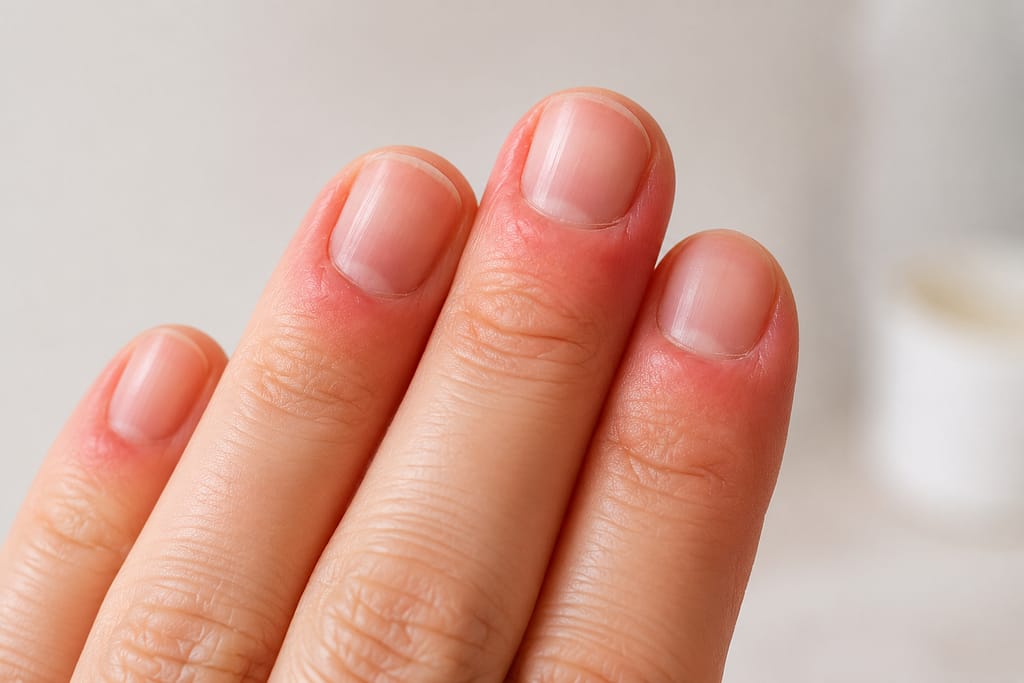
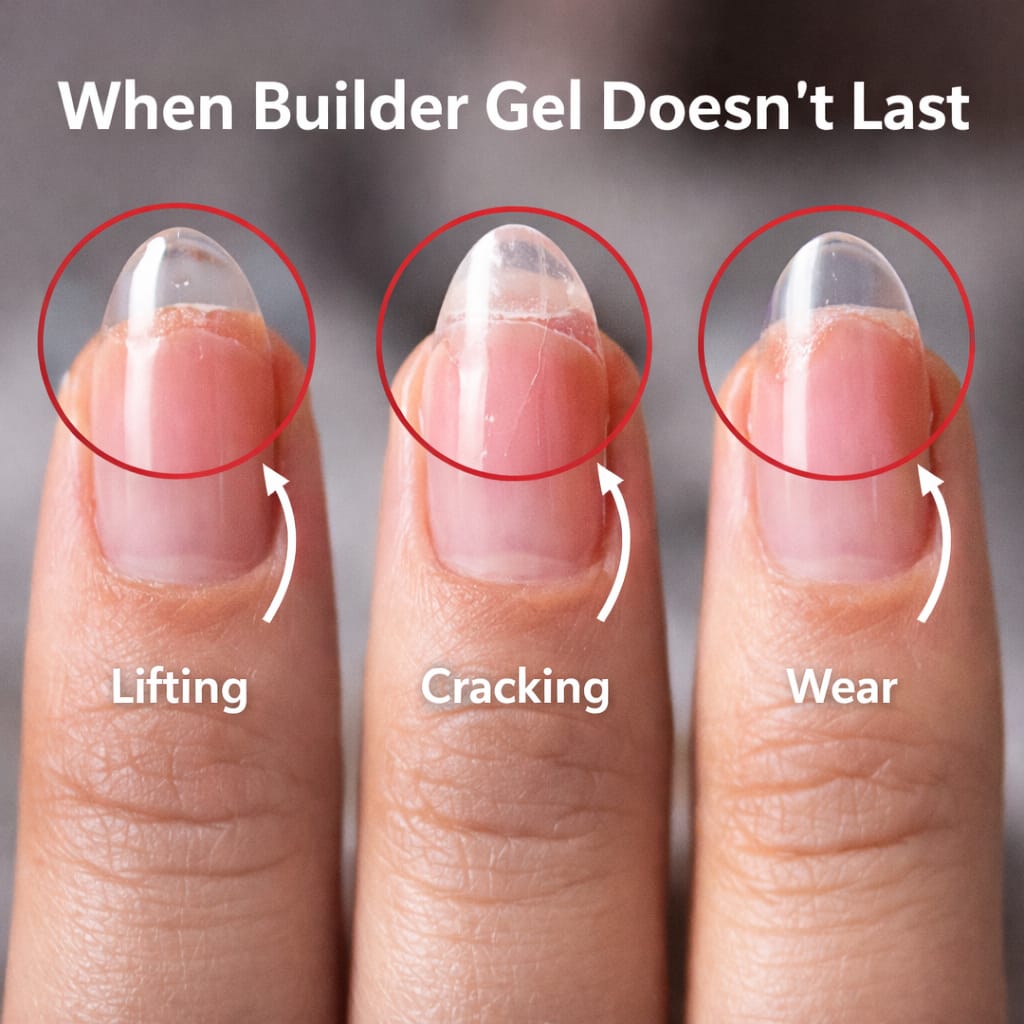
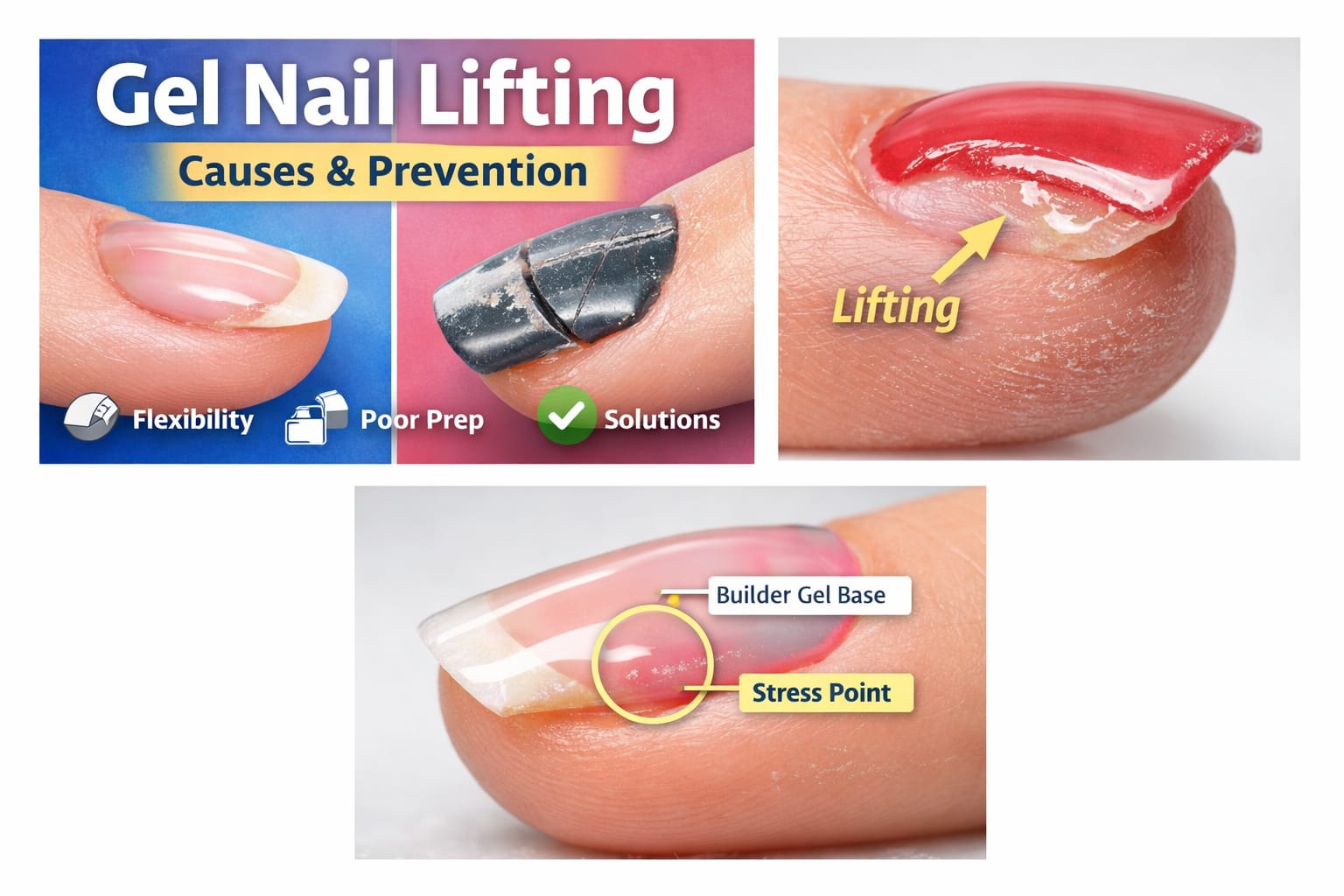
Many people dismiss early HEMA reactions as a “prep problem” because lifting is one of the first signs. If you’ve optimized your prep routine and still see lifting near the cuticle alongside any skin symptoms, consider an allergic reaction — not poor technique.
Can Nail Prep Products Trigger Allergic Reactions?
Yes — and prep products are often the most overlooked source. Most conversations about HEMA focus on gel polish or builder gel, but primers and base coats frequently contain HEMA or related methacrylates like HPMA (hydroxypropyl methacrylate). Primers are particularly high-risk because they’re designed to penetrate the nail plate surface and increase adhesion — the same mechanism that makes skin contact dangerous.
Acid-based primers contain methacrylic acid — a related compound that carries its own sensitization risk and is additionally corrosive to the nail plate. Even “acid-free” primers often contain HEMA or other methacrylates that can cause sensitization with repeated skin contact.
Who Is Most at Risk?
Anyone who uses gel nail products can develop a HEMA sensitivity, but certain habits and circumstances significantly raise the risk:
Research published in the Journal of the European Academy of Dermatology and Venereology found that gel nail-related contact allergy diagnoses increased by over 300% between 2012 and 2022 in patch-tested patients at UK dermatology clinics.[1] Frequency of application without adequate cure time was identified as the single biggest contributing factor.
Both professional nail technicians and DIY enthusiasts should read this. Techs have more exposure by volume; home users often have less awareness of safe application practices. Both groups benefit from HEMA-free alternatives.
HEMA-Free Alternatives for Nail Prep
The good news is that formulation has improved dramatically in recent years. HEMA-free gel systems are no longer niche — many mainstream brands now offer full lines built without it. Here’s what to look for:

| Product Type | HEMA Status | Safer Alternative | What to Look For |
|---|---|---|---|
| Nail Primer | Often Contains HEMA | HEMA-free primer or non-acid primer | Check INCI for absence of HEMA, HPMA, methacrylic acid |
| Dehydrator | Usually HEMA-Free | IPA-based dehydrator | Isopropyl alcohol dehydrators carry minimal chemical risk |
| Base Coat | Often Contains HEMA | HEMA-free base coat | Many brands now label “HEMA-free” explicitly on packaging |
| Builder Gel (BIAB) | Common in Standard | HEMA-free BIAB formulas | Brands like Aprés, Halo, and The Gel Bottle offer HEMA-free BIAB options |
| Bond Prep Spray | Usually HEMA-Free | Alcohol-based bond spray | Ideal first step for all nail types before any primer |
Beyond switching products, adapting your prep routine itself reduces exposure risk significantly. Applying dehydrator and primer in thin, controlled amounts — well within the nail plate boundary — eliminates the most common route of skin contact.
How to Reduce Exposure During Nail Prep
This is the most actionable section of this guide — and the one most likely to prevent a reaction before it starts. These steps are simple but non-negotiable if you’re working with any gel system, HEMA-containing or not.
5 Steps to Minimize HEMA Exposure During Nail Prep
- Avoid all skin contact. Apply primer and base coat strictly to the nail plate. Use a fine brush and work slowly. Any flooding onto the cuticle or sidewalls should be cleaned immediately with a dry brush or cuticle stick before curing.
- Cure fully and correctly. Use a calibrated LED or UV lamp and follow the manufacturer’s cure time exactly. Never cut cure time short. Under-cured product contains free monomers that absorb through skin most efficiently.
- Don’t over-file the nail. A light buff to remove shine is all that’s needed in most cases. Aggressive filing thins the nail plate and creates a shorter path for chemicals to reach the nail bed.
- Wear nitrile gloves if you’re a tech. If you’re applying gel to clients repeatedly across a session, nitrile gloves significantly reduce cumulative skin exposure. Note: latex gloves do NOT provide adequate protection against methacrylates.
- Clean flooding immediately — before the lamp. If product touches the skin at any point before curing, wipe it away with a dry lint-free wipe. Once cured, disturbed or lifted product at the skin margin is far less of an issue than uncured flooding.
Thin coats cure more completely than thick ones. If you’re applying primer or base in a generous layer, you’re increasing the chance of an uncured layer at the bottom — which is where the highest monomer concentration sits.
Can You Still Wear BIAB If You’re Sensitive to HEMA?
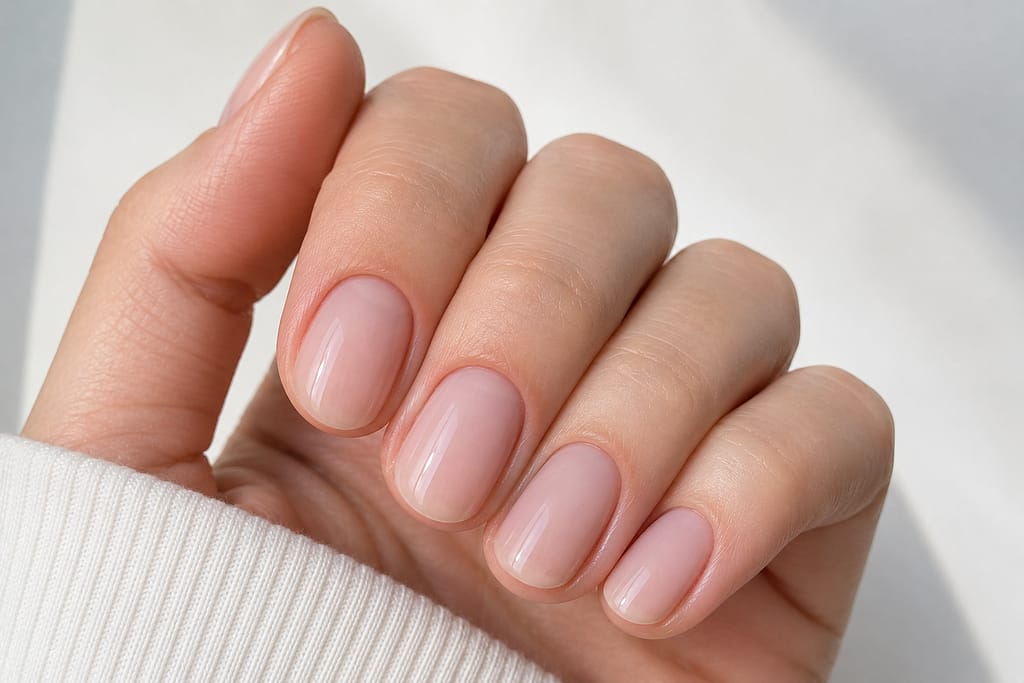
A HEMA allergy doesn’t mean you have to give up builder gel entirely. What it means is that standard HEMA-containing BIAB formulas are off the table, and that technique matters enormously. Several brands now produce HEMA-free BIAB that uses alternative adhesion chemistry — typically relying on di-HEMA trimethylhexyl dicarbamate or other urethane-based monomers that carry a lower sensitization profile.
If you’ve had a confirmed HEMA reaction and want to continue wearing BIAB, the recommended approach is: get a patch test done by a dermatologist to confirm your specific allergen profile, then choose a BIAB system specifically formulated without HEMA and the related compounds you react to. Work with a technician who understands the chemistry — or follow a meticulous no-flood self-application method.
The key warning here: don’t assume that “gel-free” or “non-UV” polish is automatically safe if you have a methacrylate allergy. Some regular nail polishes also contain low levels of acrylates. Always read the INCI list regardless of the product category.
If you suspect a HEMA reaction, stop using the product immediately and allow any symptoms to resolve. For persistent redness, blistering, or spreading rash, consult a dermatologist — ideally one familiar with contact dermatitis. A patch test is the only way to definitively confirm which acrylate compound you’re reacting to. Self-diagnosis is unreliable, and continuing use of a sensitizing product risks making the allergy permanent and more severe.
For a full breakdown of the dermatology science behind methacrylate contact allergy, the British Association of Dermatologists’ patient guide on acrylate allergy is one of the most accessible and thorough resources available. For EU market product safety data on HEMA in cosmetics, the European Commission’s CosIng database lets you look up any ingredient’s regulatory status directly.
Sources & References
- Warshaw, E.M. et al. (2021). “Acrylate contact allergy: Data from the North American Contact Dermatitis Group, 2015–2016.” Dermatitis. Referenced in the context of European trend data: British Journal of Dermatology / Contact Dermatitis findings 2012–2022 on gel nail sensitization rates.
- British Association of Dermatologists. (2017). “Alert: Acrylic nails causing increasing rates of allergy.” bad.org.uk