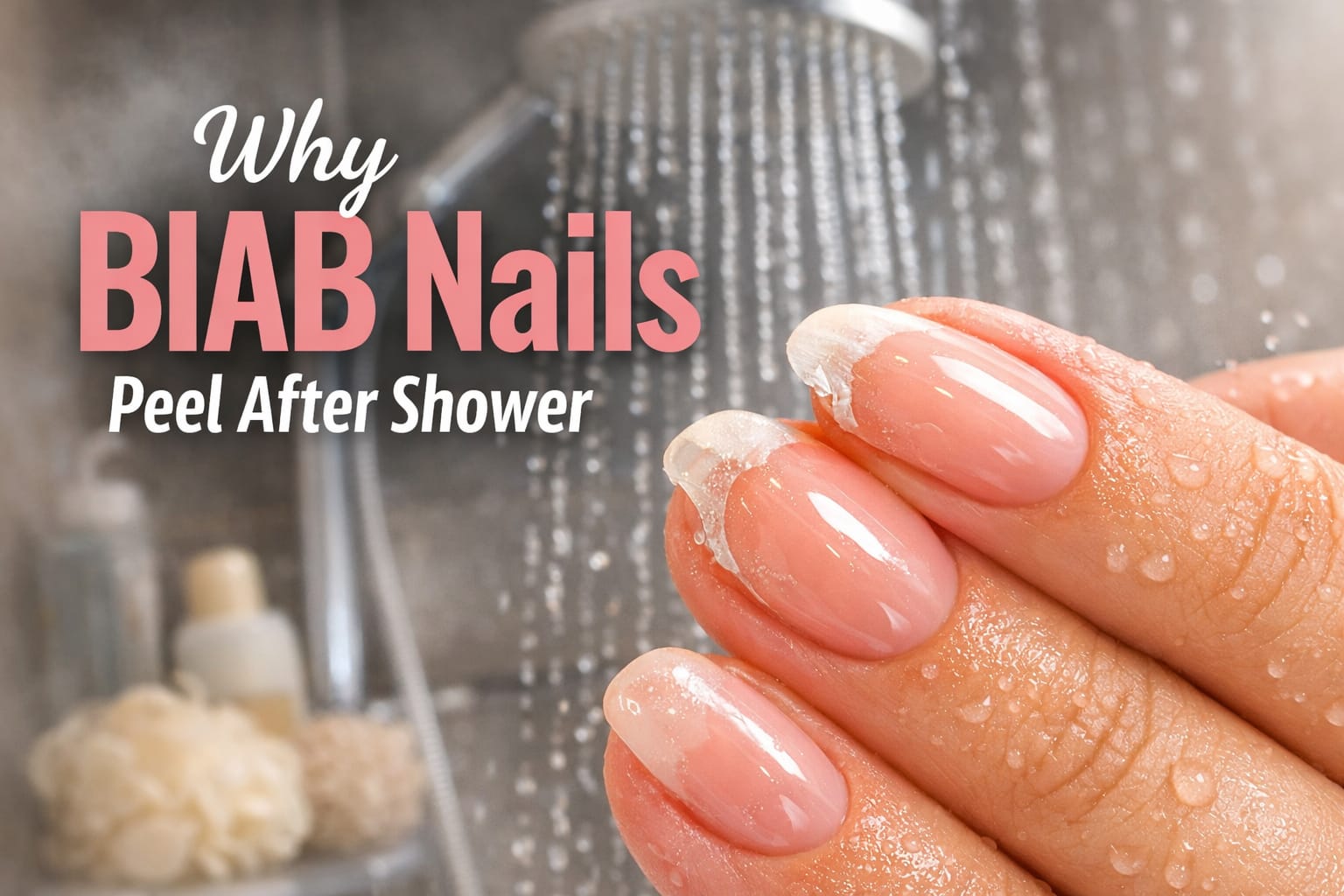
Why BIAB Nails Peel After Shower
Quick Answer
BIAB nails often peel after a shower because warm water, steam, and temporary nail plate swelling expose poor adhesion. If the product was not bonded properly, if the free edge was not sealed, or if the natural nail is overly flexible, the BIAB may begin to lift and peel once it softens slightly from heat and moisture exposure.
Why Showering Triggers BIAB Peeling
A shower does not usually “cause” BIAB to fail all by itself. Instead, it acts like a stress test. Warm water, humidity, and steam affect both the natural nail and the product sitting on top of it. The natural nail can absorb moisture and expand slightly. Then, as it dries again, it contracts. If BIAB was applied over a nail surface that was not fully prepped, or if the bond is already weak in certain areas, that movement can start separating the product from the nail.
This is why some people notice peeling right after bathing, washing dishes, or swimming. The moisture exposure highlights small adhesion problems that were invisible before. Sometimes the BIAB looks fine for days, then starts catching at one corner after a shower. That is not random. It usually means the bond had already started breaking down.
Heat
Hot water and steam can make weak areas more obvious by softening the surface slightly and increasing movement.
Moisture
Natural nails absorb water, expand a little, and then shrink back as they dry. That movement can challenge adhesion.
Weak Bond
If prep, primer, base support, or curing was off, the shower simply exposes the failure point faster.
The Most Common Reasons BIAB Nails Peel After a Shower
1. The Nail Plate Was Not Properly Dehydrated
One of the biggest causes of BIAB peeling is residual moisture or oil on the nail before application. If the natural nail was not properly cleansed and dehydrated, the BIAB may never have formed a reliable bond in the first place. It can look perfect at first, but warm water exposure quickly reveals the weakness.
This happens often when prep is rushed, when the client has naturally oily nail plates, or when hands are washed immediately before application without allowing enough time for the nails to fully dry out.
2. The Cuticle Area or Sidewalls Were Not Cleaned Thoroughly
Invisible cuticle residue can block adhesion. BIAB applied over leftover cuticle film may start lifting in thin sheets or peeling from the edges after a shower. Steam and moisture make these poorly bonded sections easier to separate from the nail.
If you are also dealing with lifting around the growth area, this post may help: Why Builder Gel Lifts at the Cuticle Area.
3. The Free Edge Was Not Properly Sealed
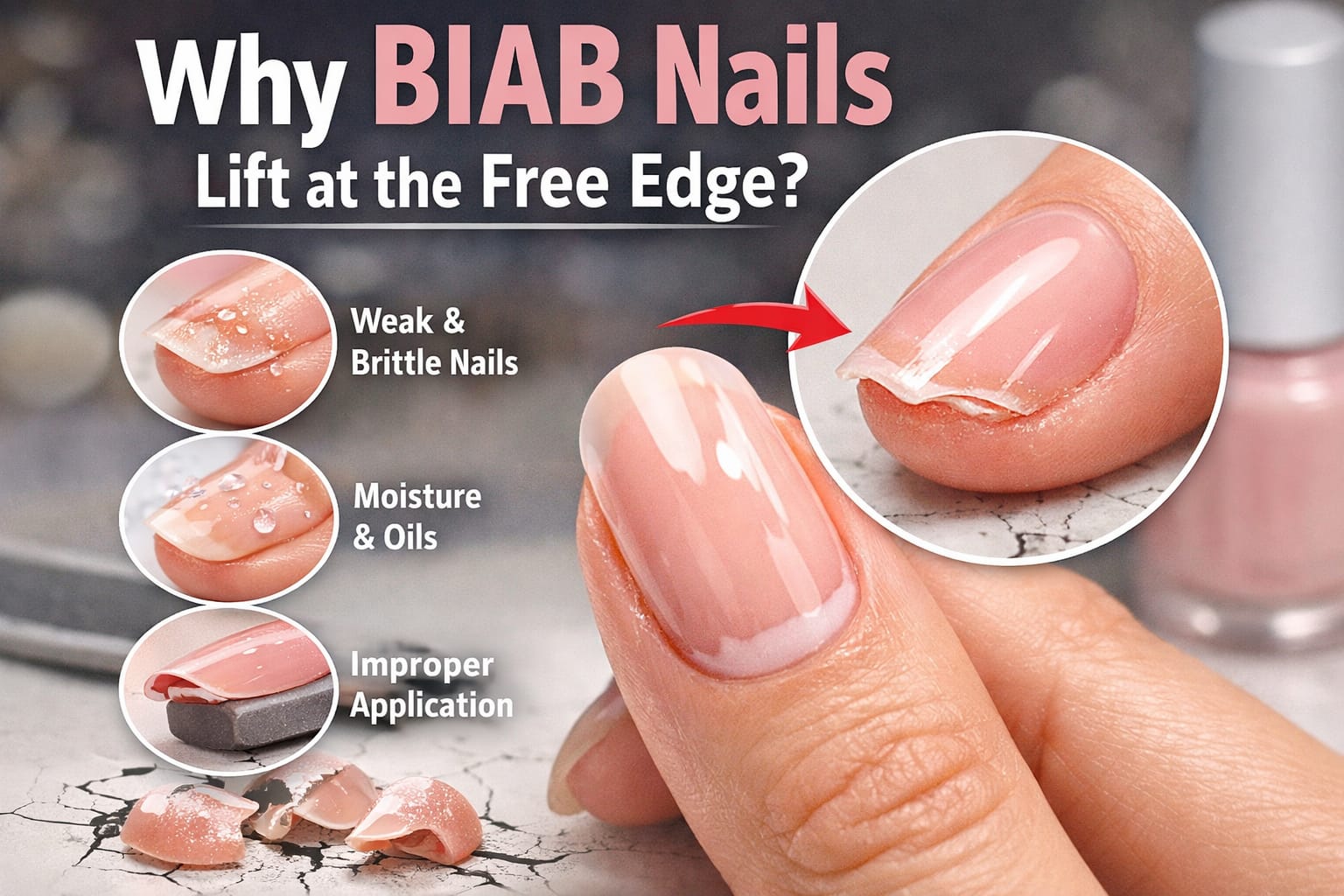
The free edge is one of the highest-risk zones for product separation. If BIAB is not capped correctly, water can repeatedly reach the edge of the enhancement and help lift it over time. Once that edge starts to separate, peeling can travel upward.
This is especially common for short nails, flexible nails, or nails that are frequently exposed to water and friction. If the free edge is your main problem area, read: Why BIAB Nails Lift at the Free Edge.
4. The BIAB Layer Is Too Thin
BIAB needs enough structure to move with the natural nail without cracking or separating. If the layer is too thin, it may not support the nail plate properly. Then, when the natural nail flexes after swelling slightly in water, the product begins to peel away.
Thin application is often mistaken for a “natural” finish, but structure still matters. A natural-looking BIAB overlay should still have appropriate strength in the stress area.
5. The Natural Nails Are Too Flexible
Some natural nails bend more than others. When very flexible nails absorb water, they can become even more reactive. If the BIAB overlay is too rigid for the amount of movement underneath, the bond can weaken and peel. This does not always mean BIAB is the wrong product, but it may mean the application method needs adjustment.
If flexibility is part of the issue, you may also want to read: Why Builder Gel Lifts on Flexible Natural Nails.
6. The Product Was Under-Cured or Improperly Cured
Even a good BIAB product can fail if it is not cured correctly. Wrong lamp compatibility, low lamp output, thick application, or incorrect cure times can all contribute to incomplete curing. A poorly cured product may feel fine at first, but it will not perform as expected. Once exposed to heat and water, the surface or bond can break down much faster.
7. Repeated Water Exposure and Heat Are Weakening the Set
One shower may expose the problem, but repeated long, hot showers can make it worse. Add frequent hand washing, dishwashing, cleaning, or baths, and the nails go through repeated expansion and contraction cycles. That does not guarantee peeling, but it definitely increases the chance when the BIAB application is not ideal.
Tips Card: How to Reduce BIAB Peeling After a Shower
- Avoid very hot showers immediately after a fresh BIAB appointment.
- Wear gloves for cleaning and prolonged water exposure.
- Keep the free edge sealed and avoid using nails as tools.
- Use cuticle oil daily to support nail flexibility and reduce dryness.
- Make sure prep is extremely clean if you are reapplying BIAB.
How to Tell Whether It Is Peeling or Lifting
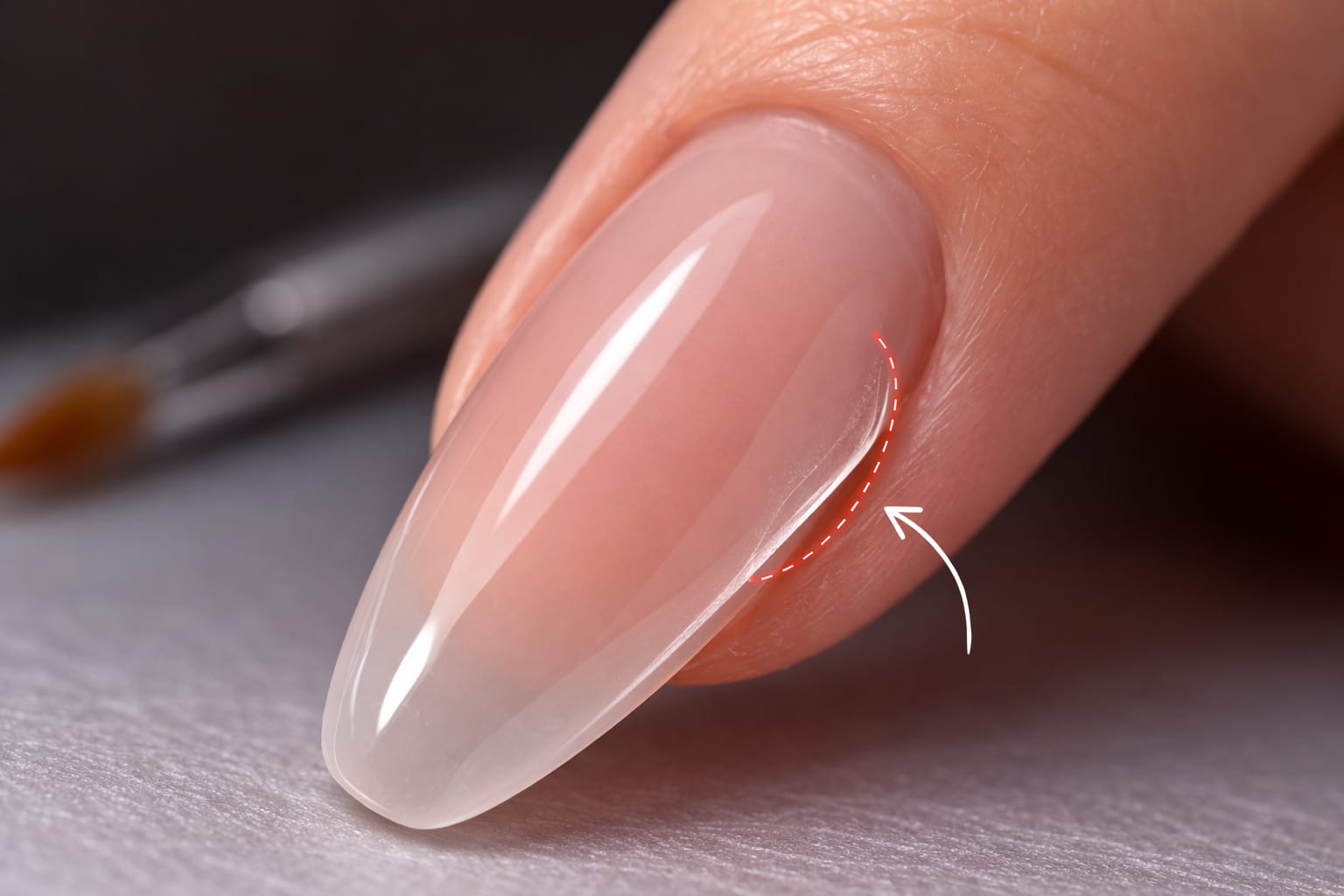
People often use the words peeling and lifting interchangeably, but they are not always the same. Lifting usually starts at an edge or a specific area where the product separates from the nail. Peeling often looks like the product is coming off in a thin sheet or layer.
In BIAB services, peeling after a shower often begins as lifting that later turns into peeling. The water exposure reveals the weak edge, then daily friction makes the loose section peel back more noticeably.
| Issue | What It Looks Like | Common Cause |
|---|---|---|
| Edge lifting | Starts from sidewall or free edge | Poor sealing, weak prep, impact |
| Surface peeling | Thin sheet-like separation | Adhesion failure, under-curing, moisture issues |
| Full product release | Large section comes off quickly | Major prep problem or severe nail flexibility mismatch |
Warning Card
Do not peel loose BIAB off by hand. Once a section starts lifting, pulling it away can remove layers from the natural nail and create even worse retention problems next time.
Can Water Actually Damage BIAB?
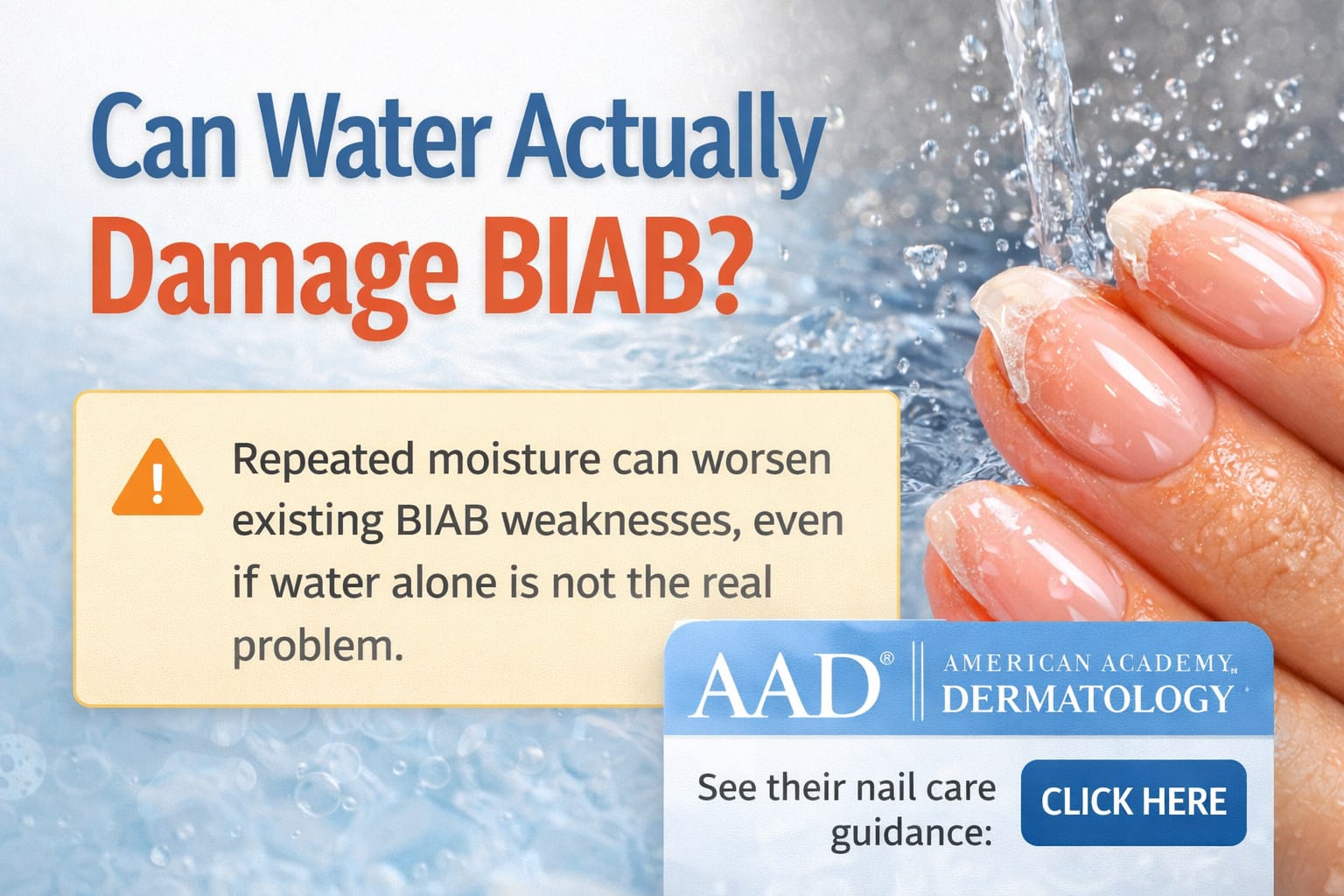 Water alone is not usually the true enemy. A well-applied BIAB overlay should tolerate normal day-to-day exposure, including showers and hand washing.
The real issue is repeated moisture combined with an already imperfect bond. Warm water may not destroy a healthy application, but it will make hidden weaknesses easier to spot.
Water alone is not usually the true enemy. A well-applied BIAB overlay should tolerate normal day-to-day exposure, including showers and hand washing.
The real issue is repeated moisture combined with an already imperfect bond. Warm water may not destroy a healthy application, but it will make hidden weaknesses easier to spot.
Natural nails are known to absorb water, which is one reason consistent moisture exposure can affect service longevity. The American Academy of Dermatology also advises limiting prolonged water exposure and protecting nails during wet work, which supports the idea that moisture can play a role in nail weakness over time. See their nail care guidance here.
Who Is Most Likely to Experience BIAB Peeling After Showering?
Some clients are more prone to this issue than others. If your BIAB seems to peel after every shower, you may fall into one of these higher-risk categories:
Oily Nail Plates
If natural oils return quickly, BIAB may struggle to maintain strong adhesion without very careful prep.
Very Flexible Nails
Flexible nails move more during moisture exposure, increasing stress under the overlay.
Frequent Wet Work
Cleaning, washing, bathing children, and dishwashing can increase repeated water exposure significantly.
Thin Application
If the structure is too flat or too thin, the BIAB may not handle normal flexing and daily wear well.
How to Prevent BIAB Peeling After a Shower
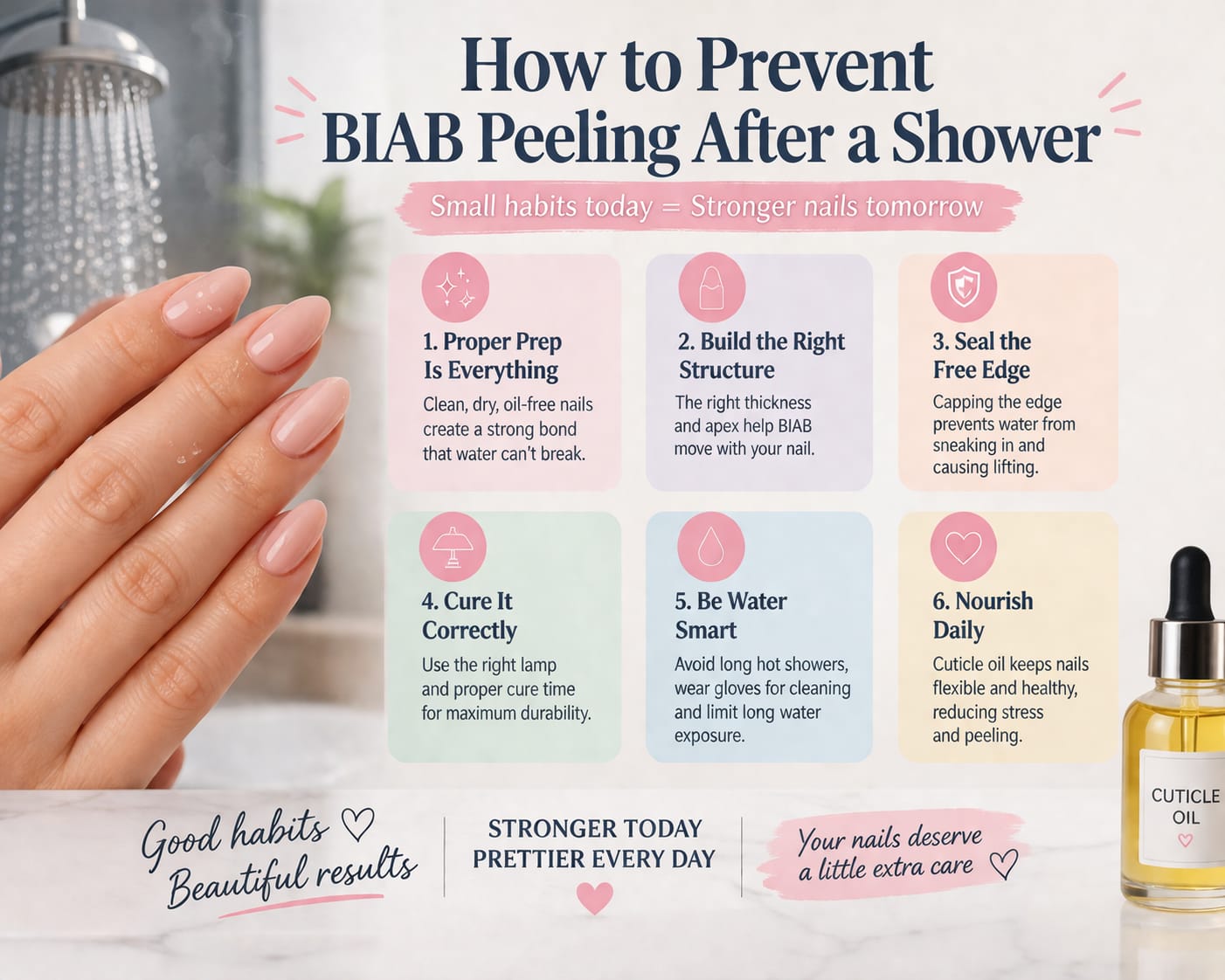 Prevention is always easier than repair. If your BIAB tends to peel after showering, the best solution is to improve retention before the problem starts.
That means looking at prep, product placement, structure, curing, and aftercare together rather than blaming water alone.
Prevention is always easier than repair. If your BIAB tends to peel after showering, the best solution is to improve retention before the problem starts.
That means looking at prep, product placement, structure, curing, and aftercare together rather than blaming water alone.
| Prevention Step | Why It Matters |
|---|---|
| Thorough prep | Removes oils, moisture, and cuticle residue that block adhesion |
| Correct structure | Helps BIAB move with the nail instead of separating |
| Free edge sealing | Reduces early edge lifting and water access |
| Proper curing | Ensures the product reaches intended performance |
| Water-aware aftercare | Helps reduce repeated stress from moisture and heat |
For clients who regularly struggle with retention, even small changes can make a big difference. Better prep, a slightly stronger apex, careful capping, and daily cuticle oil can improve wear much more than people expect.
Pro Tip Card
If BIAB always peels after a shower on the same nails, do not just reapply the same way. Look at those nails individually. They may need extra prep, different product placement, slightly more structure, or closer attention to the free edge.
What to Do If Your BIAB Has Already Started Peeling
If the peeling is minor and limited to a tiny edge, avoid picking at it. Book a repair or rebalance as soon as possible. If the BIAB is lifting enough to catch hair, fabric, or dirt, it should be professionally removed or corrected. Leaving it in place for too long can lead to more lifting, moisture trapping, or damage to the natural nail.
If the problem keeps happening appointment after appointment, it is worth reviewing:
- prep steps and nail plate cleansing
- cuticle removal quality
- whether the BIAB is too thin
- lamp compatibility and cure time
- free edge sealing technique
- how often the nails are exposed to long or hot water contact
Final Thoughts
BIAB nails peeling after a shower can feel frustrating, especially when the application looked perfect at first. But in most cases, the shower is not the real cause — it is just the moment the weakness becomes visible. Moisture, heat, and steam temporarily stress the natural nail and the product bond. If prep was incomplete, the structure was too thin, the free edge was not sealed, or the natural nail flexes heavily, peeling can begin soon after.
The good news is that this issue is usually preventable. Better prep, smarter structure, careful curing, and more protective aftercare can dramatically improve BIAB retention. So if your BIAB always seems to peel after you shower, do not assume BIAB simply “doesn’t work” for you. More often, the application method just needs to be adjusted to suit your nails better.