Builder Gel Cracking: Why It Happens and How to Prevent It
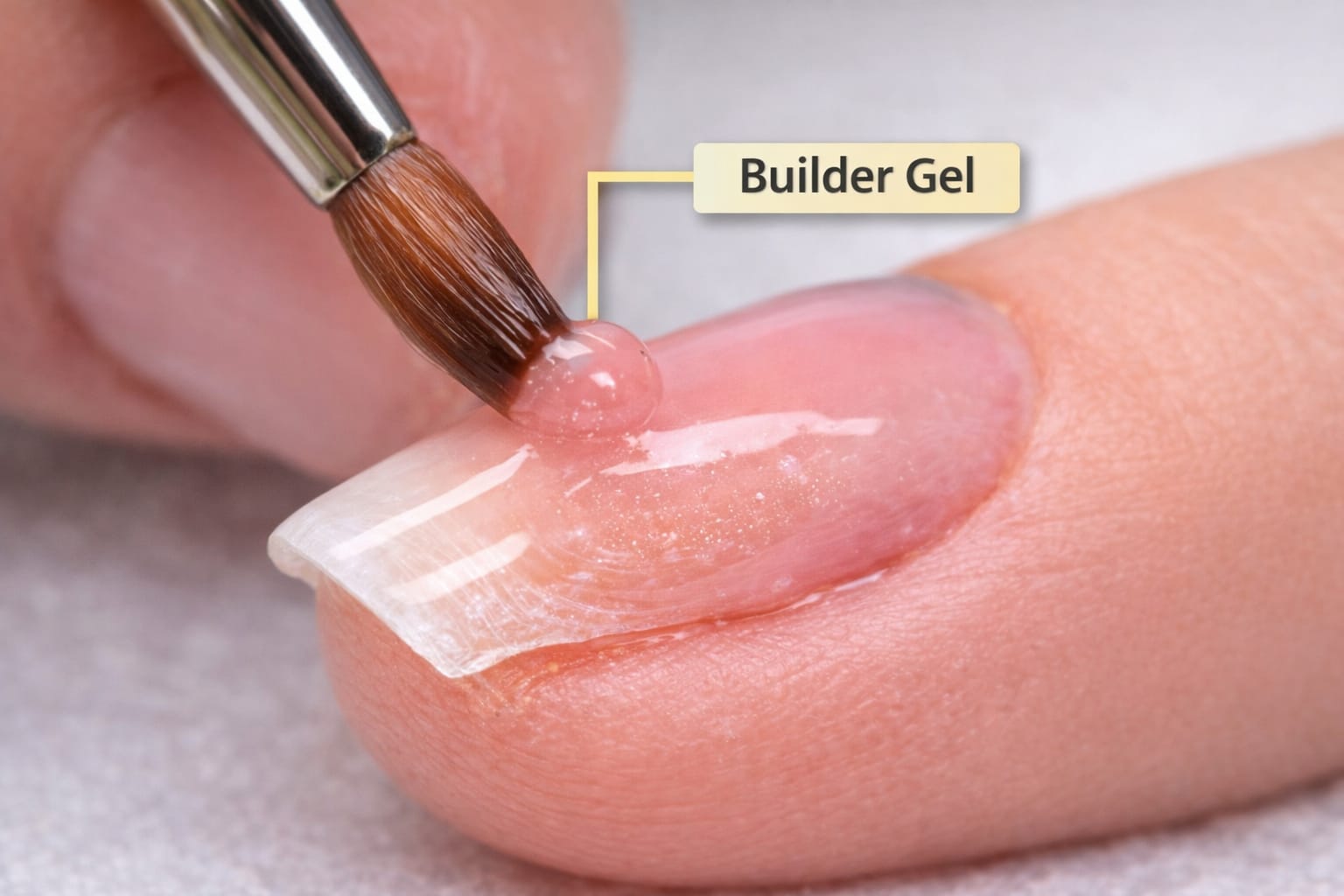
Builder gel is often chosen for clients who need extra strength, structure, and durability. However, one of the most frustrating issues nail professionals face is builder gel cracking. These cracks may appear days or weeks after application and are often mistaken for product failure.
In reality, cracking is usually not caused by poor-quality builder gel. It is almost always the result of structural imbalance, incorrect application techniques, or a mismatch between the product and the natural nail’s flexibility. Understanding why builder gel cracks is the first step toward preventing it.
What Does “Builder Gel Cracking” Actually Mean?
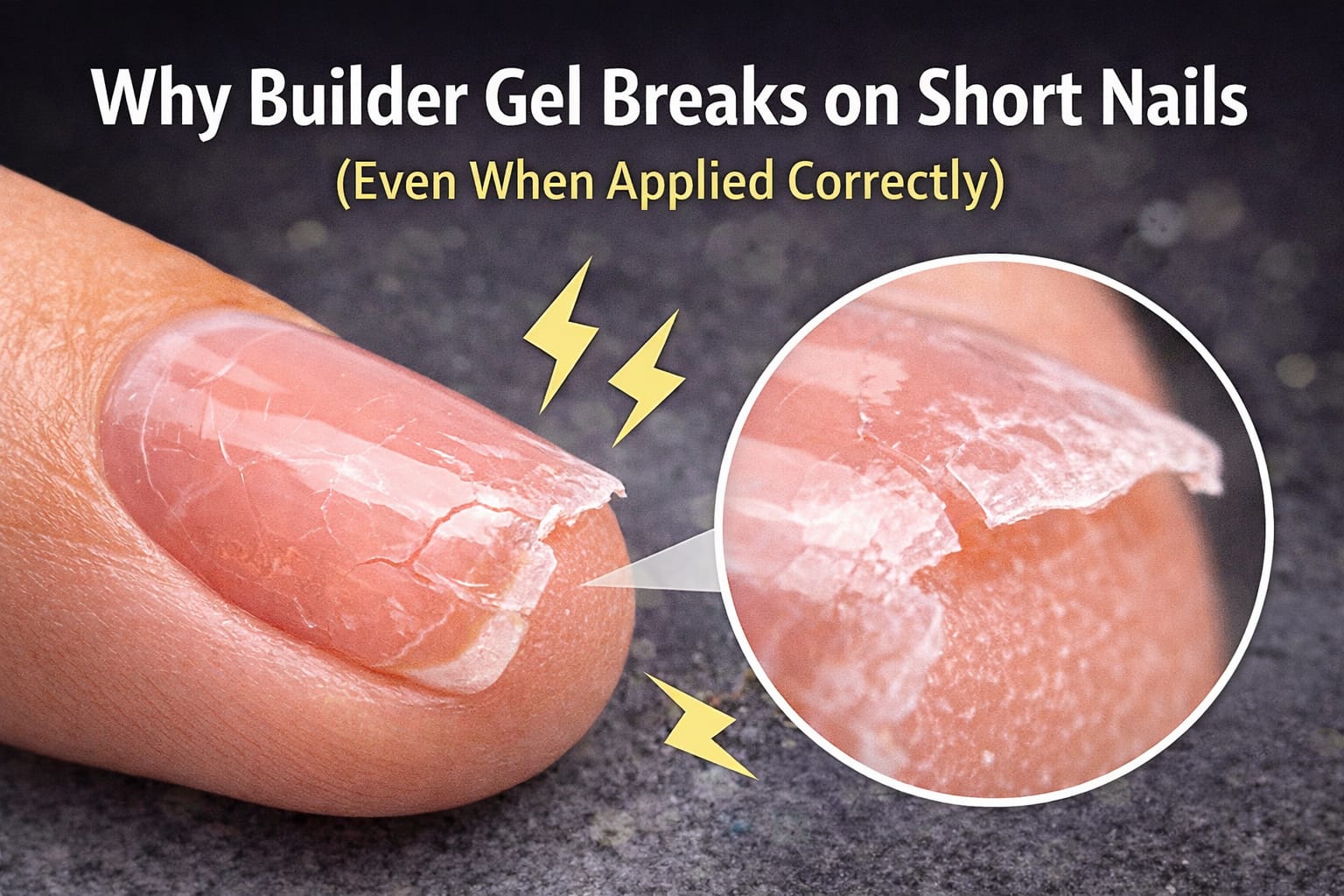
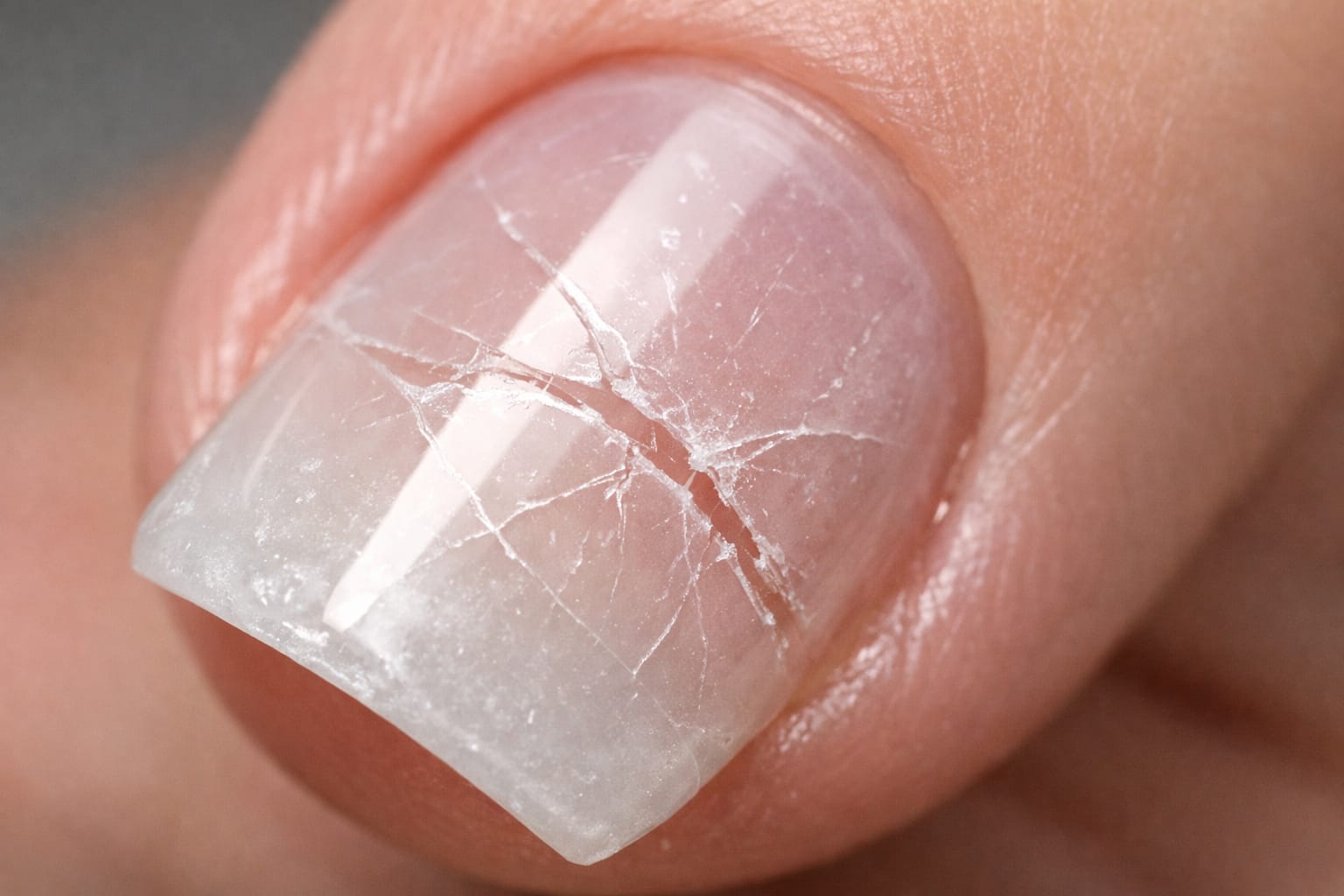
Builder gel cracking refers to visible fractures that form within the gel structure. These cracks can be hairline-thin or clearly visible and often develop around the stress area of the nail.
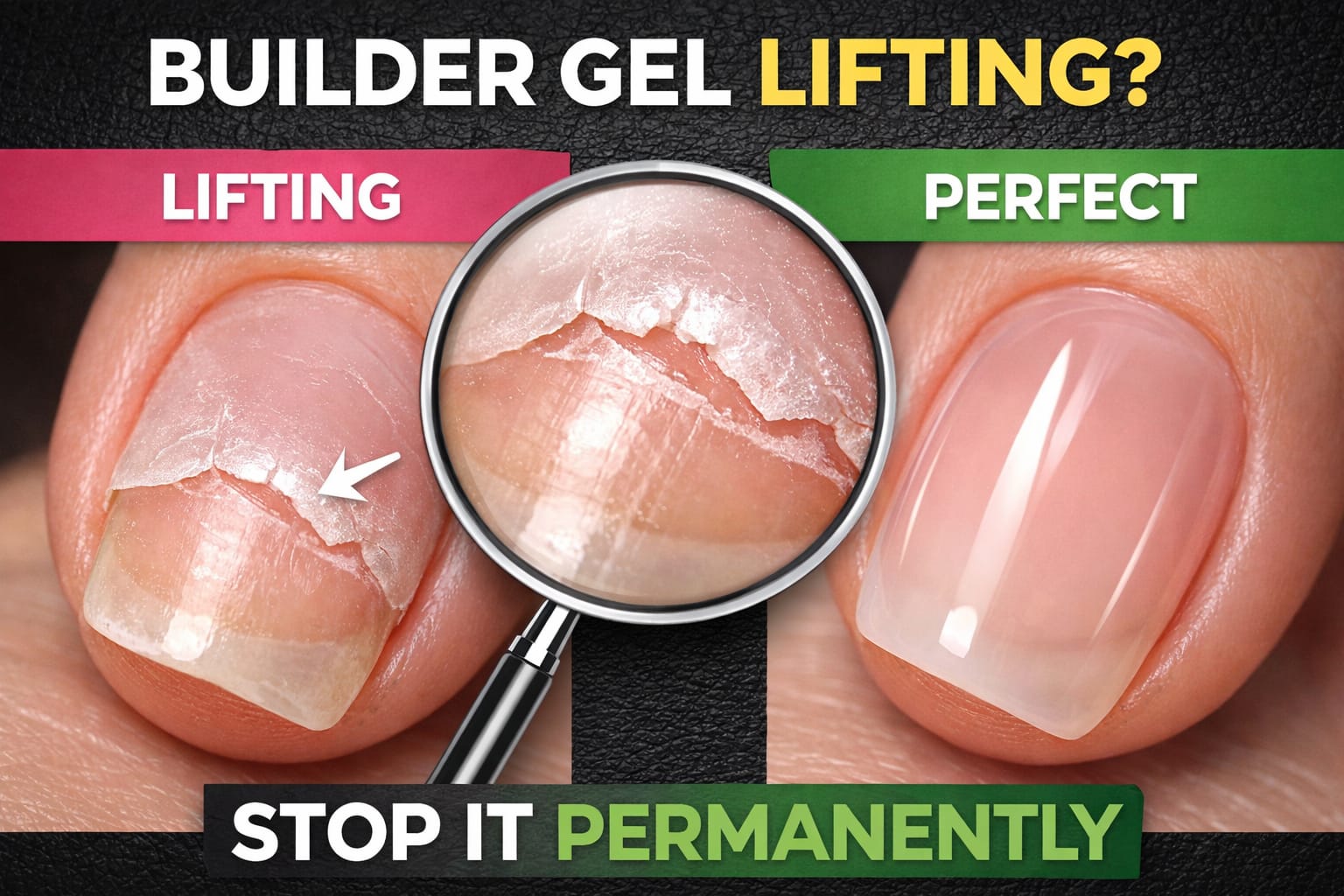
Unlike lifting, which starts at the cuticle or sidewalls, cracking occurs within the body of the gel. This makes it particularly dangerous because moisture and bacteria can enter through micro-fractures without obvious lifting at first.
Cracking is often confused with builder gel lifting, but these issues develop differently and require separate solutions.
The Most Common Reasons Builder Gel Cracks
The Builder Gel Is Too Rigid for the Natural Nail
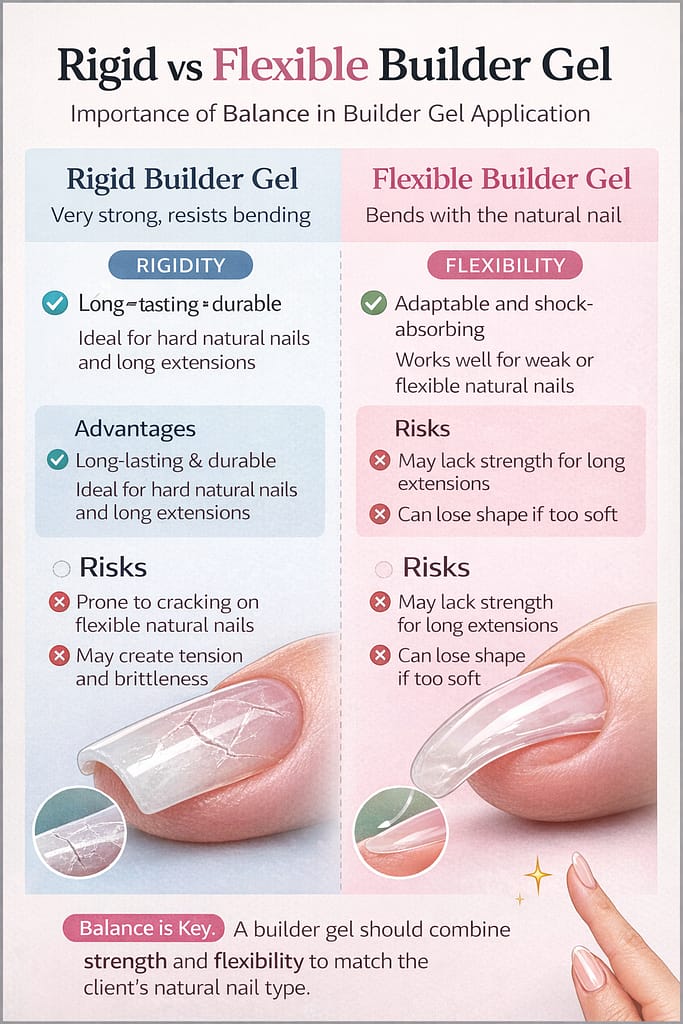
Not all natural nails have the same flexibility. When a very rigid builder gel is applied to a naturally flexible nail, the nail bends under pressure while the gel resists movement. Over time, this tension causes cracks.
Strength without flexibility creates brittleness. Builder gel must be strong and able to move slightly with the natural nail.
Incorrect Apex and Stress Point Placement
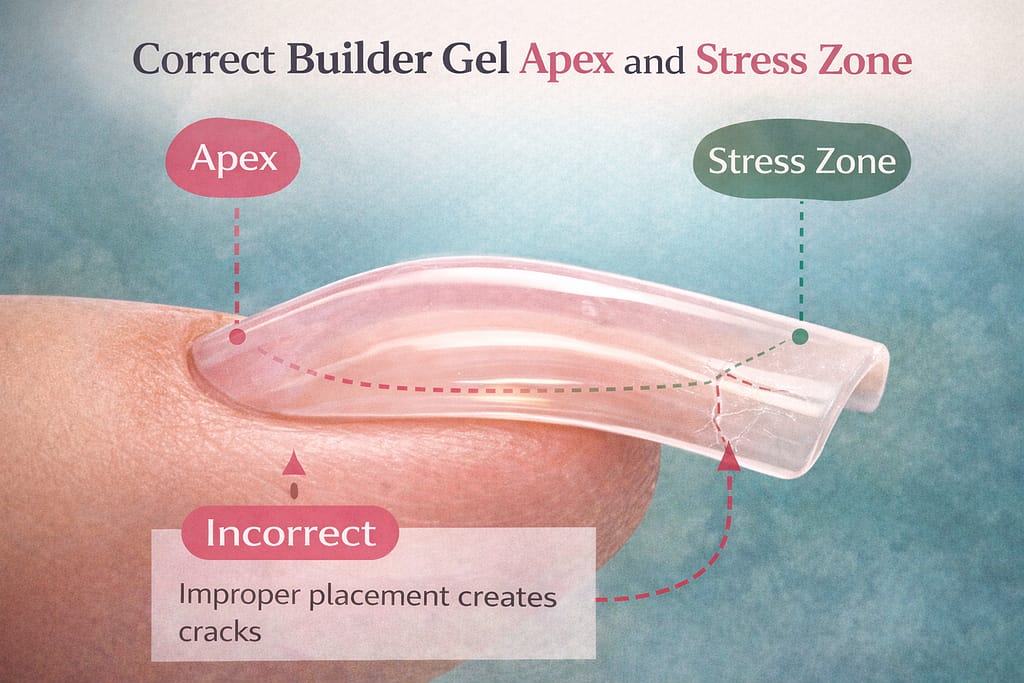
The apex is not just aesthetic—it is structural. When the apex is placed too far forward, too flat, or not built high enough, pressure is distributed unevenly across the nail.
This causes repeated stress in weak areas, eventually leading to cracking, especially during daily activities like typing or opening objects.
Over-Curing or Incorrect Lamp Power
Over-curing can make builder gel excessively rigid. Using a lamp that is too strong, curing for longer than recommended, or using an incompatible lamp can alter the gel’s internal structure.
On the other hand, under-curing weakens the gel, making it prone to internal fractures under pressure.
Builder Gel Applied Too Thin or Too Thick
Applying builder gel too thin removes its shock-absorbing function. Applying it too thick increases rigidity and internal tension.
Both extremes disrupt the balance needed for a durable structure. Builder gel must be applied with intention, especially in the stress zone.
Nail Plate Preparation Mistakes
Improper dehydration, aggressive filing, or uneven nail plate prep can create weak adhesion zones. When the gel does not bond evenly to the nail plate, movement occurs underneath the structure, leading to cracking rather than lifting.
How to Prevent Builder Gel Cracking
Preventing cracks requires a structural mindset, not just neat application.
- Choose a builder gel with balanced flexibility for the client’s nail type
- Build a proper apex aligned with the stress point
- Use the correct curing lamp and follow manufacturer guidelines
- Maintain consistent thickness, especially in high-stress areas
- Prep the nail gently and evenly without over-filing
Small adjustments in structure make a major difference in long-term wear.
When Cracking Is Not an Application Problem
Sometimes cracking is influenced by external factors:
- Clients with extremely flexible or brittle nails
- Repetitive mechanical stress (typing, manual work)
- Sudden temperature changes
In these cases, adjusting product choice or recommending shorter lengths may be more effective than changing application technique alone.
Final Thoughts
Builder gel cracking is rarely random. It is a signal that something in the structure, flexibility, or stress distribution needs correction.
When builder gel is treated as a structural system rather than just a strengthening layer, cracking becomes a preventable issue—not an unavoidable one.