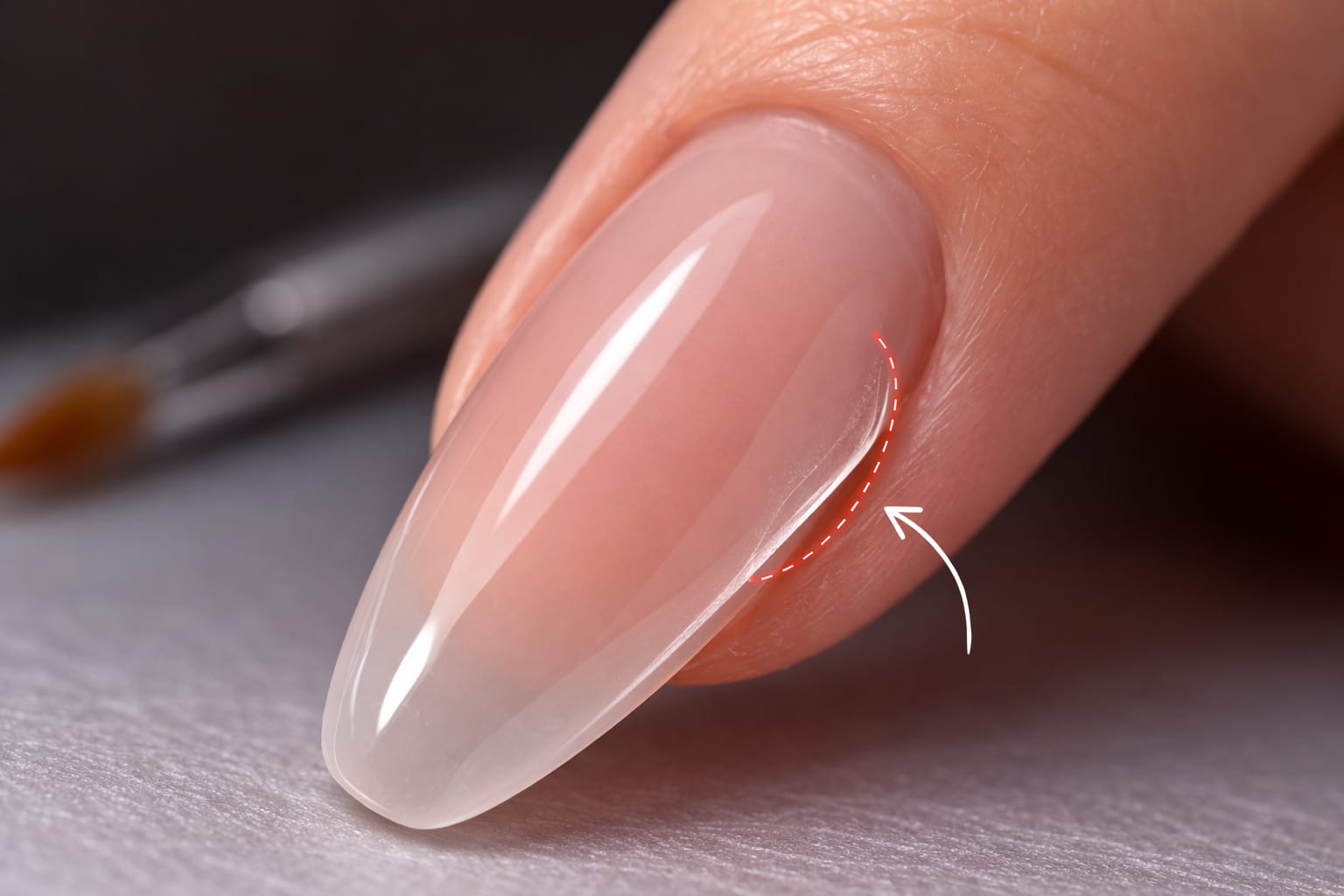
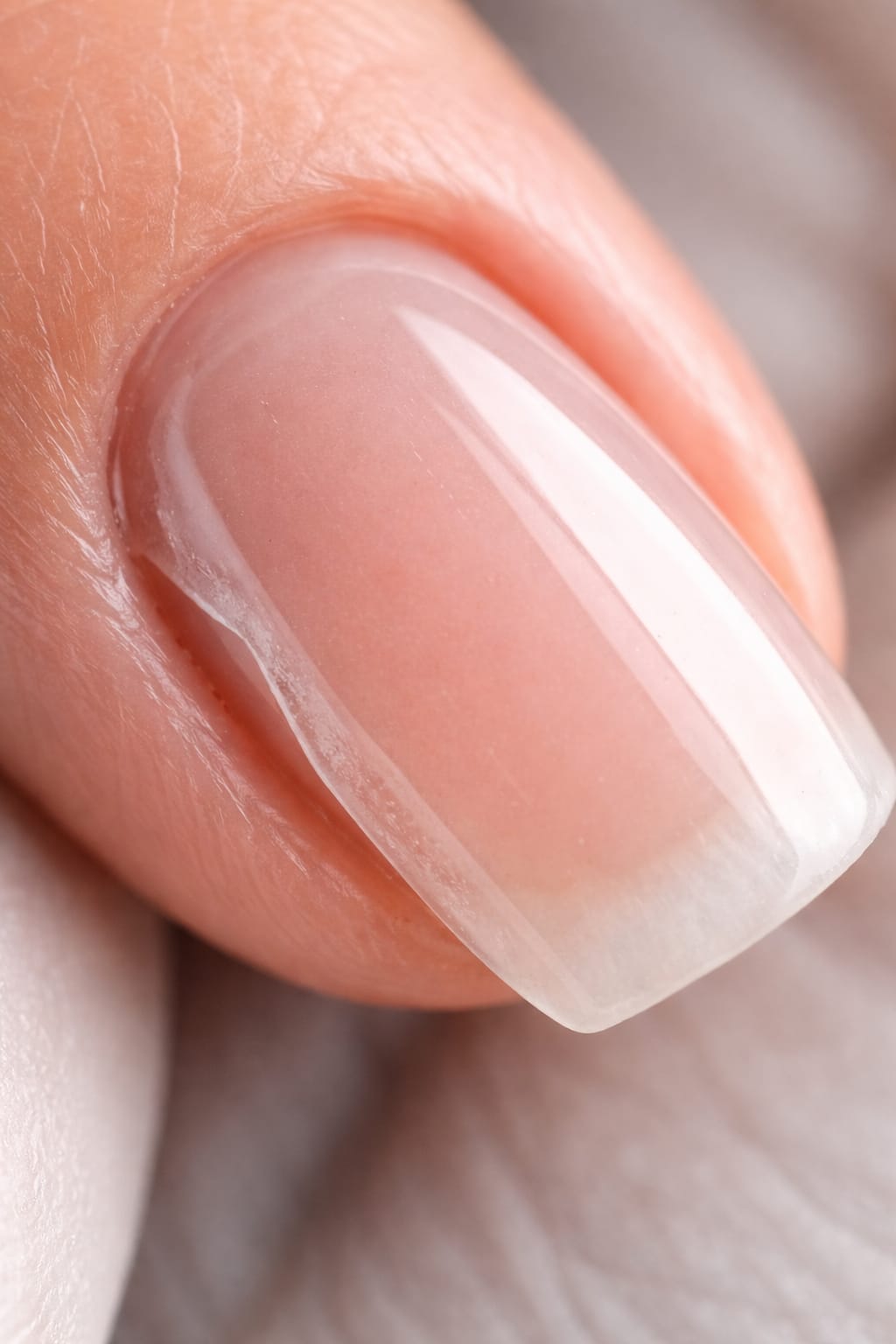
Why Builder Gel Lifts at the Sidewalls
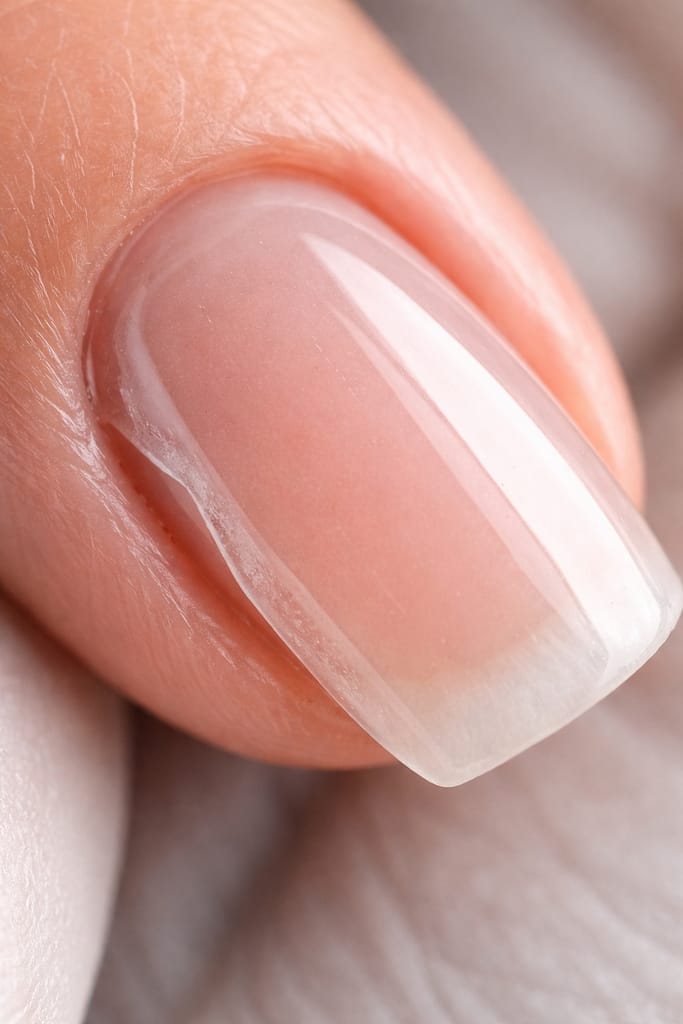
Sidewall lifting is one of the most frustrating retention issues in builder gel services.
Unlike cuticle lifting, which often relates to growth and base stress, sidewall lifting usually signals imbalance in lateral support, product placement, or structural design.
It rarely happens randomly.
When builder gel lifts at the sidewalls, the nail system is responding to directional pressure that was not properly reinforced during application.
Understanding why this happens requires looking at how the sidewalls function mechanically — not just cosmetically.
What Are the Sidewalls and Why Do They Matter?
The sidewalls are the lateral boundaries of the nail plate.
They guide the shape of the nail and play a crucial role in maintaining structural integrity. When builder gel is applied, these areas must act as stabilizers.
If the structure lacks proper lateral reinforcement, the overlay becomes vulnerable to horizontal pressure.
Most lifting at the sidewalls begins microscopically.
It may not be visible for days. But once lateral stress exceeds support, separation starts at the edges.
Lateral Pressure Is Different From Base Stress

Many technicians focus primarily on apex placement and cuticle precision. These are important. But sidewall lifting is usually caused by sideways pressure rather than forward growth.
Sources of lateral pressure include:
- Typing
- Gripping objects
- Opening containers
- Sleeping with hands curled
- Repeated thumb use
Unlike forward stress from nail growth, lateral pressure attacks the edges of the structure.
If the builder gel does not extend and seal properly along the sidewalls, these forces gradually break the bond.
Incomplete Product Coverage Along the Sidewalls
One of the most common causes of sidewall lifting is incomplete coverage.
This happens when:
- Product is not brushed close enough to the side edges
- The sidewalls are slightly under-filled
- The brush angle prevents full contact
Even a small uncoated margin can create a weak point.
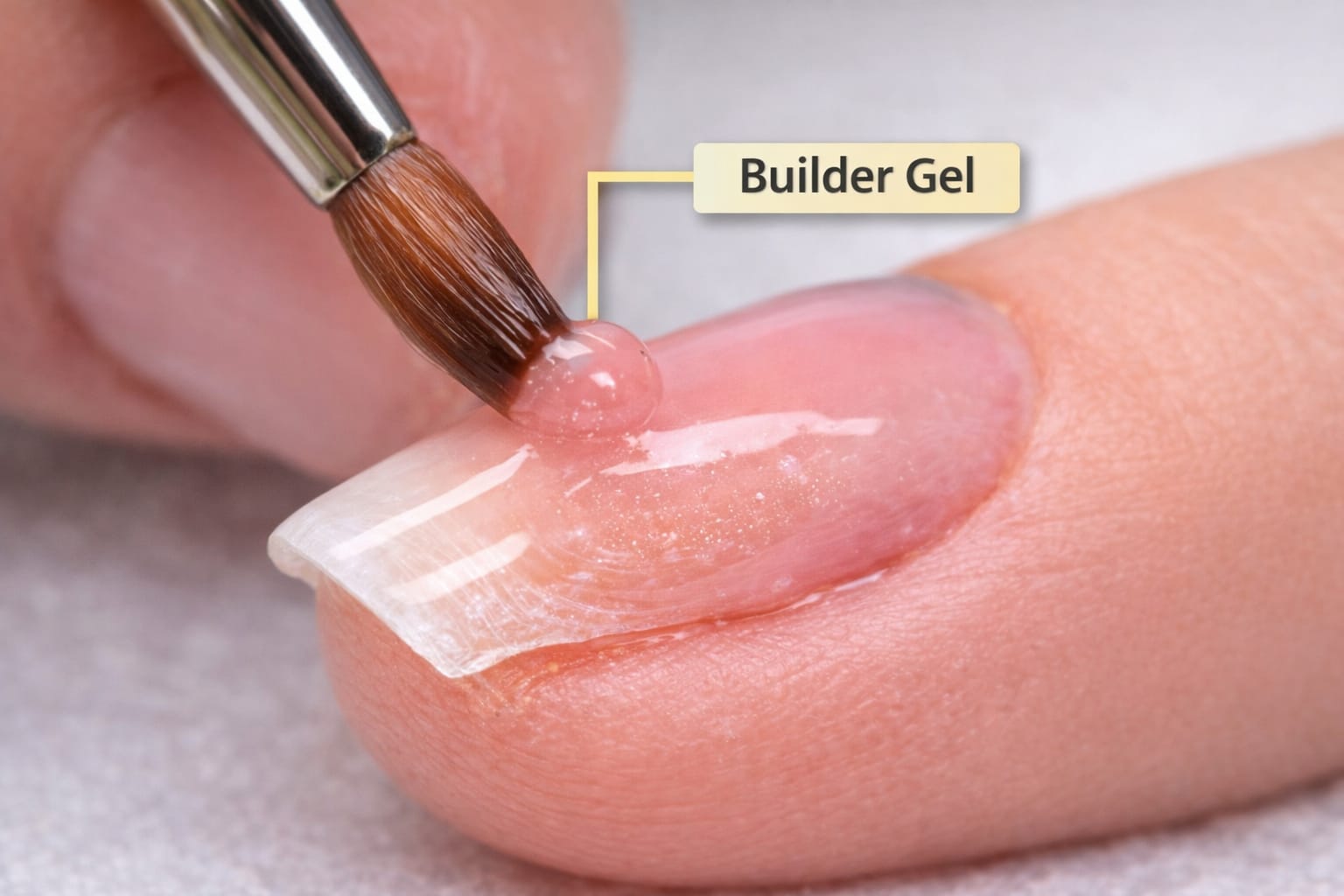
Builder gel must encapsulate the lateral edges smoothly without flooding the skin.
Too little product leaves exposure.
Too much creates lifting through skin contact.
Precision is critical.
Filing Errors That Thin the Side Structure
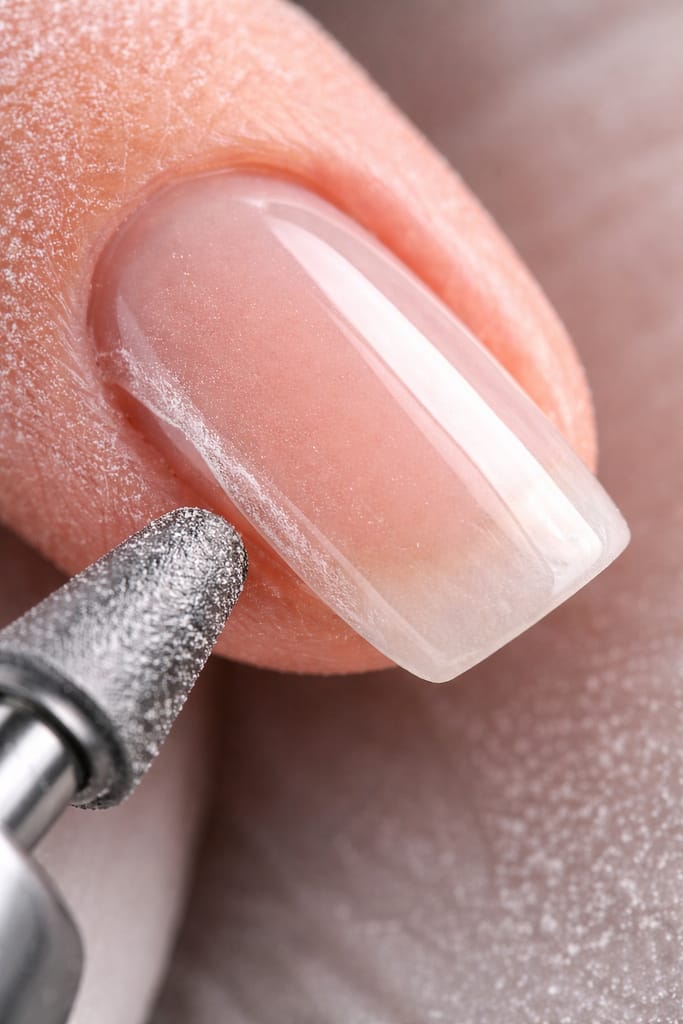
Refinement can unintentionally weaken the sidewalls.
Aggressive filing or over-shaping can remove structural mass from the lateral edges. When that happens, the nail loses reinforcement where it needs it most.
A nail may look perfectly slim and symmetrical — but structurally under-supported.
After several days of lateral pressure, lifting begins at the thinned edge.
Sidewall lifting is often a refinement issue rather than a prep issue.
Natural Nail Curvature and Product Tension
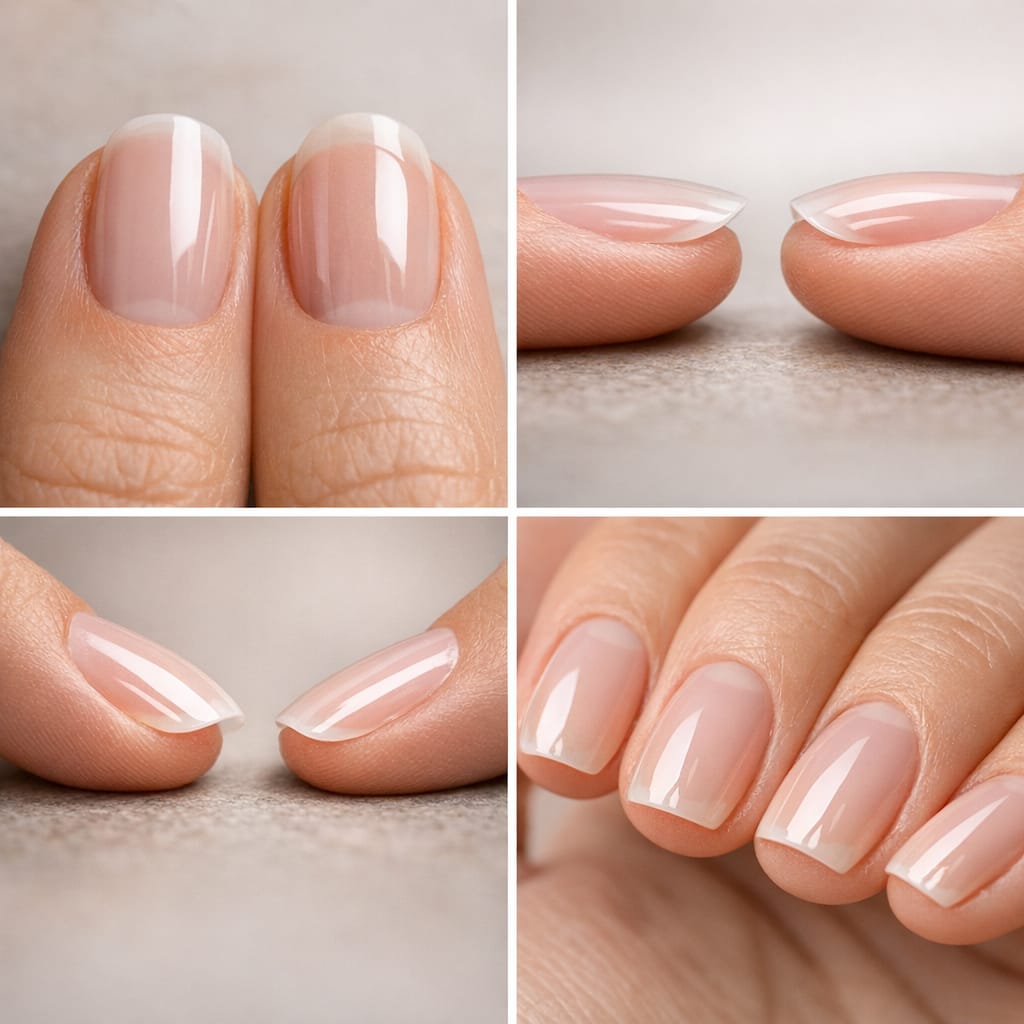
Every natural nail has a unique curvature.
If the builder gel does not follow that natural curvature, tension develops at the edges.
For example:
- Applying a flat structure on a curved nail plate
- Forcing a dramatic shape onto a narrow nail
- Ignoring asymmetry between left and right sidewalls
When product tension conflicts with the nail’s natural architecture, stress accumulates at the sides.
Eventually, the weakest adhesion point — often the sidewall — begins to separate.
Over-Curing and Rigidity Imbalance
Another hidden cause of sidewall lifting is rigidity imbalance.
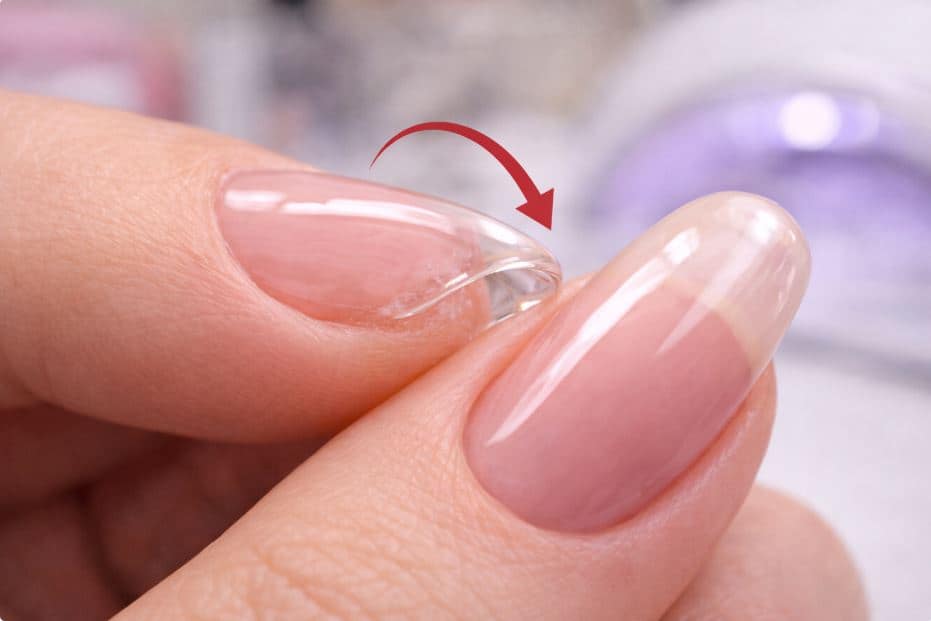
If a builder gel cures excessively rigid relative to the flexibility of the natural nail, movement concentrates at the edges.
The center may remain stable.
The sides absorb the flex.
Over time, this mismatch leads to micro-lifting at the sidewalls.
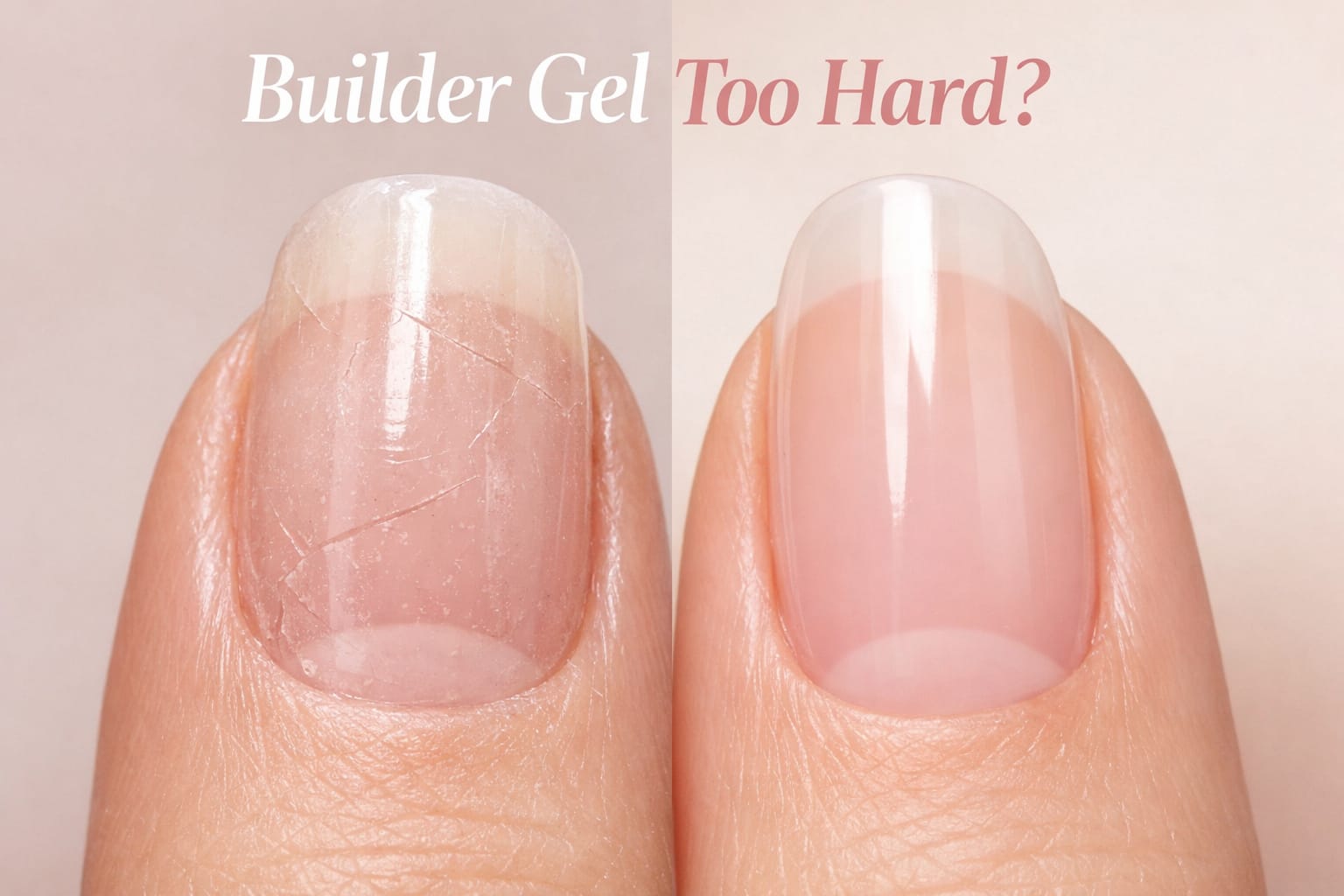
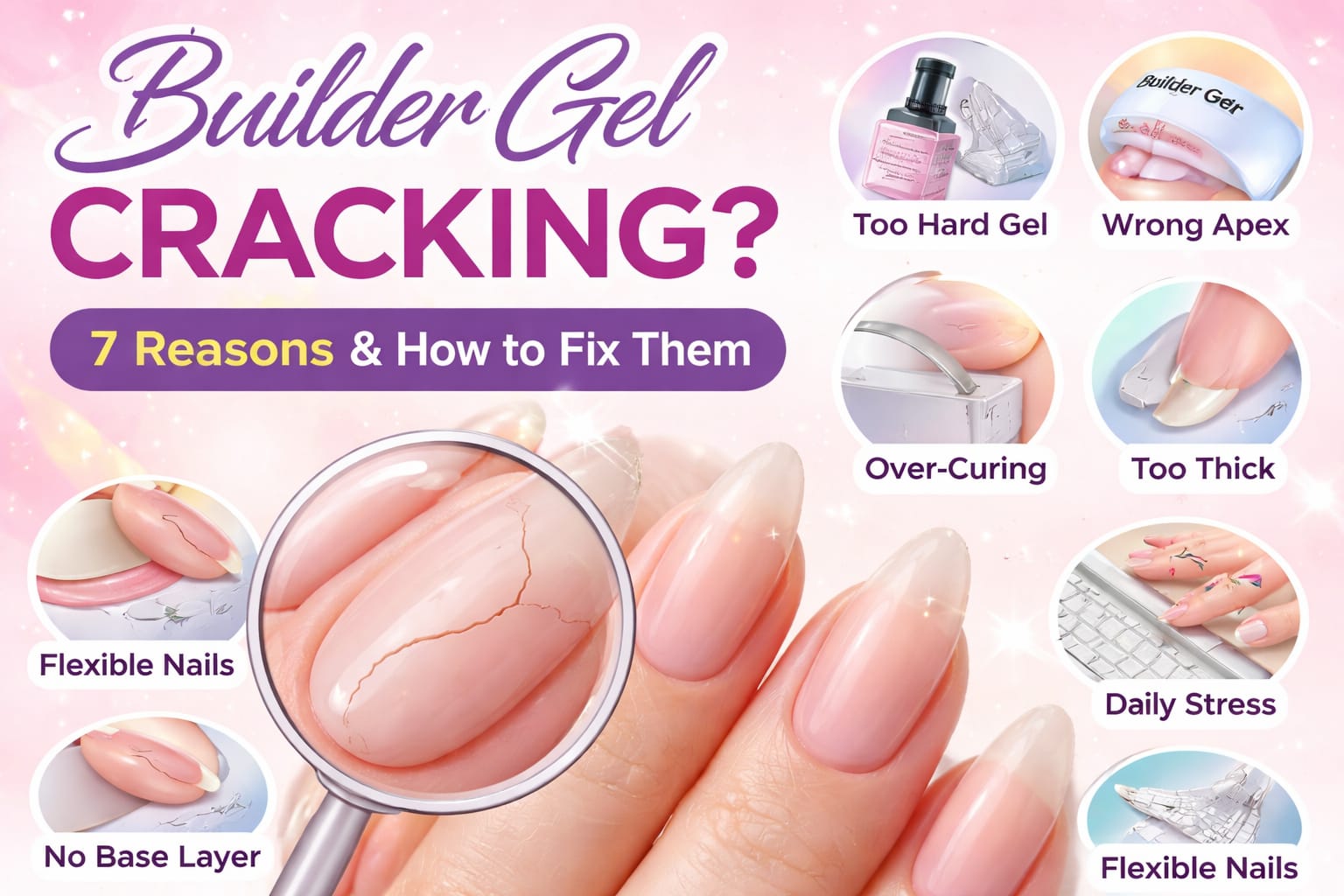
In some cases, this rigidity imbalance can also contribute to cracking patterns, especially when flexibility is limited.
The nail system must distribute stress evenly across its entire width.
Improper Lamp Positioning
Sidewalls are especially vulnerable to uneven curing.
If fingers are tilted or overlapping inside the lamp:
- One side may cure fully
- The other may cure partially
Under-cured gel may feel firm but lack full polymer stability.
Weeks later, that weaker side detaches first.
This is especially common with thumbs, where positioning errors are frequent.
The Role of Nail Length
Longer nails amplify lateral pressure.
As length increases:
- Leverage increases
- Side torque increases
- Structural demand increases
If side reinforcement is not adjusted for length, lifting becomes more likely.
A structure designed for short overlays may not withstand medium or long extensions without added lateral support.
How to Prevent Builder Gel Lifting at the Sidewalls
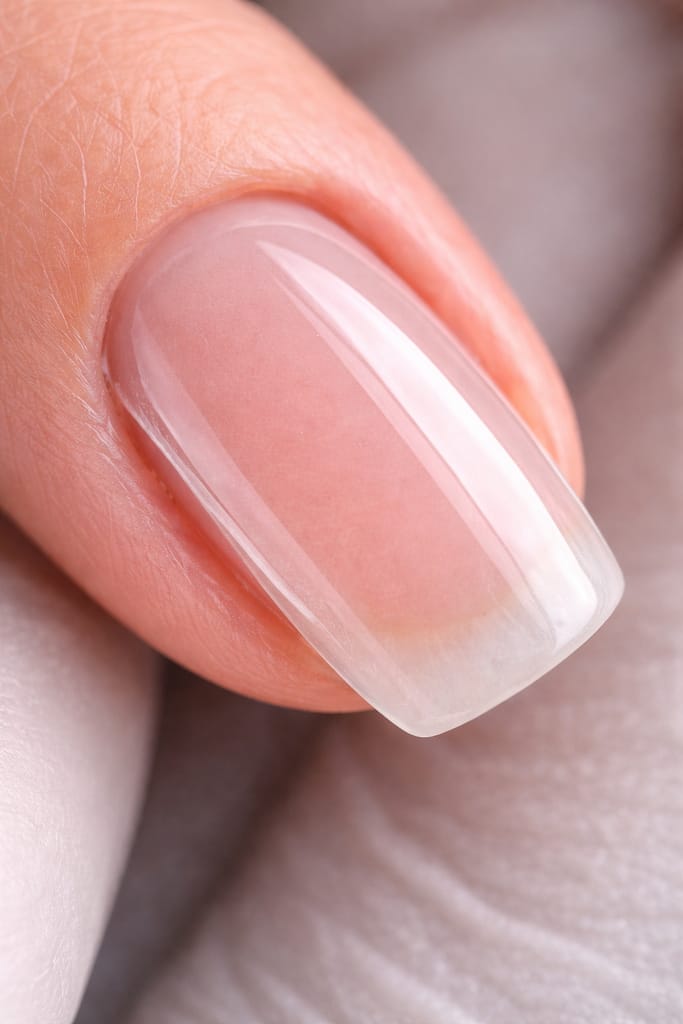
Prevention requires attention to lateral architecture.
Key principles:
- Ensure complete but controlled product coverage along both sidewalls.
- Avoid over-filing the lateral structure during refinement.
- Match the builder gel’s flexibility to the client’s nail type.
- Confirm correct hand placement in the lamp for even curing.
- Adjust side reinforcement based on nail length.
The sidewalls are not decorative edges. They are structural stabilizers.
When lateral support is balanced, retention improves significantly.
Sidewall Lifting vs Other Lifting Patterns
Recognizing the difference between lifting patterns improves troubleshooting accuracy.
- Cuticle lifting often relates to growth and base tension.
- Week two lifting frequently signals delayed structural imbalance.
- Sidewall lifting primarily indicates lateral stress or structural thinning.
Each pattern points to a different mechanical origin.
Correct diagnosis prevents repetitive mistakes.
Final Thoughts
Builder gel lifting at the sidewalls is rarely about dust or simple prep errors.
It is usually a structural response to lateral pressure, incomplete reinforcement, or imbalance between rigidity and flexibility.
When the nail is engineered to distribute stress evenly — forward and sideways — retention improves dramatically.
Sidewalls deserve the same attention as the apex and cuticle.
Structure is not only about shape.
It is about stability in every direction.