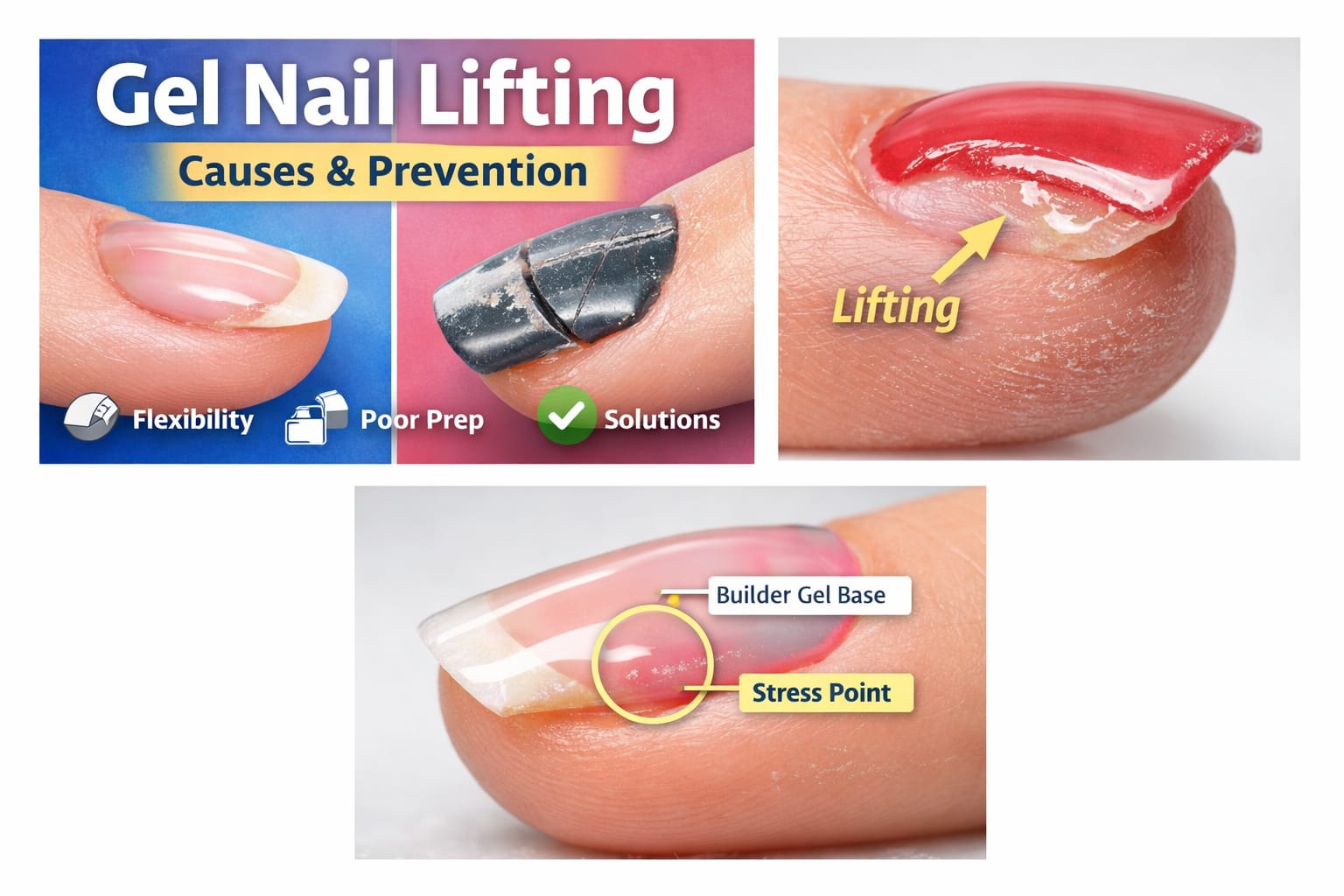
Why Builder Gel Lifts at the Cuticle Area
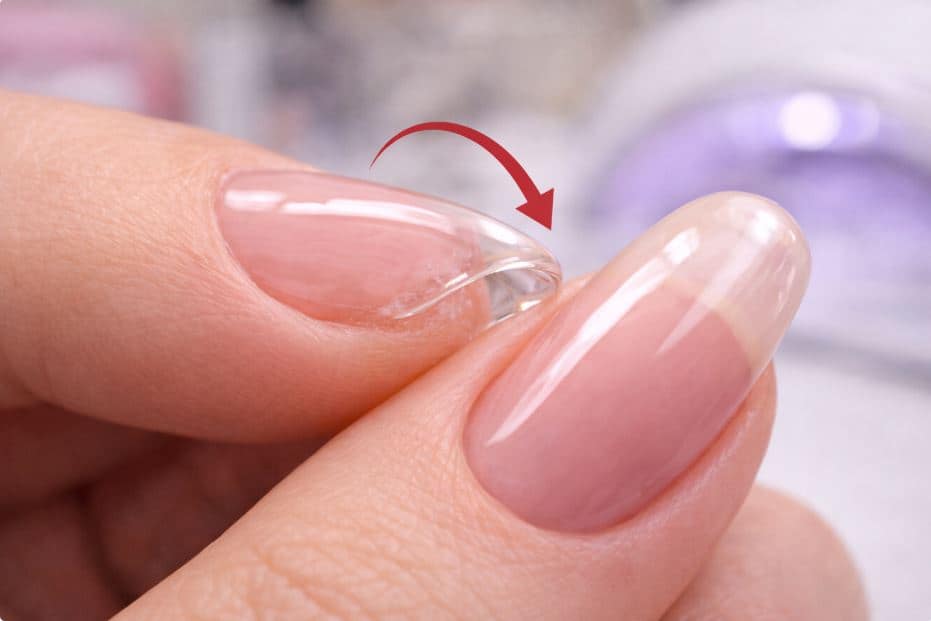
Builder gel lifting is frustrating in any form. But when it begins at the cuticle area, it becomes even more concerning. Clients notice it quickly. The regrowth area looks compromised. And in many cases, the lifting starts far earlier than expected.
What makes cuticle lifting different is that it rarely begins as a dramatic separation. It usually starts as a subtle shadow, a faint air line, or a barely visible pocket near the base. Within days, that small instability spreads. For a broader explanation of how adhesion failure develops over time, you can read our detailed guide on why gel nails lift.
To understand why builder gel lifts at the cuticle area, we need to look beyond surface explanations. This is not simply a “prep mistake.” It is a combination of adhesion mechanics, structural design, product behavior, and natural nail movement.
The cuticle zone is the most delicate part of the entire nail system. And it demands precision.
The Cuticle Area Is the Most Sensitive Adhesion Zone
The base of the nail plate is thinner, more flexible, and constantly changing due to growth. Unlike the stress area or free edge, the cuticle zone does not remain static.
Every day, the natural nail grows forward from the matrix. That growth subtly shifts tension along the base. If builder gel is applied too rigidly or too thickly in this area, it cannot adapt to that forward movement.
Additionally, the cuticle area often retains microscopic traces of:
- Non-living tissue
- Residual oils
- Invisible cuticle film
- Dehydrated or over-filed surface patches
Even when prep appears clean, the adhesion layer here is more fragile than other zones.
Micro-Movement at the Nail Base
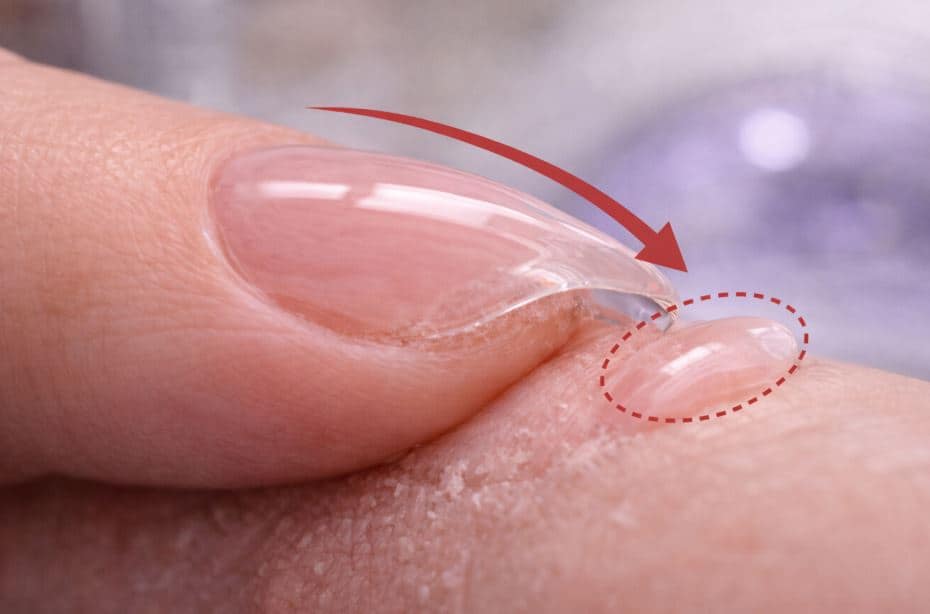
One of the most overlooked causes of lifting at the cuticle is micro-movement.
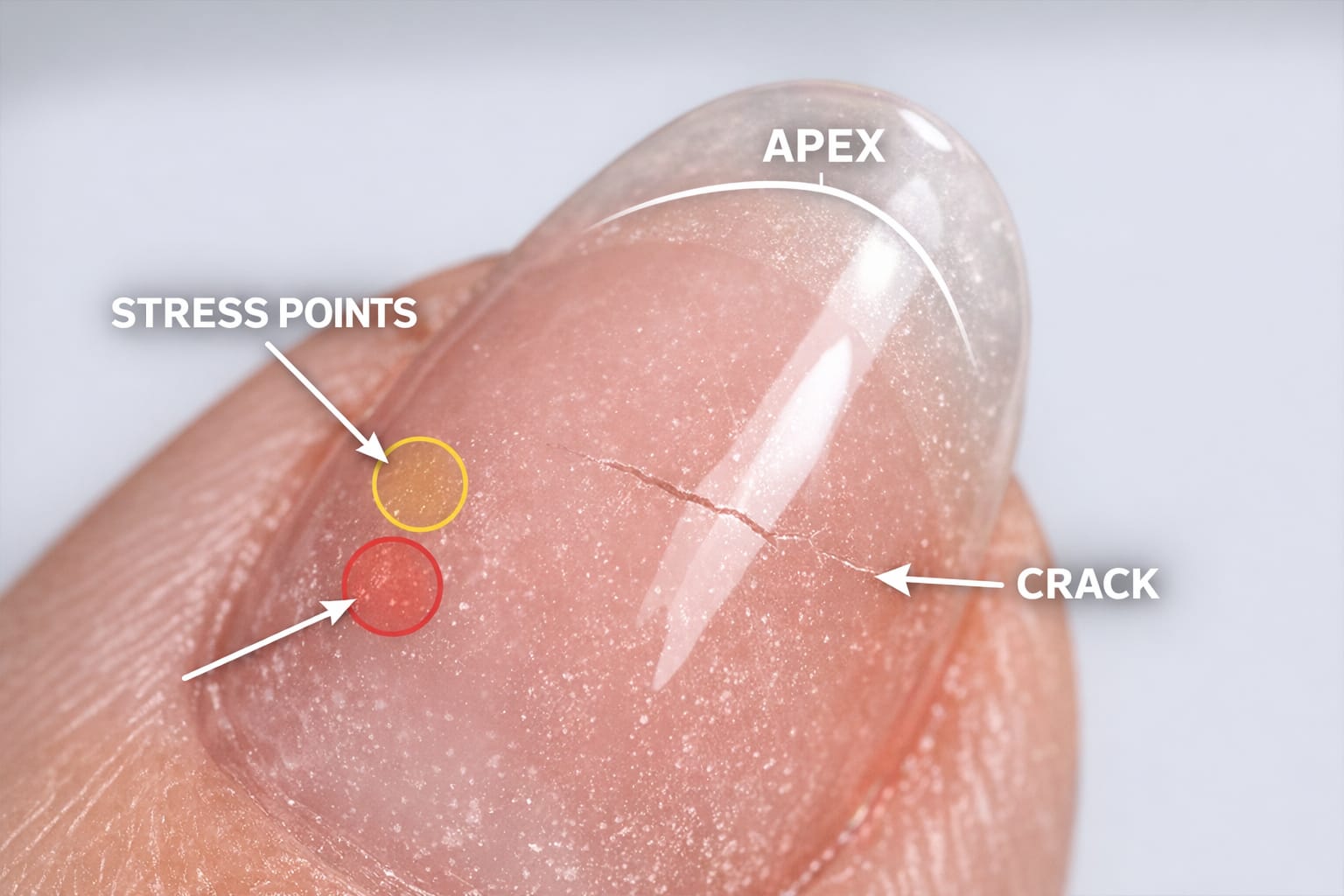
The base of the nail flexes more than the apex. When pressure is applied to the free edge, the force transfers backward. If the structure does not properly distribute that stress, it concentrates at the base.
Over time, this repeated stress weakens adhesion.
This is especially common when the apex is placed too far forward. In those cases, the stress area lacks support, and the cuticle zone absorbs excess tension.
Builder gel does not fail instantly. It detaches gradually under repeated mechanical load.
Over-Filing During Prep
Ironically, aggressive prep intended to improve adhesion often creates the opposite effect.
Over-filing the cuticle area:
- Thins the nail plate
- Increases flexibility
- Creates uneven porosity
- Weakens structural integrity
When the nail becomes too thin near the base, it bends more easily. A rigid product applied over a thinned plate cannot maintain stable bonding.
The goal of prep is refinement, not thinning.
Gentle surface etching is sufficient. Removing shine does not require pressure.
Product Flooding vs. Micro Gaps
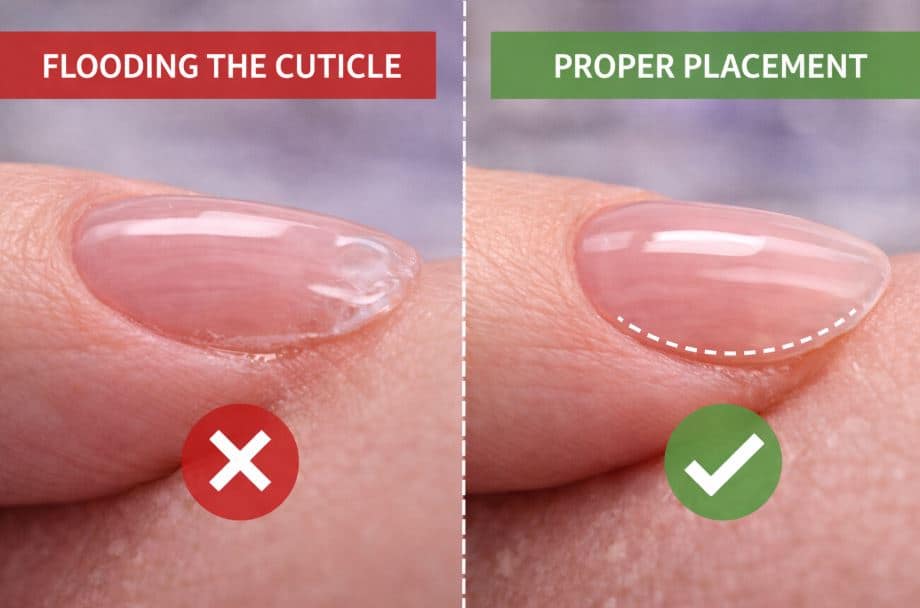
Two opposite application errors frequently cause cuticle lifting.
1️⃣ Flooding the Cuticle
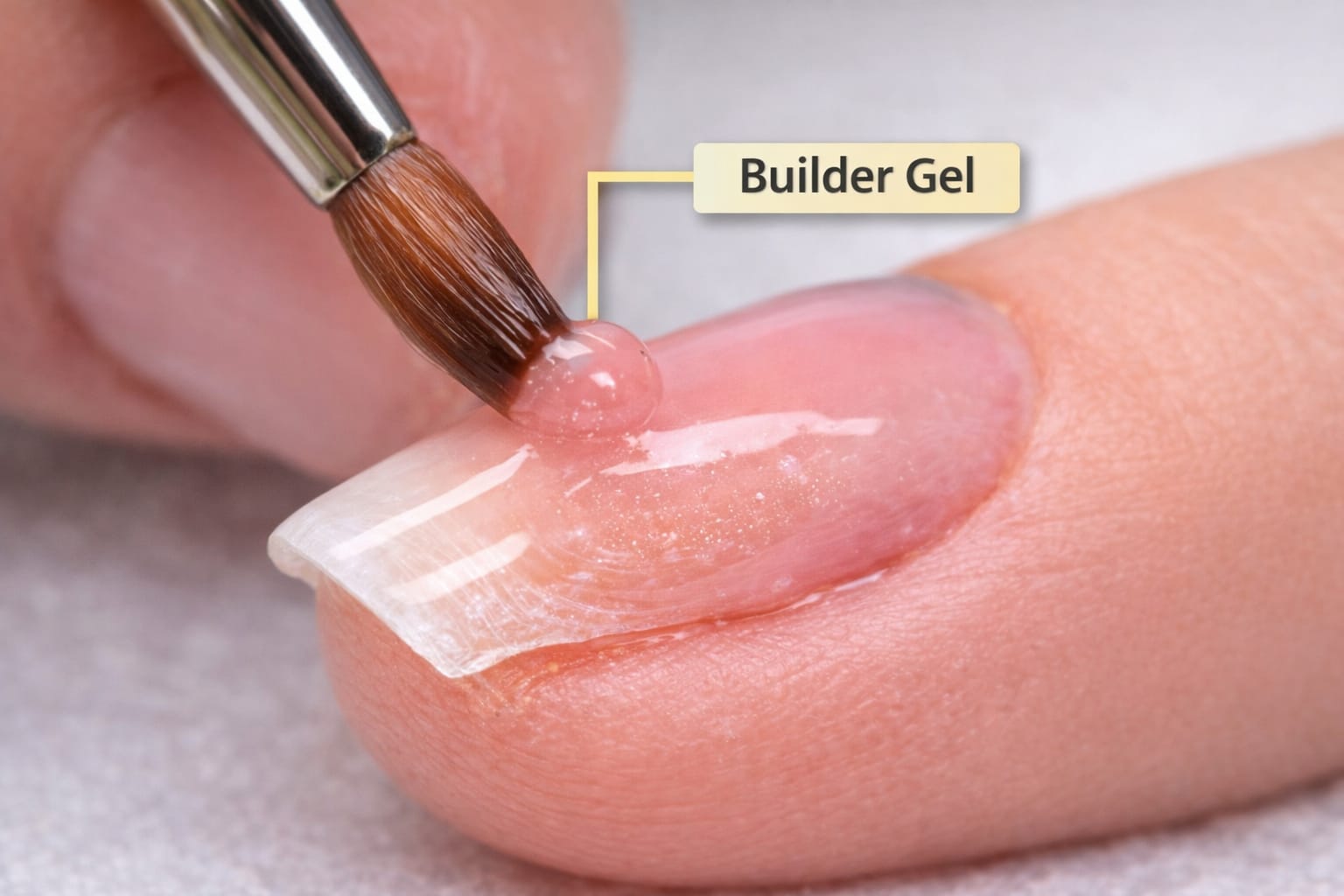
When builder gel touches the skin or cuticle tissue, it creates improper curing angles and micro-separation. Even if cleaned, the product edge is often compromised.
Once the nail grows even slightly, that weak perimeter begins to lift.
2️⃣ Leaving a Micro Gap
On the other hand, applying builder gel too far from the cuticle leaves an exposed margin. As the nail grows, that gap becomes visible quickly and can collect debris and moisture.
Both extremes lead to premature lifting.
Precision placement—close but not touching—is essential.
Thickness Errors at the Base
Many nail technicians focus heavily on apex height but underestimate cuticle thickness.
Common mistakes include:
- Applying the base too thin
- Filing too aggressively during refinement
- Creating a flat transition without reinforcement
If the cuticle zone is paper-thin while the apex is bulky, stress distribution becomes uneven.
The product must taper naturally into the cuticle while still maintaining enough structural support to resist movement.
Too thin = lifting.
Too thick = rigidity and cracking.
Balance is technical, not visual.
Growth Direction and Forward Pressure
As the natural nail grows, the builder gel overlay is gradually pushed forward. If adhesion at the base was already marginal, that forward movement accelerates separation.
This is why some sets lift specifically at week two or three, a delayed failure pattern we explain in detail in our article on builder gel lifting after 2 weeks..
The initial bond may have been acceptable. But natural growth introduces directional stress. Without proper structural compensation, the base begins to detach.
This is also closely related to general lifting mechanisms explained in our guide on why builder gel lifts on flexible natural nails, where movement and structural imbalance play a significant role.
Dehydration and Environmental Factors
The cuticle area is more exposed to daily moisture changes than most professionals realize.
Frequent:
- Hand washing
- Sanitizer use
- Cleaning products
- Temperature shifts
cause expansion and contraction of the nail plate.
If the adhesion layer was weak or overly rigid, these changes accelerate separation at the base.
Retention is never purely about application technique. It is also about environmental compatibility.
Lamp Position and Curing Angles
Improper curing is another hidden cause.
If the client’s hand is tilted or the thumb is improperly positioned, the cuticle area may not receive uniform light exposure. This can leave the gel slightly under-cured near the base.
Under-cured gel appears solid but lacks full polymer stability. Over time, it detaches more easily.
Ensuring correct lamp positioning is critical—especially for thumbs.
Structural Design Is the Core Solution
Preventing builder gel lifting at the cuticle is not about applying more product. It is about intelligent structure.
Key principles:
- Proper apex placement (not too far forward)
- Balanced thickness distribution
- Smooth transition at the base
- Controlled sidewall support
- Minimal pressure during prep
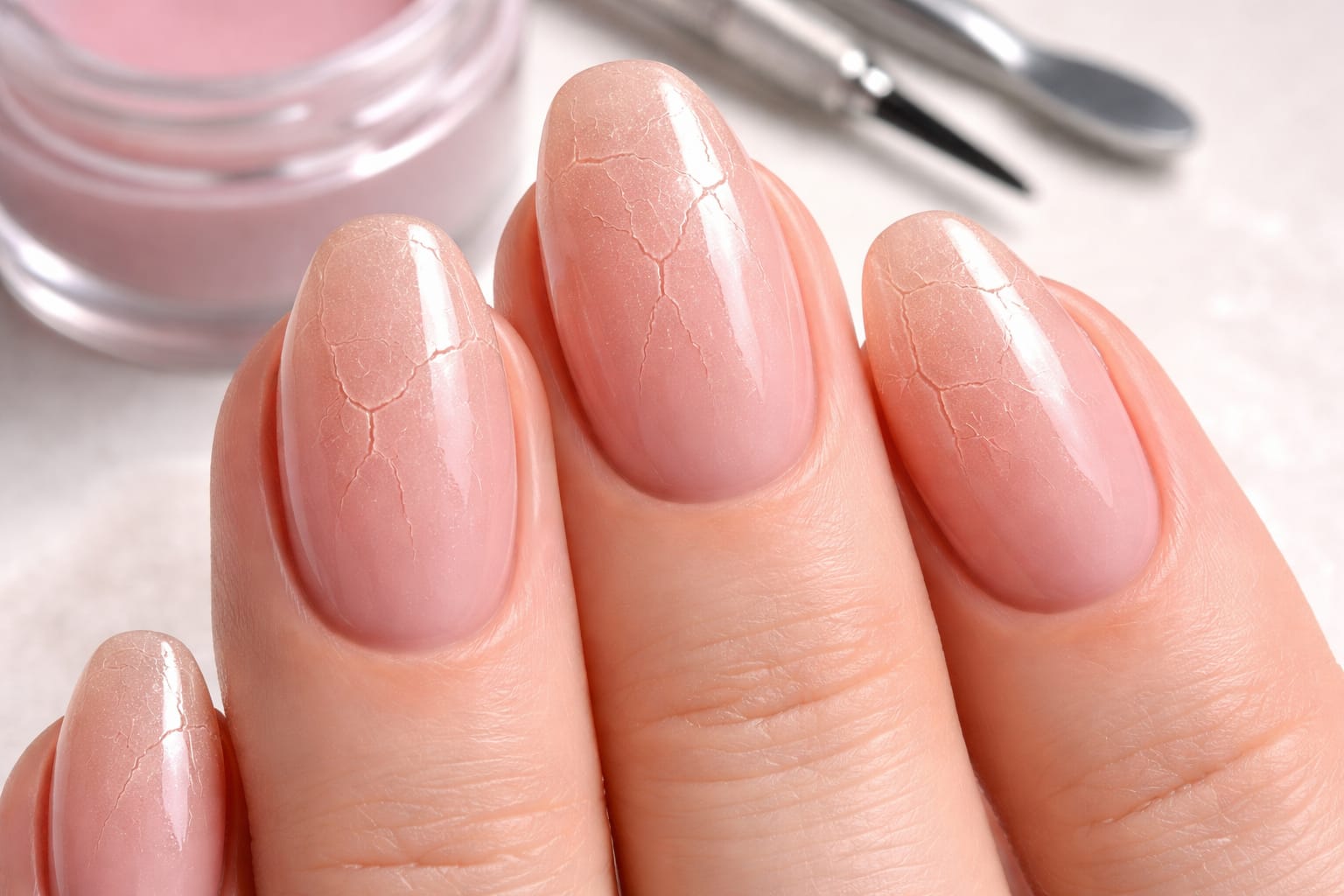
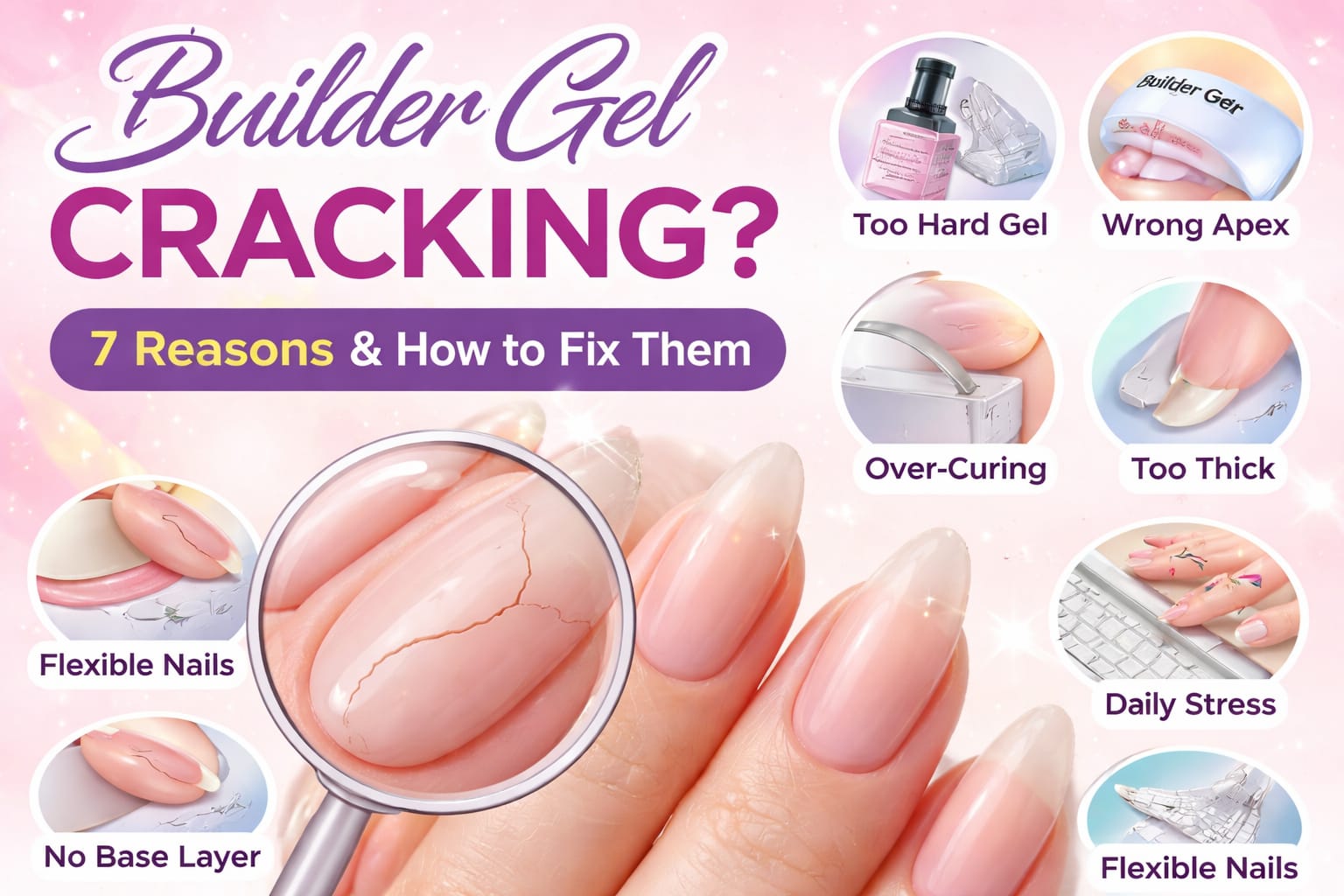
When structure supports movement rather than fighting it, lifting decreases dramatically. If rigidity exceeds flexibility, the system may also develop stress fractures, a failure pattern commonly seen in builder gel cracking.
This same structural logic also explains why builder gel cracking develops when rigidity exceeds flexibility.
The nail system must function as a unit.
How to Prevent Builder Gel Lifting at the Cuticle Area

Professional-level prevention involves consistency:
- Refine prep without thinning
- Remove all non-living tissue carefully
- Use a thin bonding layer if necessary
- Avoid flooding or visible gaps
- Balance apex and base thickness
- Cure with proper hand positioning
- Educate clients on maintenance
Small refinements create major retention improvements.
Final Thoughts
Builder gel lifting at the cuticle area is rarely random. It is almost always a structural or mechanical imbalance.
The base of the nail is dynamic. It grows. It flexes. It responds to pressure. When product application does not respect those movements, lifting follows.
Precision at the cuticle requires more than careful brushing. It requires understanding how the nail behaves over time. If you’re specifically experiencing lifting at the cuticle line even after thorough preparation, you may want to read our in-depth breakdown on why builder gel lifts at the cuticle line.
Once you design your builder gel application around movement, not just aesthetics, cuticle lifting becomes the exception—not the norm.
Frequently Asked Questions
Why does builder gel lift only at the cuticle area?
Builder gel often lifts at the cuticle because this area experiences constant growth, micro-movement, and stress transfer from the apex.
Is cuticle lifting always caused by poor prep?
Not always. Structural imbalance and incorrect apex placement are more common causes than simple preparation mistakes.
How can I prevent builder gel from lifting at the cuticle?
Balanced prep, correct apex positioning, and precise product placement near the cuticle significantly improve retention.