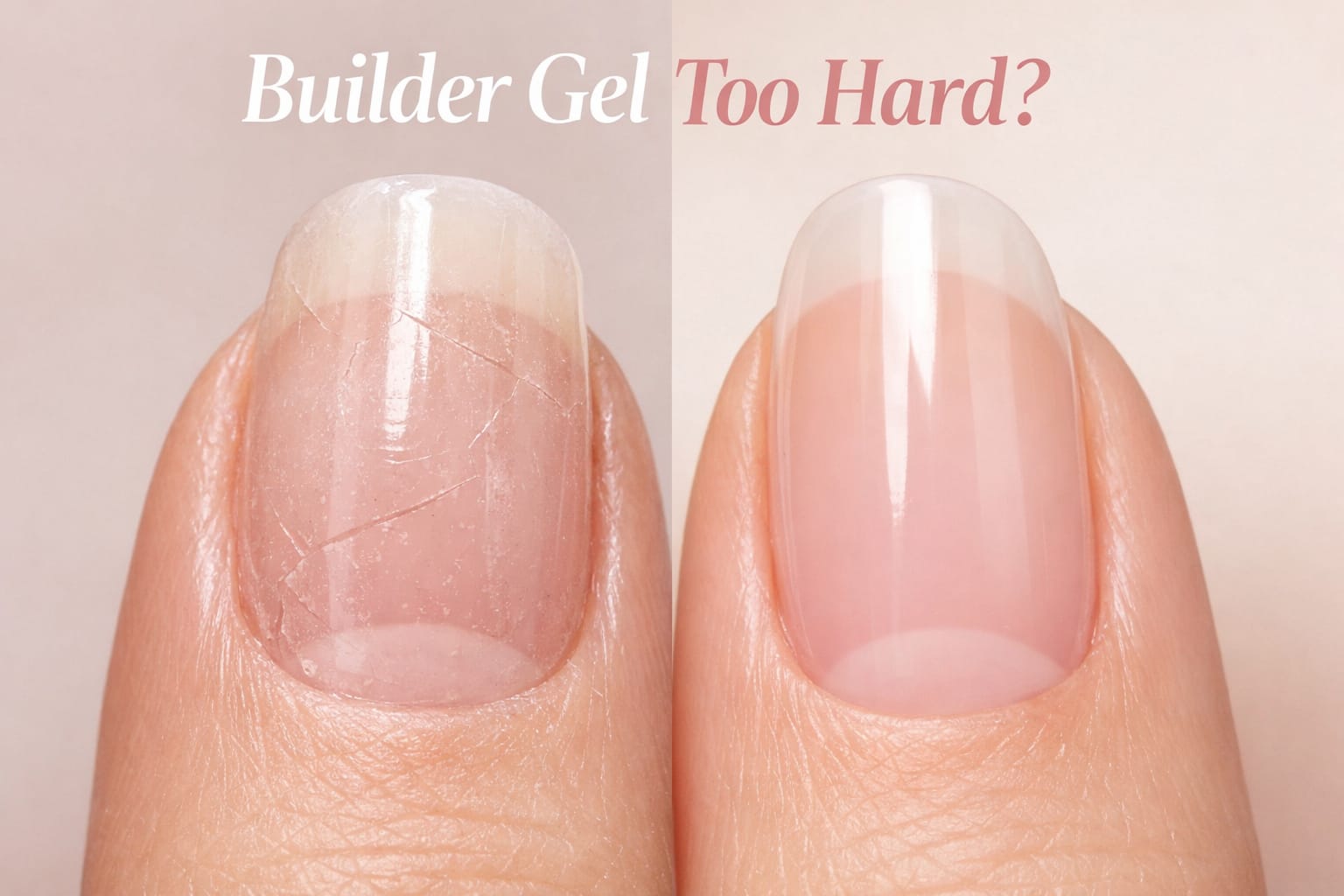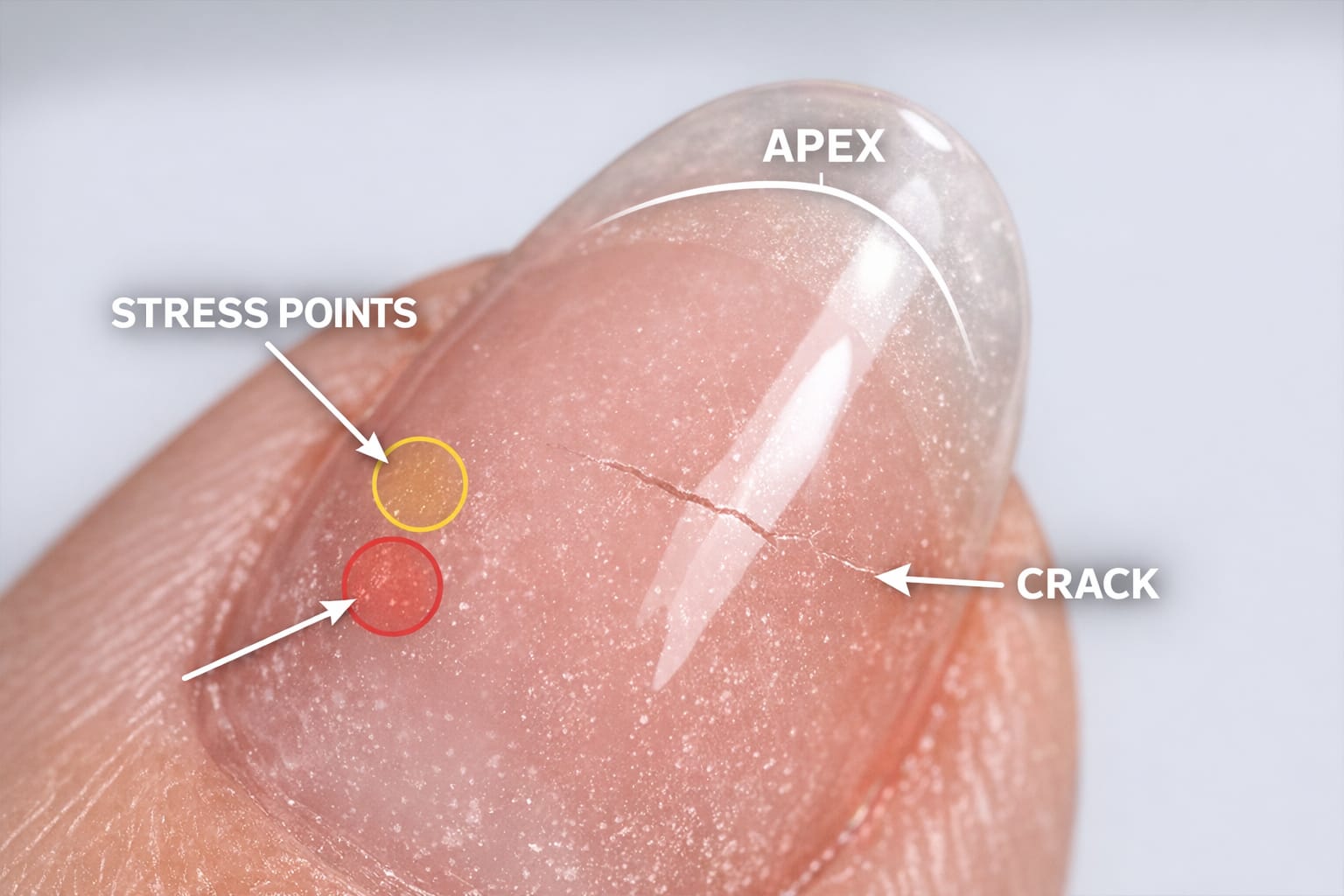
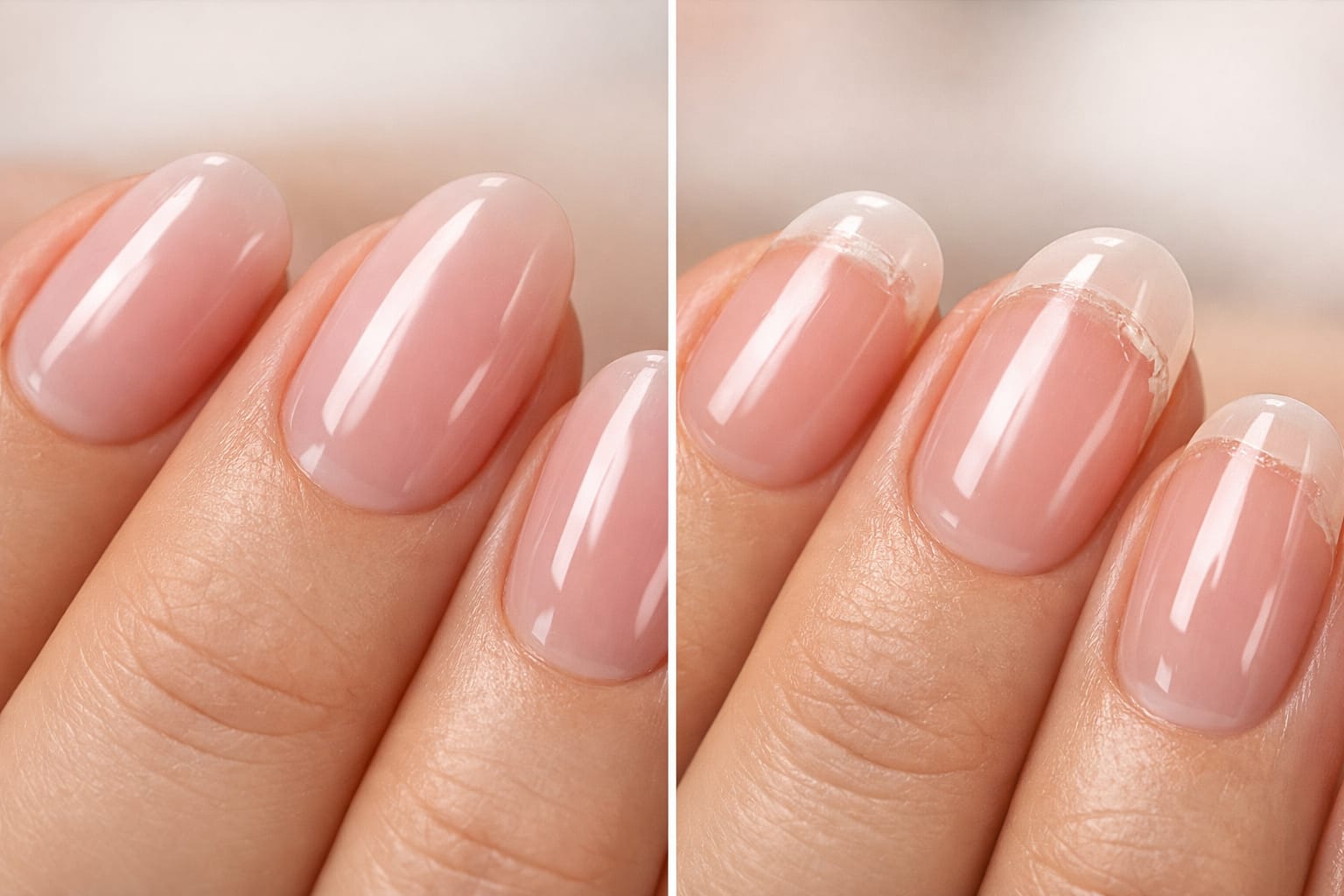
Why BIAB Nails Lift (Even When Applied Correctly)
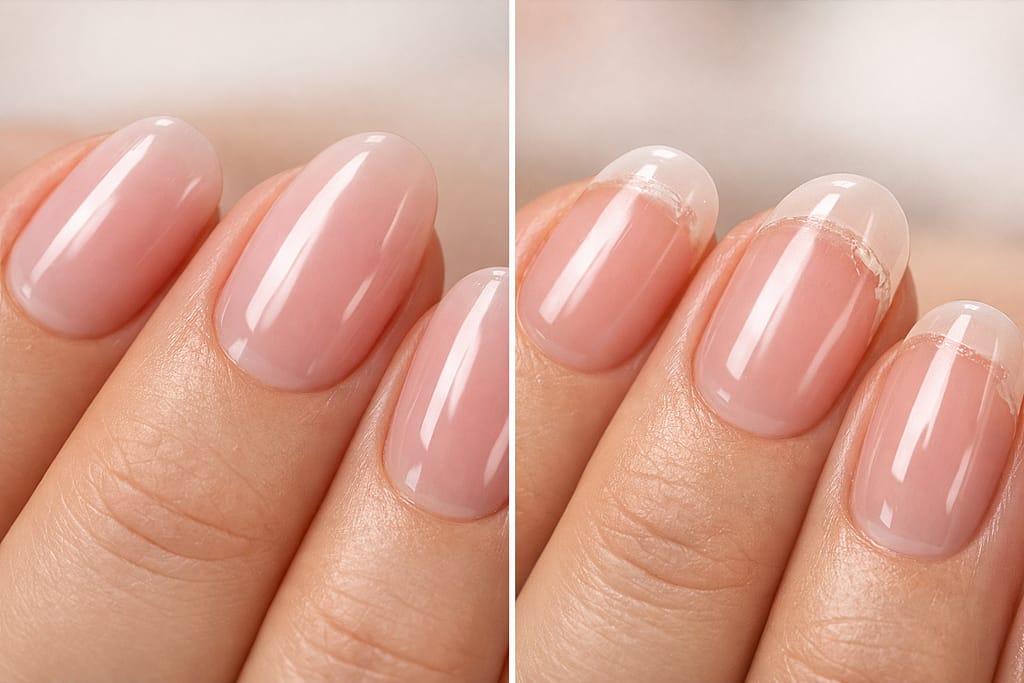
Why is my BIAB lifting after just two days?
Early lifting within 48–72 hours is almost always a nail prep or application issue — residual oils on the nail plate, product touching the skin, or under-curing. Review your dehydration and primer steps first before assuming the product is faulty.
Can BIAB lift even if nail prep was done perfectly?
Yes. Even with perfect prep, BIAB can lift due to under-curing, product flooding the cuticle, client lifestyle factors such as water exposure or chemical contact, or product incompatibility between brands used in the same service.
Does BIAB lift more than regular gel polish?
BIAB is thicker than gel polish and requires more rigorous prep and curing. When done correctly it lasts significantly longer — but the margin for error during application is slightly narrower than with standard gel polish.
How do I stop BIAB from lifting on oily nail beds?
Use a dual-step prep: first a nail dehydrator, then an acid-based primer. Cure the base coat thoroughly before applying BIAB, and use a bonding base formulated specifically for oily nail types.
Should I always use a primer with BIAB?
For most clients, yes. A bonding primer (not an etching primer) significantly improves adhesion, especially for clients prone to lifting or with naturally oily nail beds. Check whether your BIAB brand recommends their own dedicated primer.
What wattage lamp do I need for BIAB?
Most BIAB products require a minimum 36W LED or UV lamp. Some techniques benefit from 48W. Always check the manufacturer’s recommendation and replace bulbs in lamps older than 2–3 years of heavy use.
Understanding why BIAB nails lift — even when applied correctly — is one of the most common frustrations for nail techs and clients alike. You follow every step, yet the product starts peeling within days. The truth is, BIAB lifting is rarely caused by just one thing. It’s usually the result of several subtle, compounding factors that are easy to overlook.
What is BIAB and why does it lift?
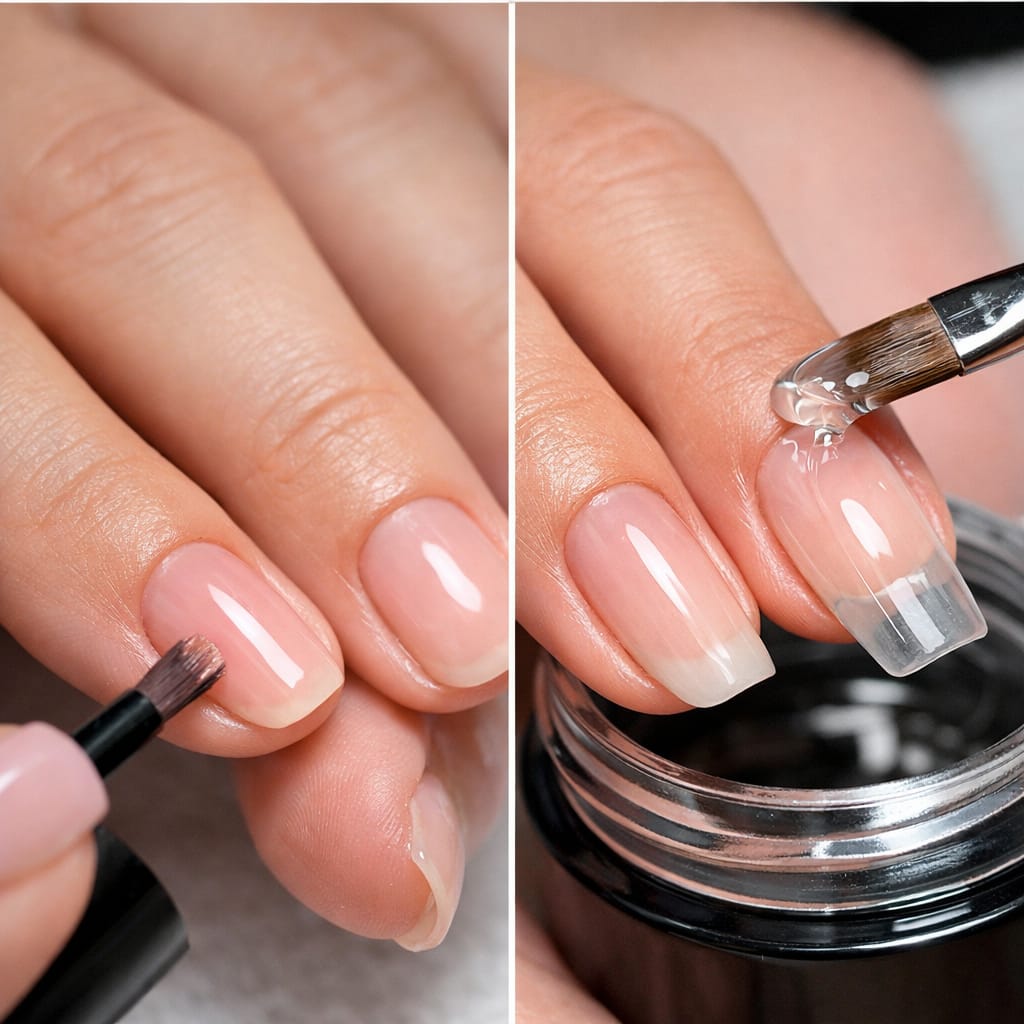
BIAB (Builder In A Bottle) is a hybrid gel product that combines the durability of hard gel with the flexibility of gel polish. It’s designed to coat the natural nail and provide strength without the need for acrylic or extensions. However, this very structure — a thick, rigid layer bonded to a flexible, oily, ever-growing surface — is exactly what makes proper adhesion so critical.
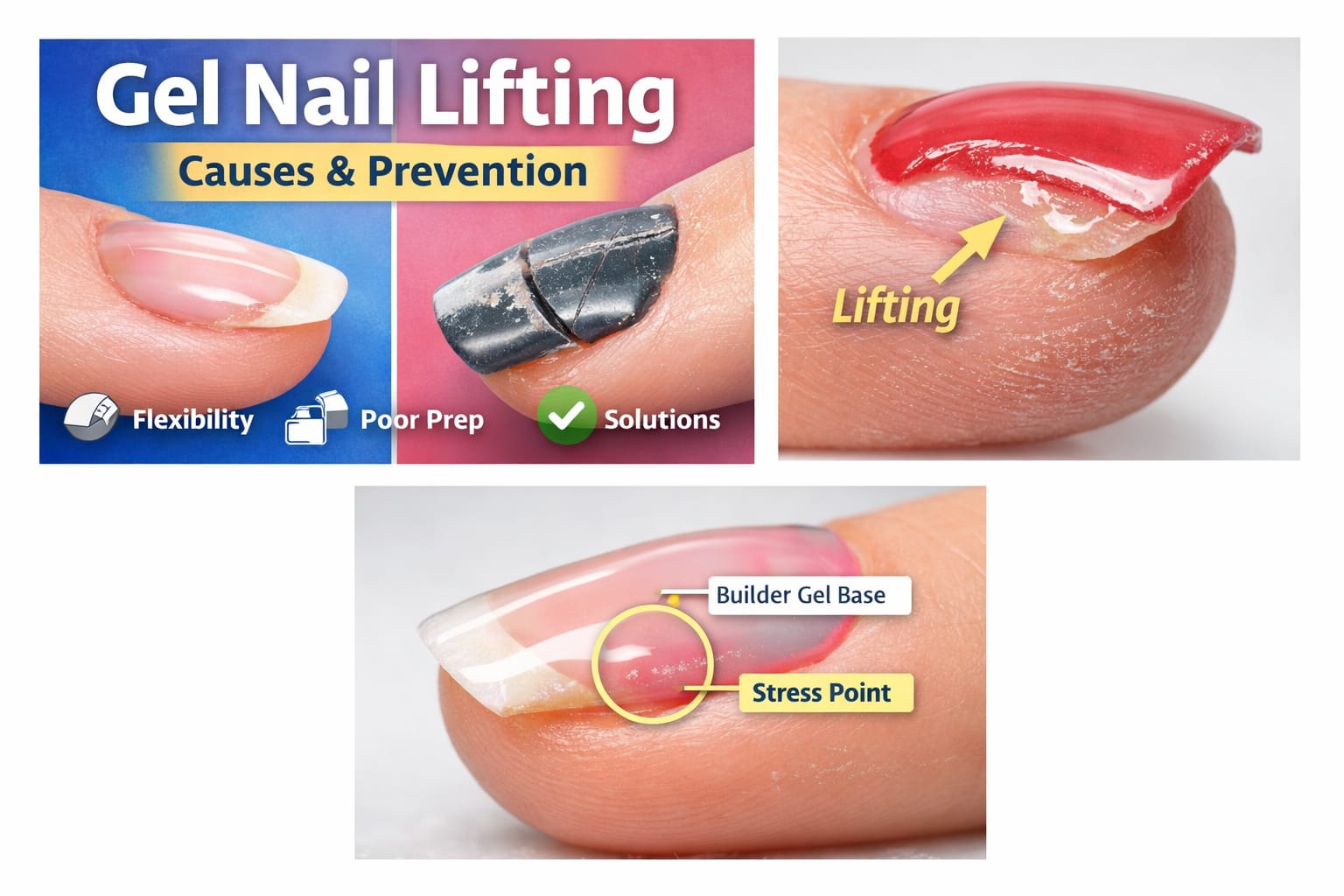
When BIAB lifts, it almost always comes down to one or more of these core issues: inadequate nail preparation, improper product layering, environmental exposure, client nail conditions, or the lamp used for curing. Let’s break each one down.
1. Nail preparation is the most common culprit
No matter how premium your BIAB product is, it cannot bond to a nail that hasn’t been properly prepped. Nail prep for BIAB isn’t just about pushing back cuticles — it’s about creating the right surface chemistry for adhesion.
Natural oils, lotions, or sweat create an invisible barrier between the nail plate and BIAB. Always use a nail dehydrator before any product.
The nail needs a fine matte texture to grip. A 180-grit file is the sweet spot — too coarse damages the nail; too fine won’t create enough texture.
Even microscopic cuticle tissue on the nail plate is enough to cause lifting. Push back thoroughly and remove all dead skin, not just the visible cuticle.
Many BIAB brands require their own bonding primer. Using a mismatched base or skipping it altogether significantly weakens adhesion from day one.
2. Application technique errors you might not notice
Even flawless nail prep won’t save a poor application. The most common technique errors are invisible in the moment but reveal themselves as BIAB lifting within 24–72 hours.
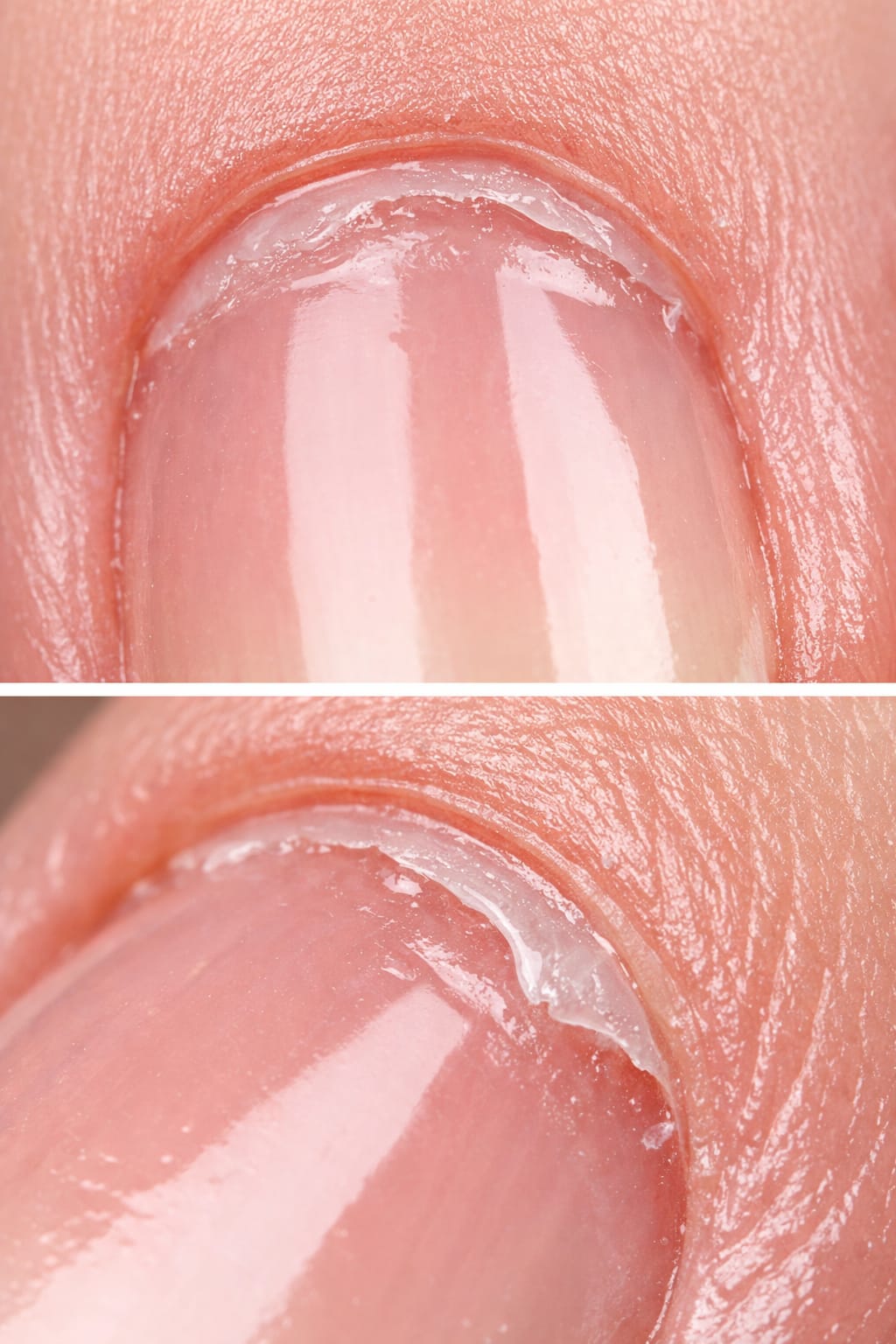
- Flooding the cuticle: Getting BIAB too close to or touching the cuticle or sidewalls creates a lifting point almost immediately. Always leave a 0.5–1mm gap from all skin.
- Applying too thick in one coat: Thick layers cure unevenly. The outside cures while the inside stays semi-soft, creating internal stress that causes separation.
- Not capping the free edge: Forgetting to seal the free edge leaves an open end where water and impact start to peel the product away from the nail.
- Contaminated brushes: If your brush contacts skin and goes back into the bottle, it introduces oils that compromise future applications.
After applying each layer and before curing, check the nail from the side at eye level. If you see any pooling near the cuticle or sidewalls, use a clean brush to pull the product away from the skin before placing under the lamp.
3. Under-curing: a hidden cause of BIAB lifting
Many BIAB lifting problems that appear to be prep or application issues are actually curing problems in disguise. BIAB requires full, complete curing to achieve proper hardness and adhesion.
Under 36W lamps often can’t cure thick BIAB layers fully, even with extended cure times.
Fingers tilted or at the lamp’s edges receive uneven UV/LED coverage. Keep nails flat and centred inside the lamp.
Bulbs degrade with use. A 2–3 year old lamp may output far less than its rated wattage. Replace regularly.
4. Client-specific factors that cause BIAB to lift
Sometimes the issue has nothing to do with technique — it’s the nail itself. These client conditions make BIAB adhesion genuinely more challenging:
Double dehydrating and a strong bonding primer help. Some techs do a light buff immediately before priming for extra grip.
Highly flexible nails flex under impact. BIAB can’t always follow, causing stress-related lifting at the free edge.
Cuticle oil, lotion, or sanitiser applied before the session dramatically increases lift rates. Ask clients to arrive product-free.
Pregnancy, thyroid conditions, and menopause all affect nail surface chemistry and oil production.
Before troubleshooting BIAB lifting, it’s worth asking whether BIAB is the best fit for a client’s nail type and lifestyle. Our detailed comparison covers structure, flexibility, removal, and longevity.
Read: Is BIAB Better Than Builder Gel? →5. Environmental and lifestyle factors post-application
BIAB can begin to lift when the client’s lifestyle puts excessive stress on the nails within the first 24–48 hours — a critical window when the product is still settling and hardening to full strength.
- Water exposure: Long baths, swimming, or dishwashing without gloves cause the natural nail to expand and contract, breaking adhesion at the bond line.
- Harsh chemicals: Cleaning products, acetone from other nail services, or certain hand sanitisers can weaken the product bond over time.
- Physical stress: Picking, peeling, or using the nails as tools creates stress on the free edge and sidewalls — the most vulnerable areas for BIAB.
Advise clients to wear gloves when cleaning, apply cuticle oil daily (on the skin only, not the product surface), and avoid prolonged water exposure for at least 48 hours post-appointment.
6. Product compatibility and system mixing
BIAB is a complete system, not a standalone product. Mixing products from different brands — one brand’s base coat, another brand’s BIAB, a third brand’s top coat — can create chemical incompatibilities that cause delamination (lifting between layers) rather than separation at the nail plate.
Stay within the same brand’s ecosystem when using BIAB, especially while learning the product. Once you understand how it behaves across different nail types, you can experiment with cross-brand combinations more safely.
Dehydrate → Primer → Thin base layer → Cure fully → Apply BIAB in thin coats → Cap the free edge → Cure each layer fully → Compatible top coat.
Every skipped step is a potential lifting point.
Frequently asked questions about BIAB lifting
The bottom line
Understanding why BIAB nails lift means looking at the full picture — prep, application, curing, client health, and aftercare. Rarely is there a single culprit. More often it’s a combination of a slightly rushed prep, an imperfect free edge seal, a degraded lamp, and a client who washed dishes without gloves the same evening.
When you treat BIAB as a complete system rather than just another product, lifting becomes far less common — and far easier to diagnose when it does occur.