Builder Gel Too Hard: When Strength Becomes a Problem
Builder gel is often marketed as the solution for weak, bendy, or easily breaking nails. Strength, durability, and long wear time are usually the main selling points. But in practice, many nail issues don’t come from builder gel being too weak—they come from builder gel being too hard.
If your nails crack instead of lifting, snap suddenly, or keep breaking on the same fingers, the problem may not be your application technique. It may be that your builder gel is too rigid for the natural nail underneath.
Understanding when strength turns into a problem is essential for building nails that last.
What Does “Builder Gel Too Hard” Actually Mean?
When we say builder gel is too hard, we’re not talking about quality. A hard builder gel isn’t automatically bad. The issue starts when the cured gel becomes less flexible than the natural nail plate.
Natural nails are not static. They bend, flex, and move throughout the day due to:
- Typing and gripping
- Temperature changes
- Water exposure
- Natural nail elasticity
If the builder gel cannot flex at a similar rate, stress builds up between the layers. Instead of being absorbed, that stress is released through cracks or sudden breaks.
This is why builder gel cracking often appears even when the product is applied correctly.
Signs Your Builder Gel Is Too Rigid
A builder gel that’s too hard usually shows very specific symptoms. These are often misdiagnosed as general “product failure.”
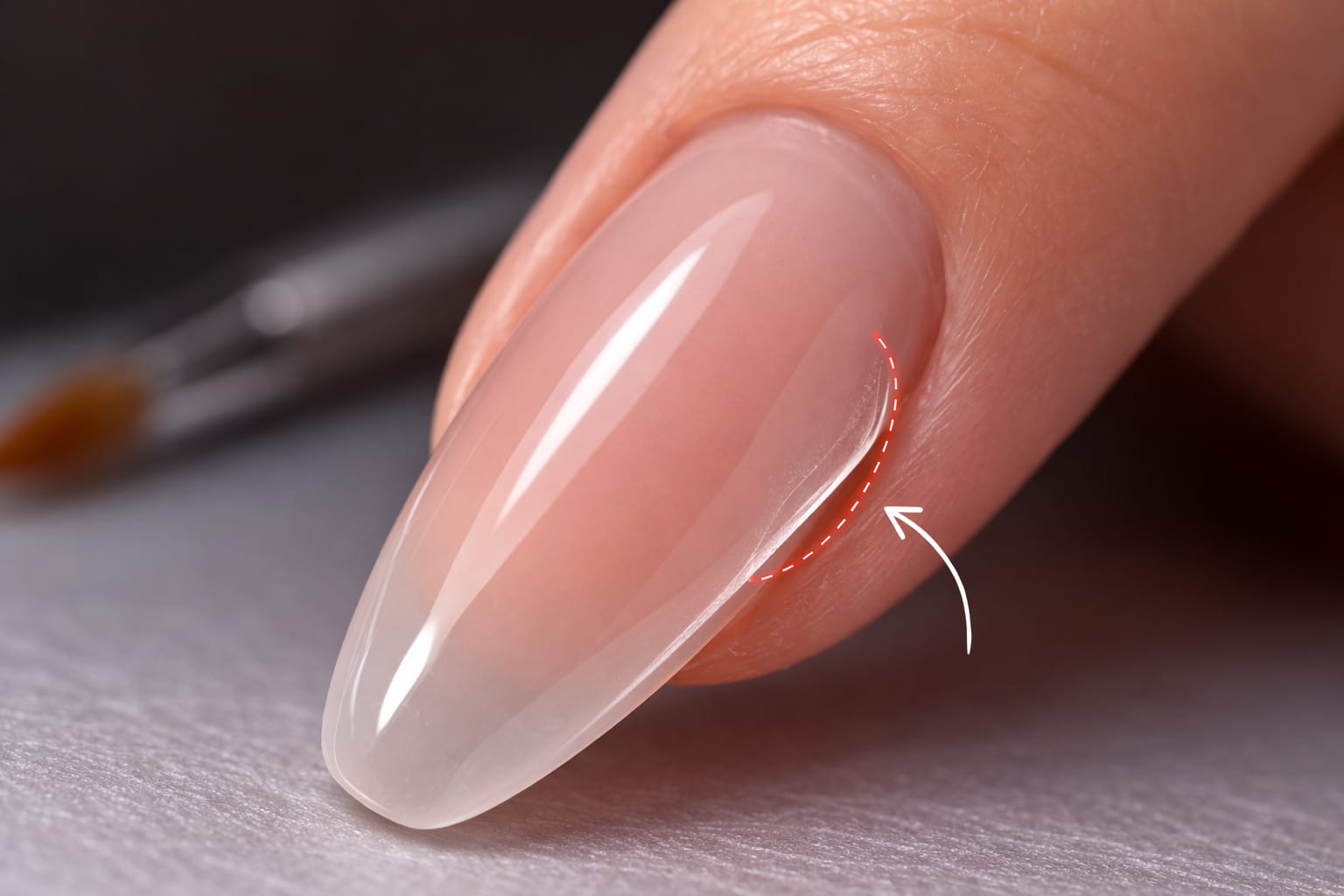
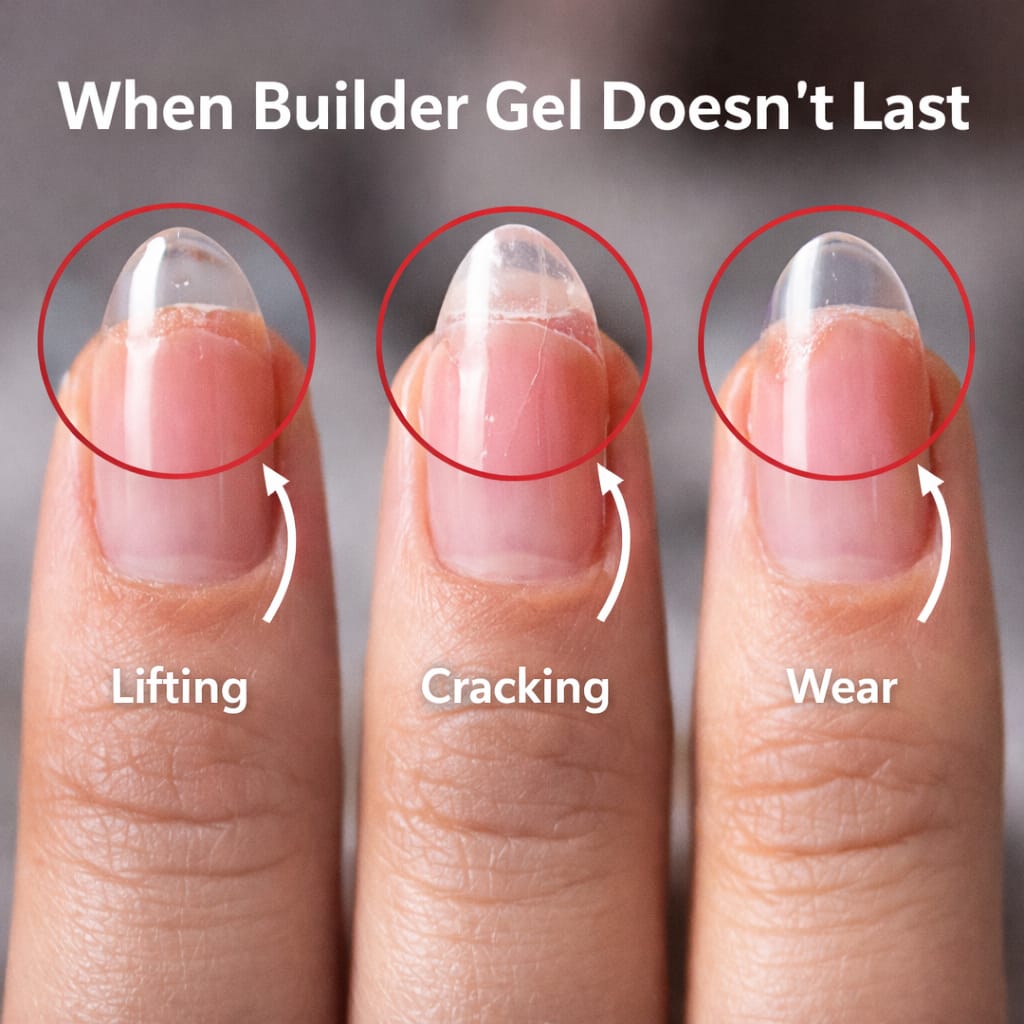
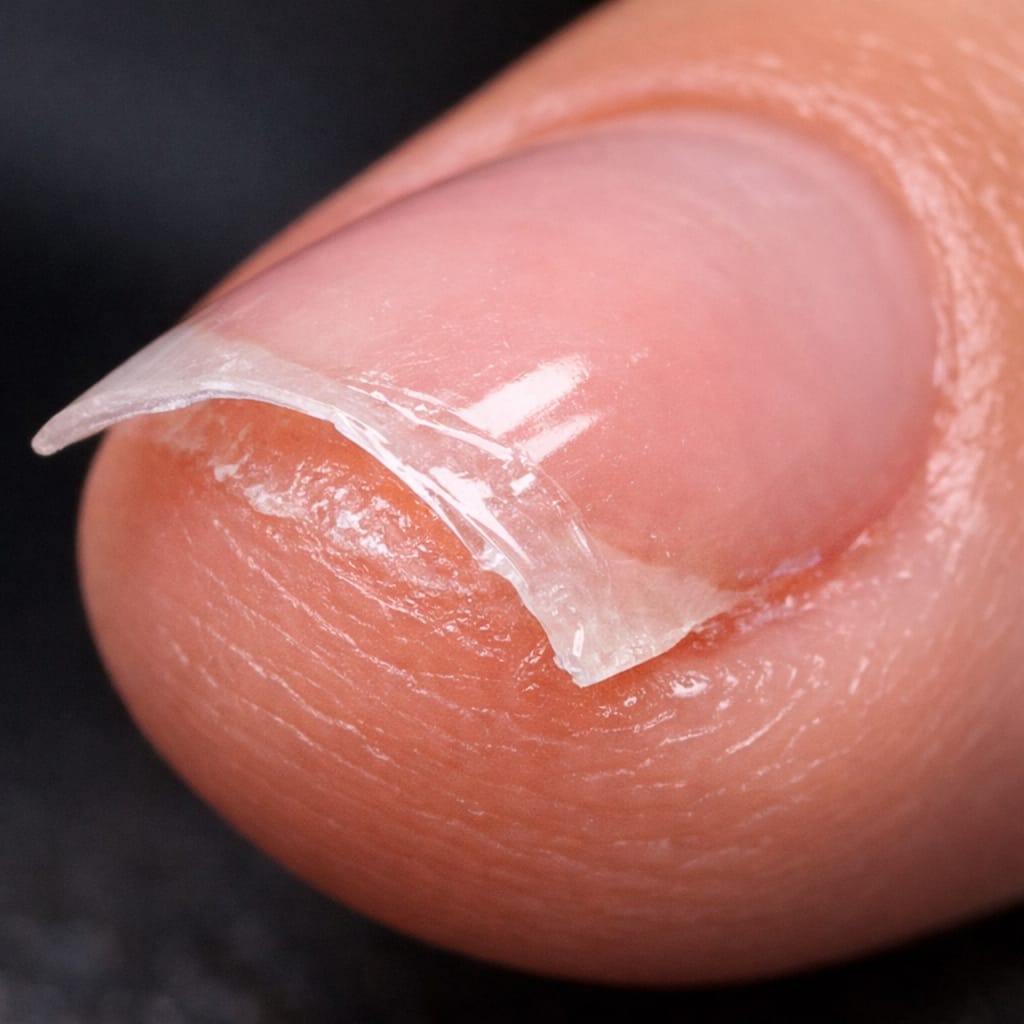
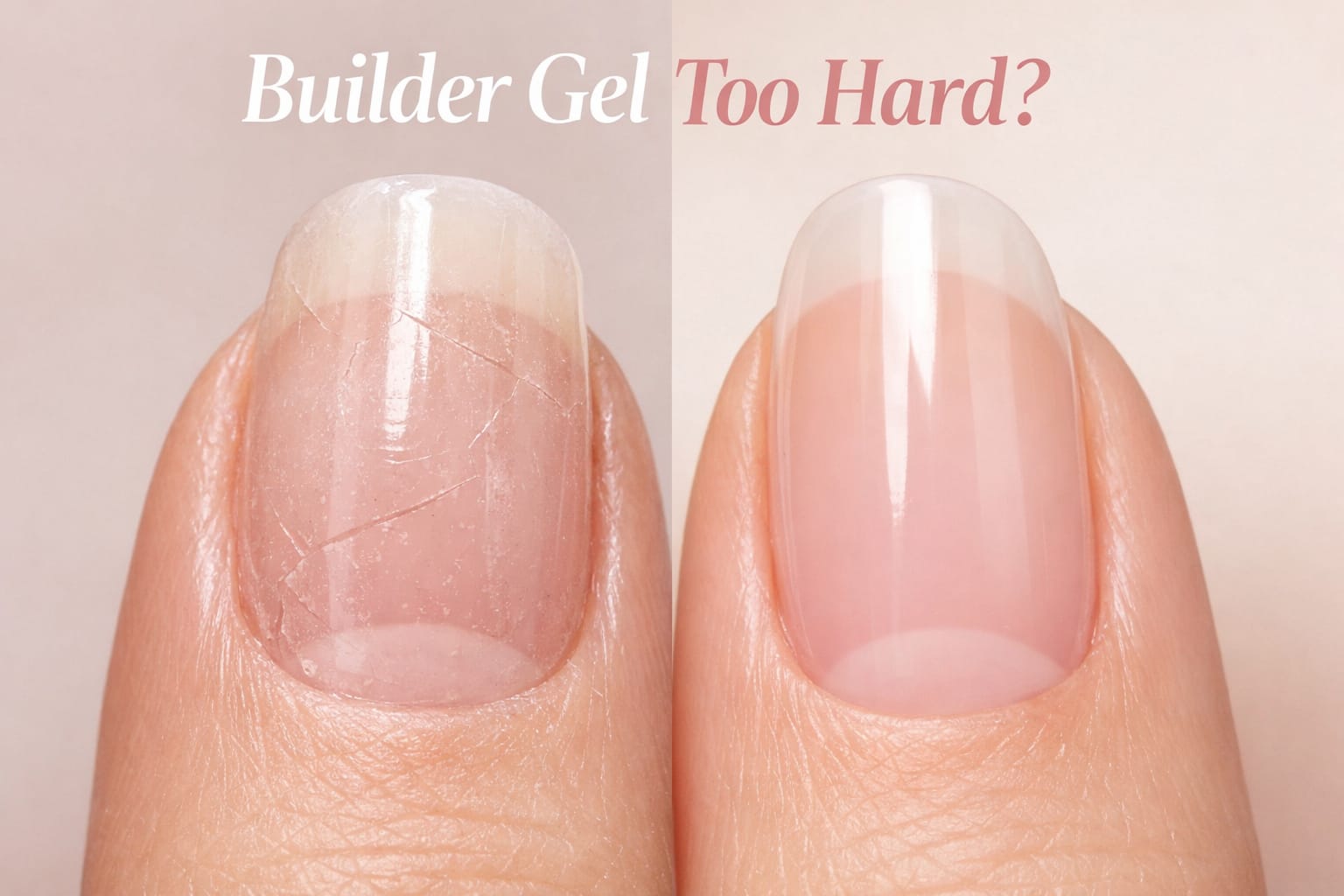
Cracking Instead of Lifting
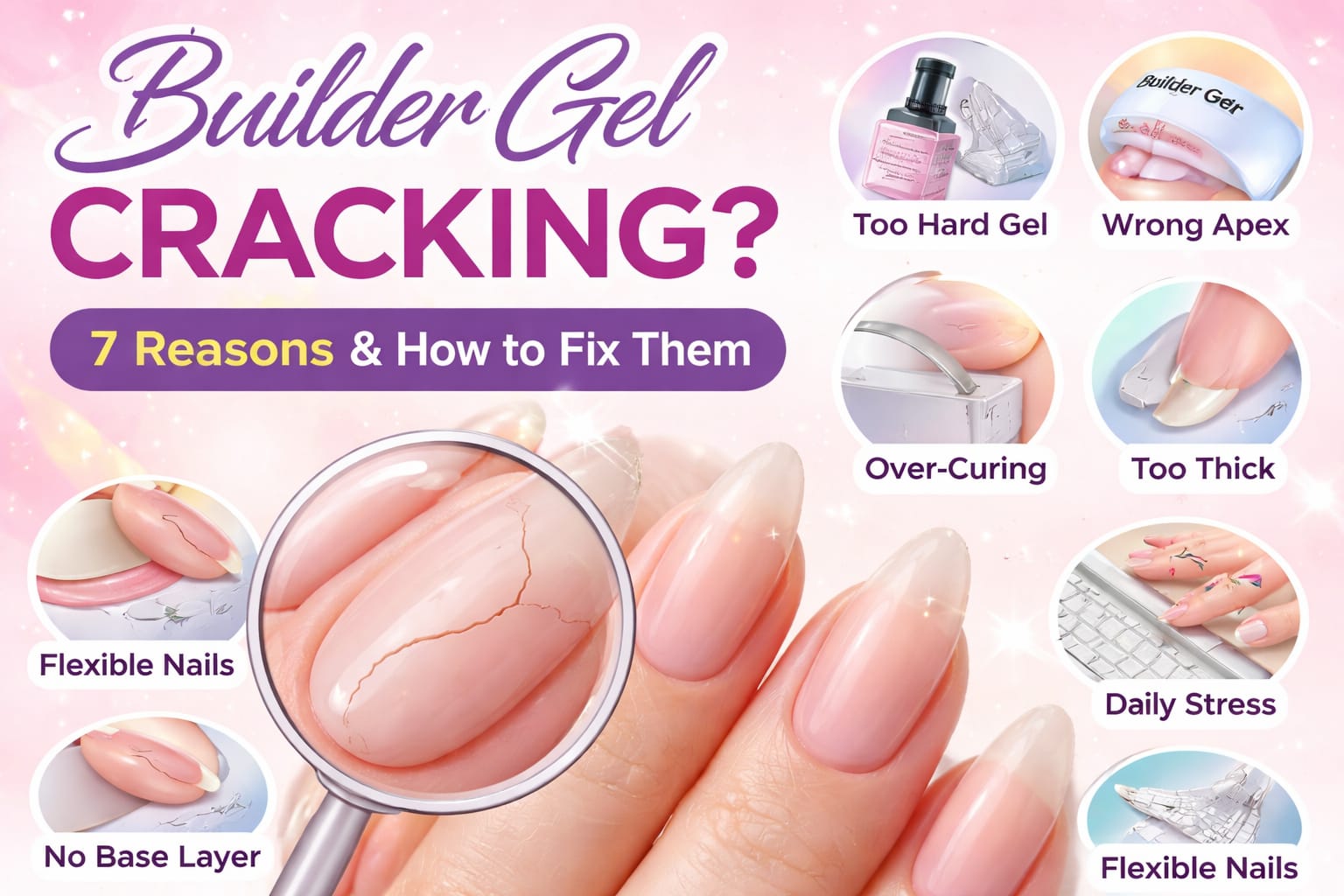
This type of damage is closely linked to builder gel cracking, where the nail structure cannot absorb daily stress properly.
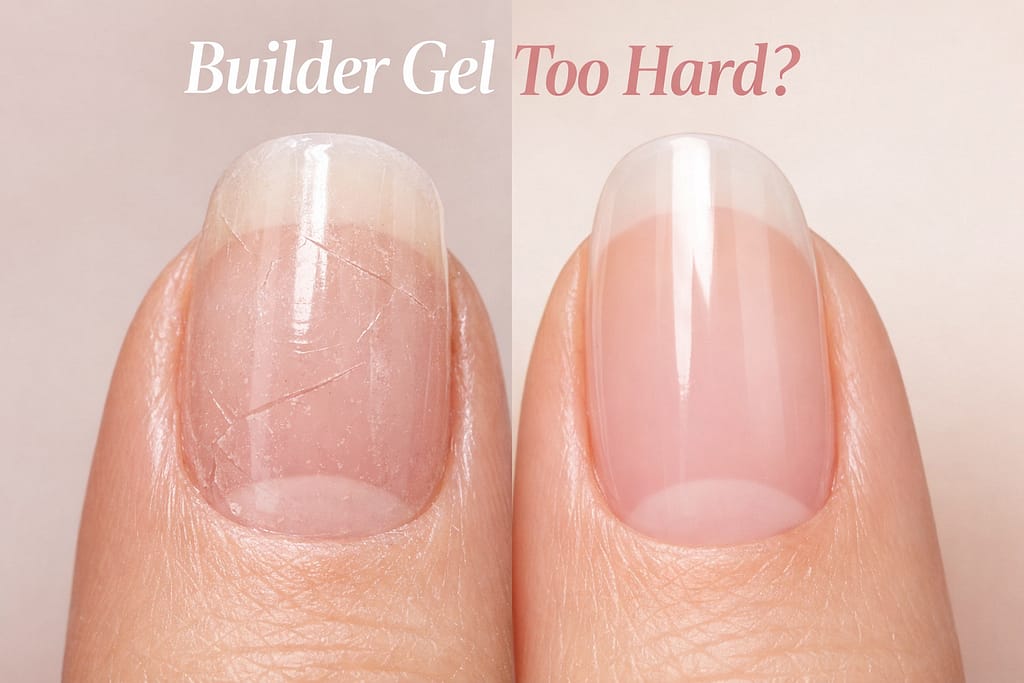
When adhesion is the problem, gel lifts. When rigidity is the problem, gel cracks. If you’re seeing fractures across the nail rather than separation at the cuticle, rigidity is a major suspect.
This behavior is closely linked to builder gel cracking, where the nail structure can’t handle stress properly.
Sudden Snapping
Some nails don’t show warning signs. They feel fine—until they suddenly snap cleanly across the stress area. This type of break is common when the builder gel is too hard to absorb impact.
Pressure or Discomfort
A rigid builder gel can create a tight, pressurized feeling on the nail. Some clients describe this as discomfort rather than pain. This happens because the gel resists natural nail movement.
The Same Fingers Keep Breaking
Thumbs, index fingers, or the dominant hand breaking repeatedly is a strong sign of rigidity issues. These nails experience more mechanical stress and expose flexibility mismatches faster.
Why Hard Builder Gel Causes Problems
Hard builder gel problems are not random. They are structural and mechanical.
Natural Nail Flexibility Mismatch
This is the most common cause.
Soft or flexible natural nails paired with a very hard builder gel create opposing forces. The nail bends; the gel resists. Over time, that tension causes cracking or breakage.
This mismatch explains why the same builder gel can work beautifully on one person and fail on another.
Stress Transfer Instead of Stress Absorption
A properly balanced nail structure absorbs stress and spreads it evenly. A very hard builder gel does the opposite—it transfers stress directly to weak points.
Instead of being distributed:
- Stress concentrates at the apex
- Or near the free edge
- Or along sidewalls
Once stress has nowhere else to go, the nail breaks.
Apex Rigidity
Even a correctly placed apex can become problematic if the gel itself is too rigid. A hard apex acts like a pressure point rather than a shock absorber. For a deeper explanation of how structure distributes pressure across the nail, see the structure of overlays and enhancements.
This is why builder gel sometimes cracks because it’s too hard, not because the apex is missing or misplaced.
Is Hard Builder Gel Always Bad?
No—and this is important.
Hard builder gel works extremely well for:
- Naturally strong nails
- Low-flexibility nail plates
- Clients who don’t use their hands heavily
- Structured extensions that need rigidity
Problems arise only when gel hardness does not match nail behavior.
Hard builder gel is a tool. Used on the wrong nail type, it creates problems. Used on the right nail type, it performs beautifully.
How to Fix Builder Gel That’s Too Hard
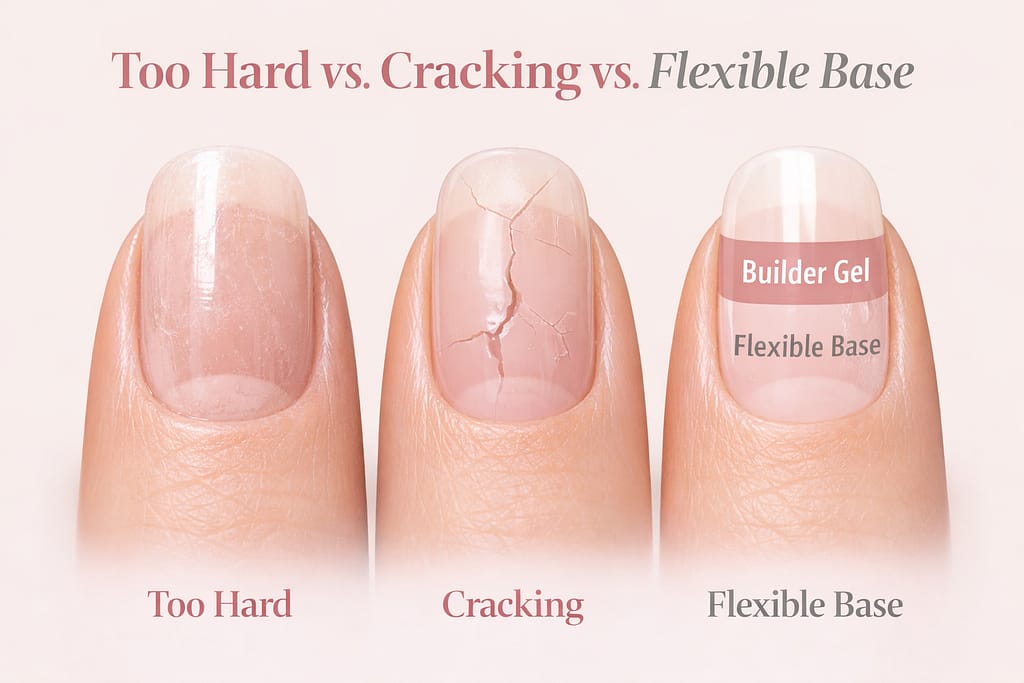
If you suspect rigidity is the issue, the solution is not adding more product. It’s adjusting the system. In many cases, what looks like rigidity issues is actually related to builder gel not lasting, where structure and flexibility are out of balance.
Switch to a More Flexible Formula
If cracking continues across multiple nails despite correct structure, the formula itself may be too rigid. Switching to a slightly more flexible builder gel often solves the problem immediately.
This is especially effective for clients who previously experienced builder gel not lasting, where durability issues weren’t caused by adhesion.
Use a Flexible Base Layer
A compatible, flexible base layer can act as a buffer between the natural nail and the builder gel. This allows both layers to move together instead of fighting each other.
This small adjustment often reduces hard builder gel problems without changing the main product.
Adjust the Nail Structure
Sometimes the gel doesn’t need to change—the structure does.
- Slightly reinforce high-stress fingers
- Avoid overly sharp sidewalls
- Balance thickness across the nail
These adjustments help redirect stress away from vulnerable areas.
How to Choose the Right Builder Gel for Nail Type
Choosing the right builder gel isn’t about finding the “strongest” product. It’s about matching behavior.
For Flexible or Thin Nails
- Slightly flexible builder gels
- Shock-absorbing base layers
- Balanced apex, not bulky structure
For Strong, Low-Flex Nails
- Hard builder gels work well
- Structured apex for durability
- Minimal flexibility required
When gel flexibility and nail movement are aligned, cracking and breaking virtually disappear.
How This Connects to Builder Gel Cracking
Many people treat cracking as a separate issue, but it’s often the result of rigidity.
If your builder gel is too hard:
- Cracks replace lifting
- Breaks appear suddenly
- The same nails fail repeatedly
Understanding rigidity helps explain why builder gel cracking happens even with good technique and quality products.
Final Thoughts: Strength Needs Balance
Builder gel is meant to reinforce nails—not overpower them.
When builder gel becomes too hard for the natural nail, strength turns into a weakness. Cracks, breaks, and discomfort follow.
The solution isn’t thicker layers or stronger lamps. It’s balance.
Strong nails aren’t just hard.
They’re flexible where needed, rigid where necessary, and structurally intelligent.