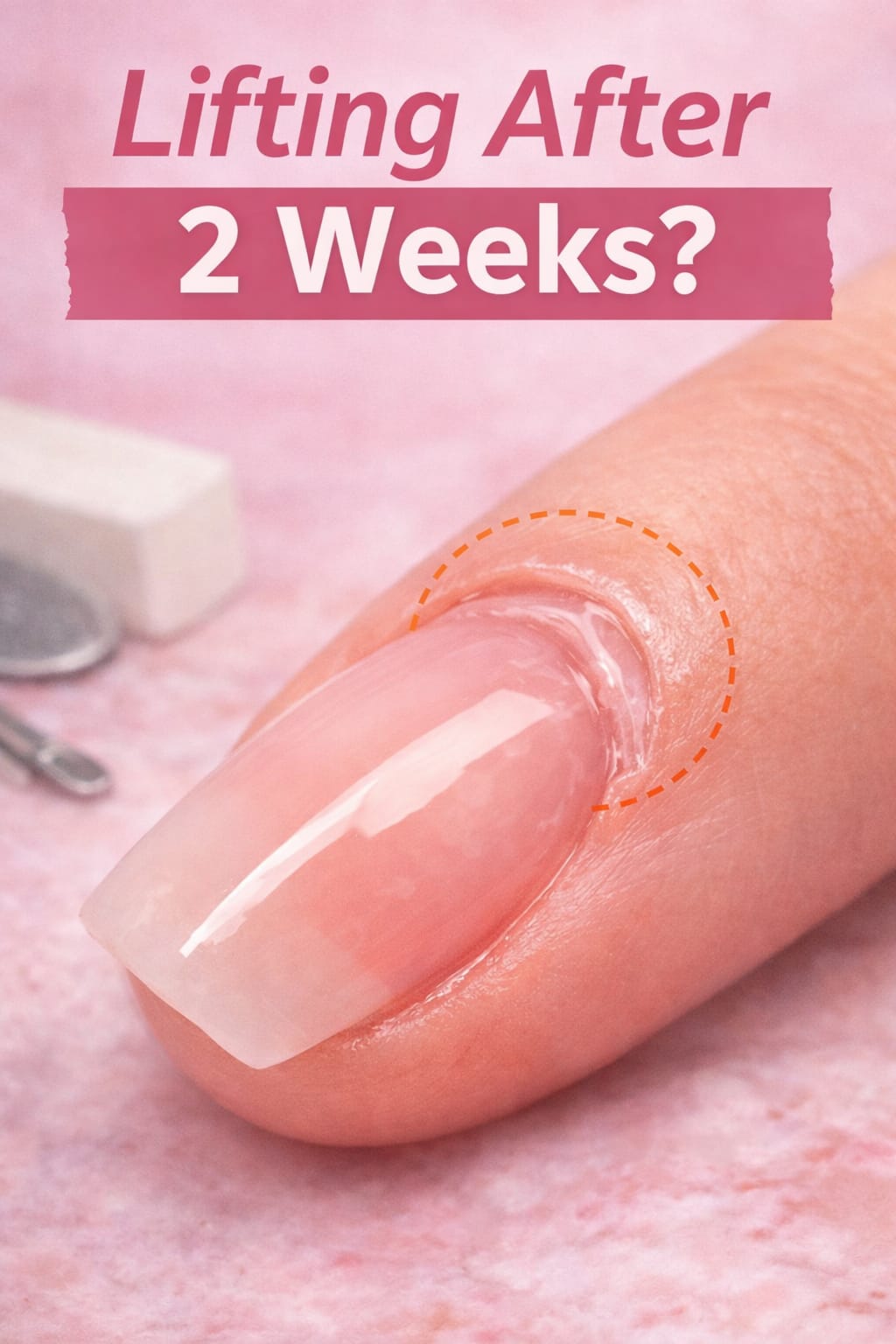
Builder Gel Lifting After 2 Weeks
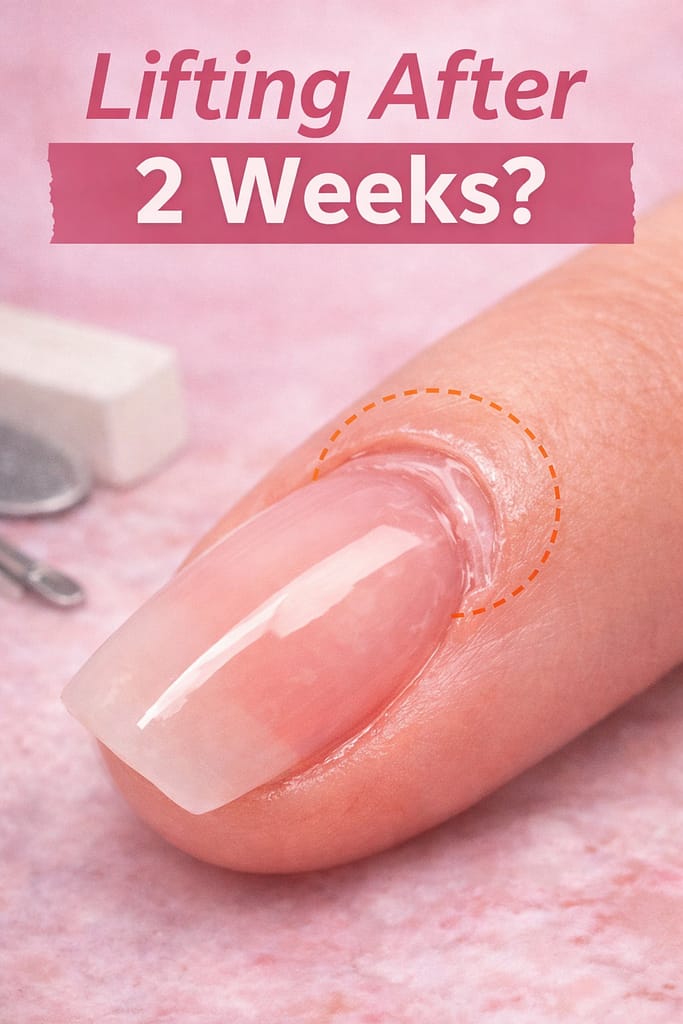
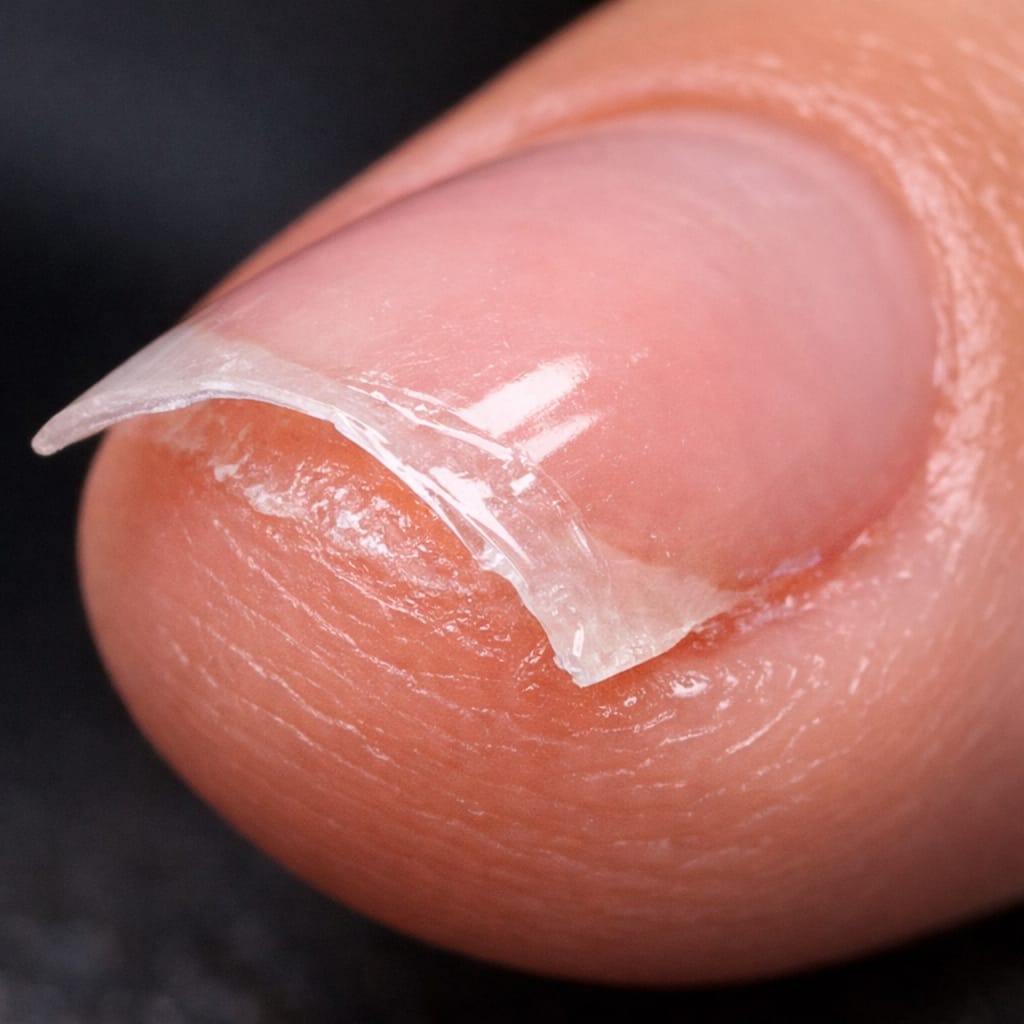
Builder gel lifting that appears around the second week is one of the most common — and most misunderstood — retention issues in nail services.
The set looks perfect at first. The structure seems balanced. The cuticle area is clean. The client leaves satisfied.
Then, around day 10 to 14, lifting begins.
This timing is not random.
When builder gel starts lifting after two weeks, the cause is rarely a simple preparation mistake. In most cases, it is the result of delayed mechanical stress, natural nail growth, structural imbalance, or product–nail compatibility issues that only become visible over time.
Understanding why lifting appears specifically around week two requires looking at how the nail system evolves after application.
Why Week Two Is a Critical Point
The second week marks a structural transition phase.
By this point:
- The natural nail has grown forward
- Stress distribution has shifted
- The apex position has effectively migrated
- Environmental exposure has accumulated
Even a well-applied builder gel set begins to experience new force patterns during this time.
Lifting that appears immediately (within 2–3 days) is usually contamination-related.
Lifting that appears around week two is typically structural.
That distinction matters.
Natural Nail Growth Changes Tension Distribution
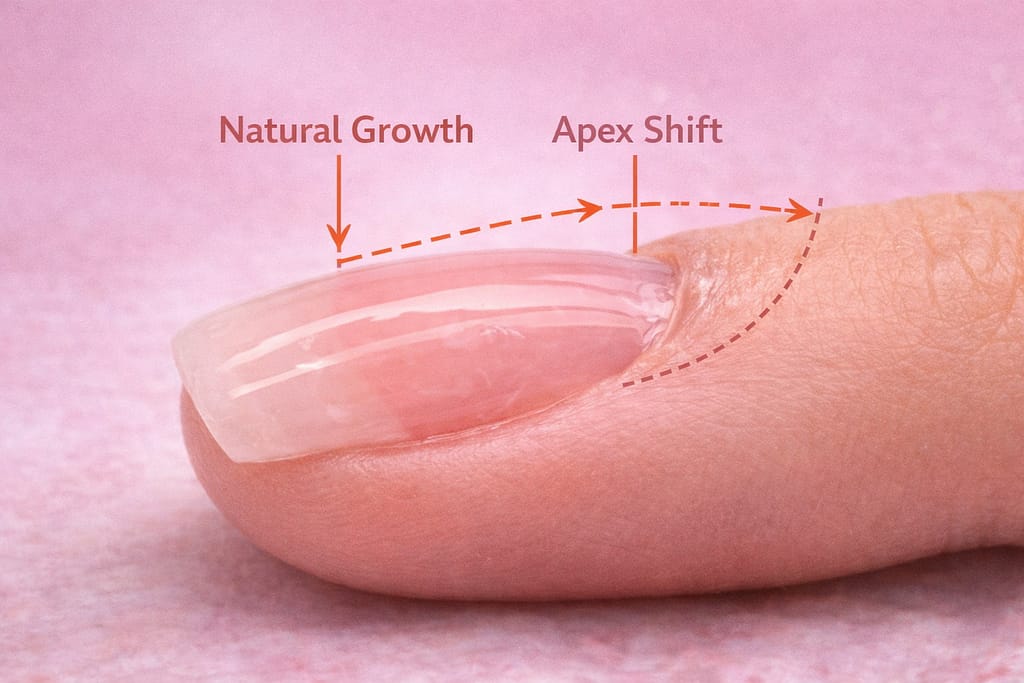
The natural nail grows approximately 2–3 millimeters per month. By week two, visible growth is already present at the base.
As the nail grows:
- The entire overlay moves forward This movement often results in lifting at the base, similar to the patterns explained in our article on why builder gel lifts at the cuticle line.
- The original stress balance shifts
- The apex is no longer aligned with the new stress area
If the original structure was slightly underbuilt, this shift becomes noticeable around day 10–14.
The nail system was stable at day one.
It becomes mechanically challenged by week two.
This is especially relevant in cases involving flexible nail plates, where movement magnifies structural weaknesses.
Apex Migration and Delayed Instability
The apex is designed to support the stress zone.
However, once the nail grows:
- The stress zone moves forward
- The apex stays in its original position
- Structural alignment changes
If the original apex placement was even slightly too far forward, the nail may remain stable for the first week but begin lifting as tension redistributes.
This delayed instability explains why some clients report:
“It was perfect at first, then it suddenly started lifting.”
It did not suddenly fail.
The mechanics simply reached their threshold.
Environmental Stress Accumulation
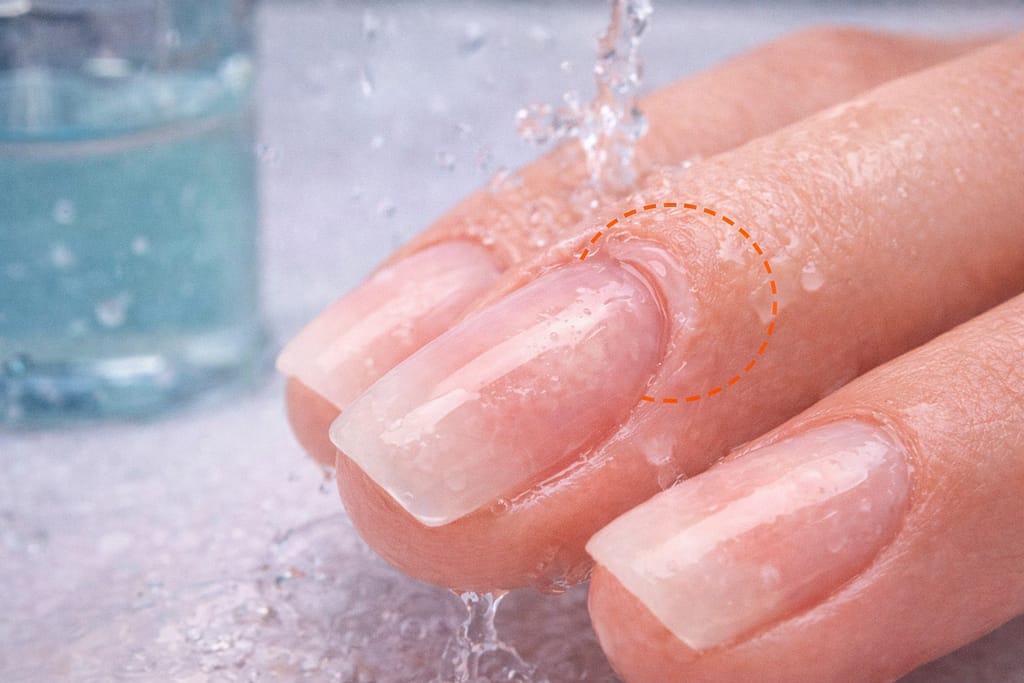
Retention is not tested in the salon.
It is tested in daily life.
By week two, the nails have been exposed to:
- Repeated hand washing
- Cleaning chemicals
- Temperature changes
- Mechanical pressure
- Hydration fluctuations
These environmental cycles cause the natural nail plate to expand and contract subtly.
If adhesion or structure was slightly compromised, these repeated cycles amplify the weakness.
Mechanical fatigue builds gradually.
Week two is often when that fatigue becomes visible.
Product Rigidity vs Nail Flexibility
Builder gels vary in elasticity.
A highly rigid builder gel applied to a flexible natural nail may initially appear secure. However, over time, the mismatch between gel rigidity and nail movement creates stress at the adhesion layer.
The nail bends microscopically.
The gel resists movement.
The bond absorbs the stress — until it no longer can.
This delayed incompatibility frequently shows itself around the second week rather than immediately.
Compatibility is just as important as prep.
Over-Refinement During Application
Retention problems are sometimes created during the finishing stage.
After curing, technicians refine the structure with a file or e-file. If the cuticle zone or stress area becomes over-thinned during this stage, the structure may appear visually perfect but lack long-term reinforcement.
A structure that is slightly under-supported can survive light use.
After two weeks of normal wear, however, that weakness becomes exposed.
Lifting may begin at:
- The cuticle area
- The sidewalls
- The stress point
Depending on where the imbalance originated.
Refill Prep Can Trigger Early Lifting
In some cases, the issue is not the original application — but how the regrowth area was handled during maintenance.
Aggressive removal of product near the cuticle during a rebalance can thin the base excessively.
When a new layer is applied over a compromised area, adhesion may initially seem fine. But as the nail continues to grow, stress reappears quickly.
This can make it seem like “week two lifting” when the real issue is cumulative structural fatigue.
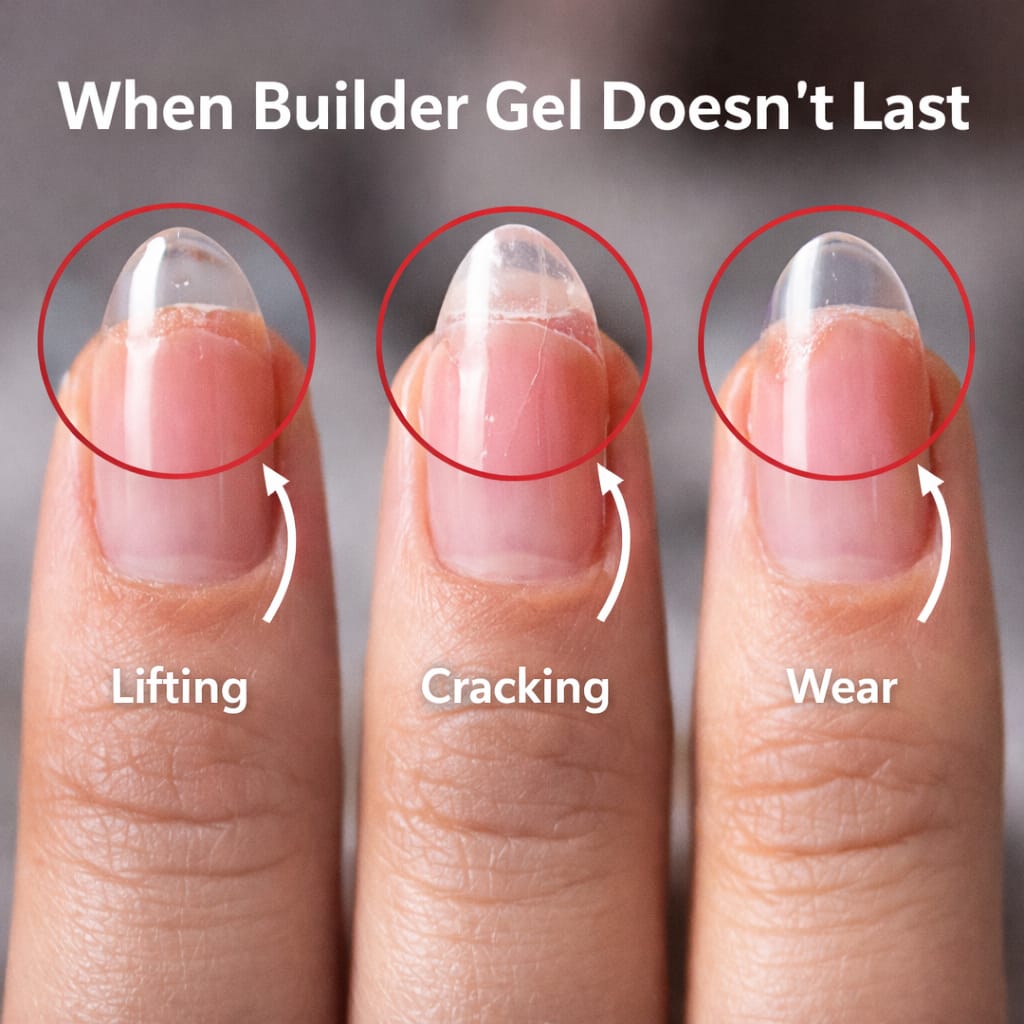
Cuticle vs Sidewall vs Stress Point Lifting
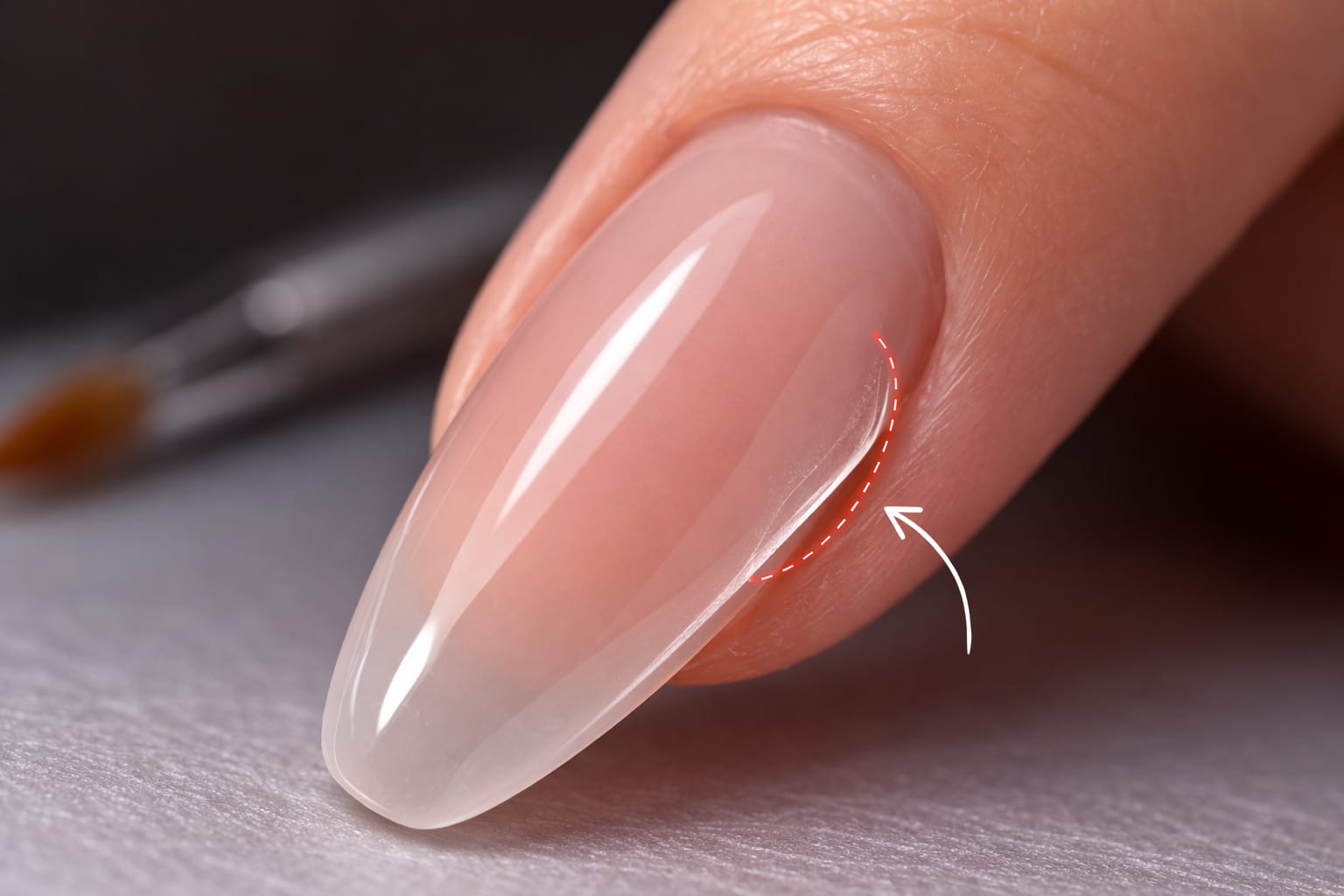
The location of the lifting reveals the cause.
- Cuticle area lifting often indicates forward growth stress or thinning at the base, as discussed in our guide on why builder gel lifts at the cuticle area.
- Sidewall lifting frequently relates to lateral stress and incorrect side reinforcement.
- Stress point lifting suggests apex misplacement.
Identifying the pattern is more useful than repeating prep steps.
How to Prevent Builder Gel Lifting After Two Weeks
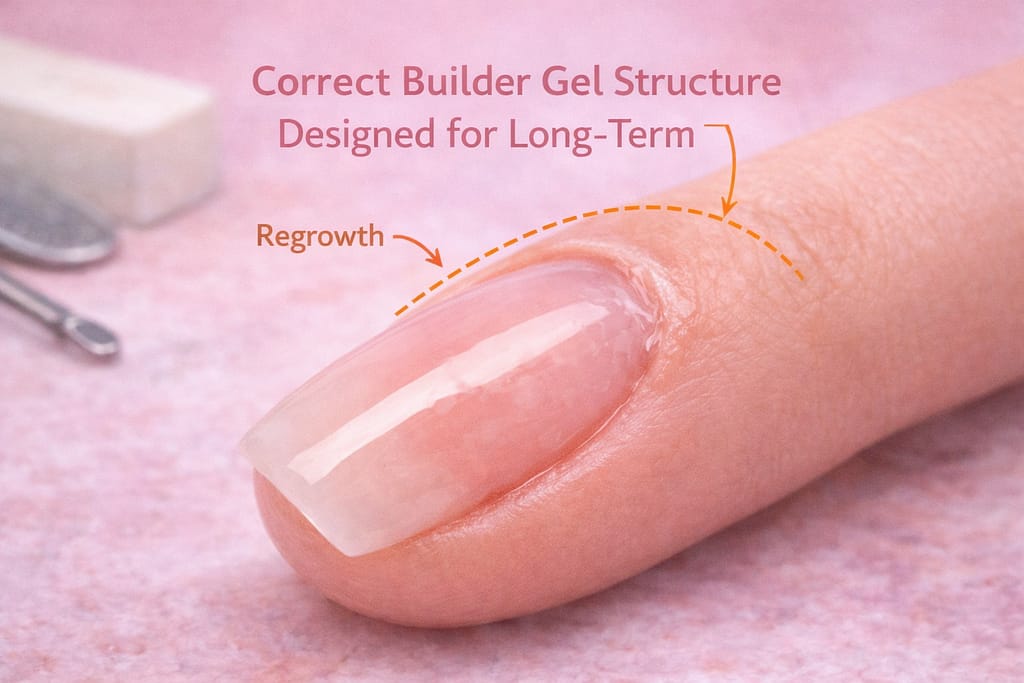
Prevention requires planning for growth — not just day-one aesthetics.
- Position the apex slightly more strategically to accommodate forward stress.
- Avoid thinning the cuticle zone excessively during refinement.
- Ensure even curing, especially at the base and sidewalls.
- Consider using a flexible base layer for softer nails.
- Educate clients about mechanical pressure and nail care.
Builder gel structure must anticipate movement.
Retention is about mechanical design, not just clean prep.
The Bigger Picture: Delayed Failure vs Immediate Failure
Immediate lifting is usually procedural.
Delayed lifting is structural.
Week two lifting is rarely about dust, oil, or contamination alone. It is usually about how the nail system responded to growth, stress redistribution, and environmental fatigue over time.
When structure and flexibility are balanced, week two should not be a breaking point.
When they are not, it becomes the moment where hidden weaknesses surface.
Final Thoughts
Builder gel lifting after two weeks is not random and it is not mysterious.
It represents a mechanical turning point — the moment when natural nail growth, structural alignment, and accumulated stress intersect.
By designing your structure with forward growth in mind and reinforcing stress distribution from the start, week two lifting becomes predictable — and preventable.
Long-term retention is not created on day one.
It is engineered for day fourteen.