Builder Gel Cracking: 6 Common Causes and How to Stop It
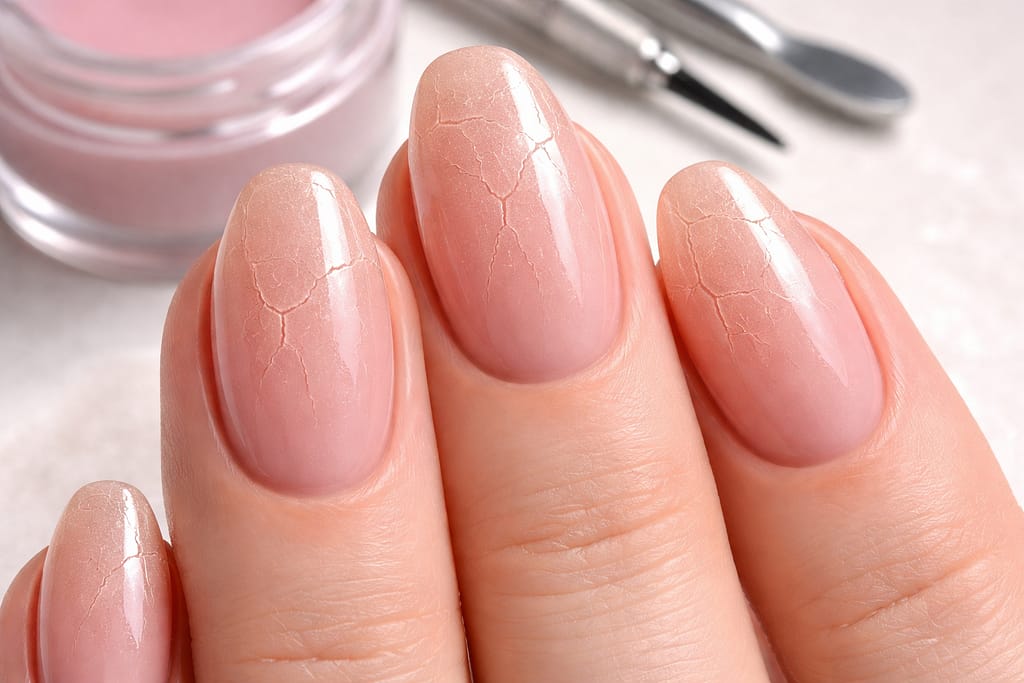
Builder gel cracking is one of the most frustrating problems for nail techs—especially when the application looks perfect at first. The surface is smooth, the structure seems balanced, and yet after a few days, fine cracks begin to appear.
In most cases, cracking is blamed on product quality. But just like lifting, cracking is rarely caused by the builder gel itself. It’s almost always a structural or technical issue.
Builder gel is designed to add strength, not flexibility. When it’s applied without respecting stress points and natural nail movement, cracks are almost inevitable. Understanding why cracking happens is the first step to preventing it completely.
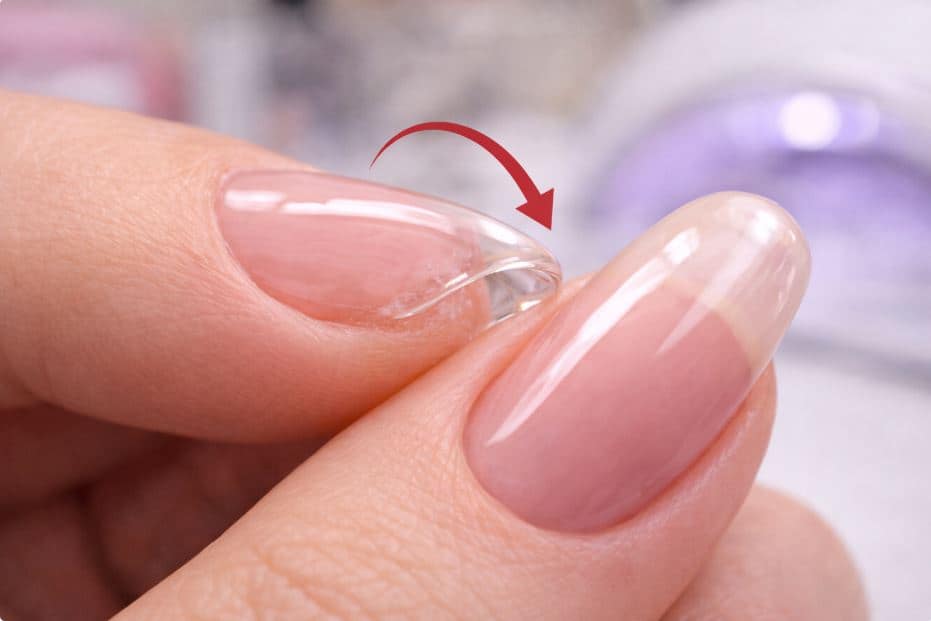
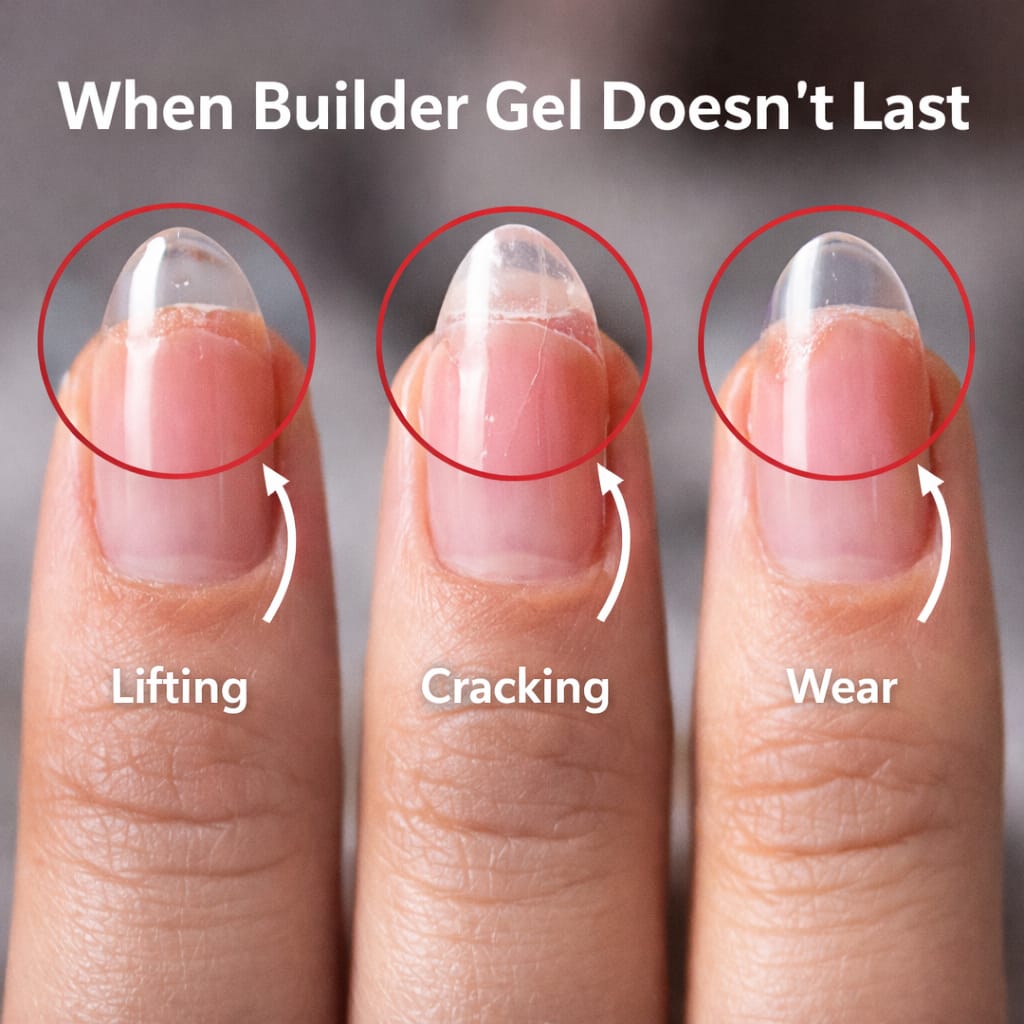
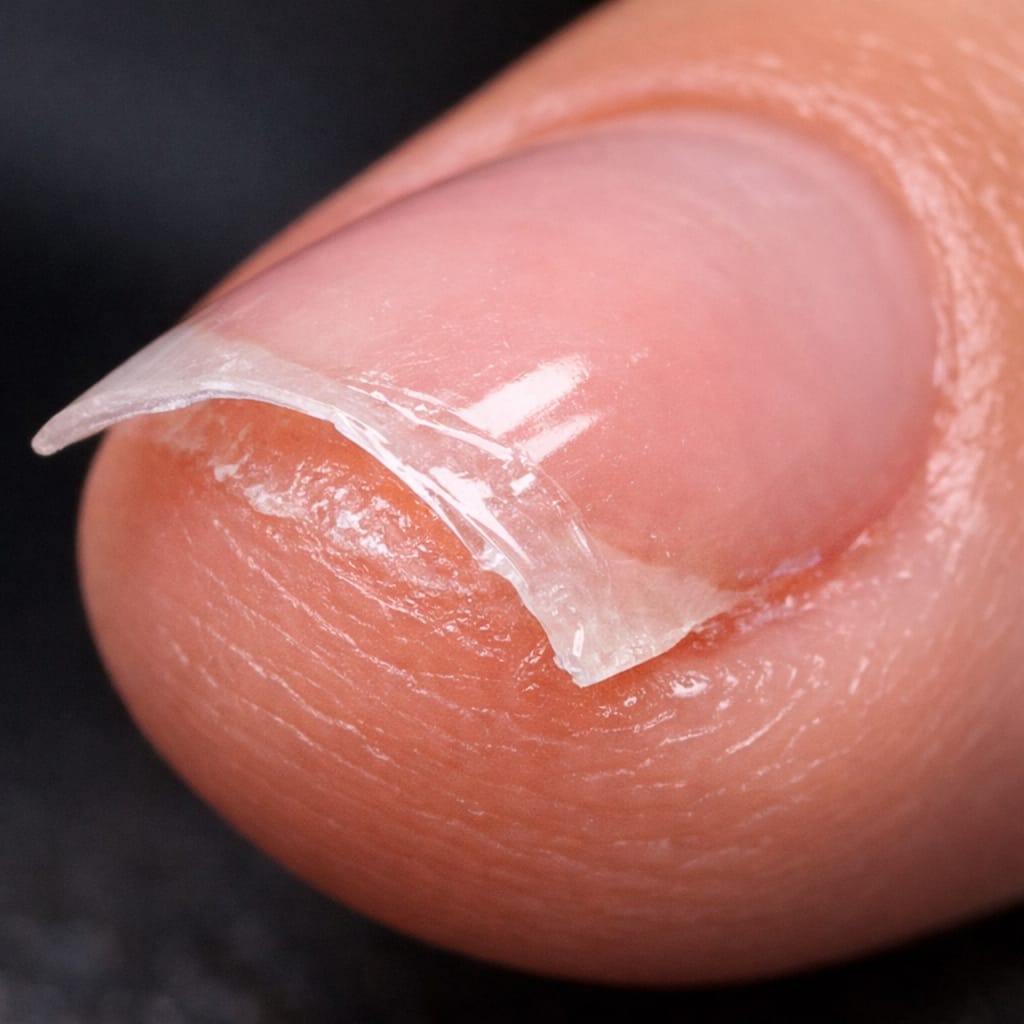
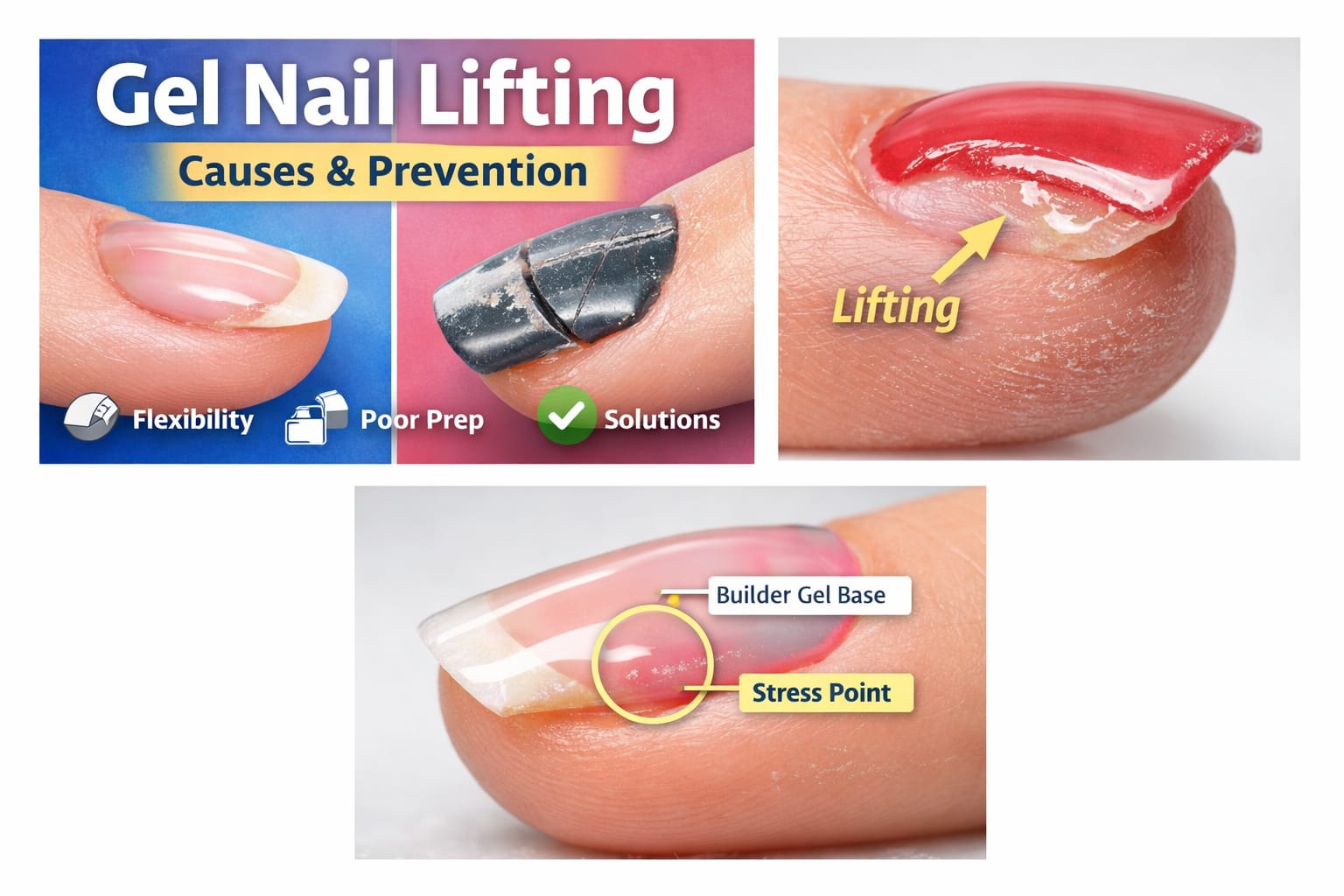
Many nail techs confuse cracking with lifting, but these are two different structural problems. If your builder gel separates from the natural nail instead of cracking, the issue may be related to builder gel lifting problems rather than the gel itself.
What Does Builder Gel Cracking Actually Mean?
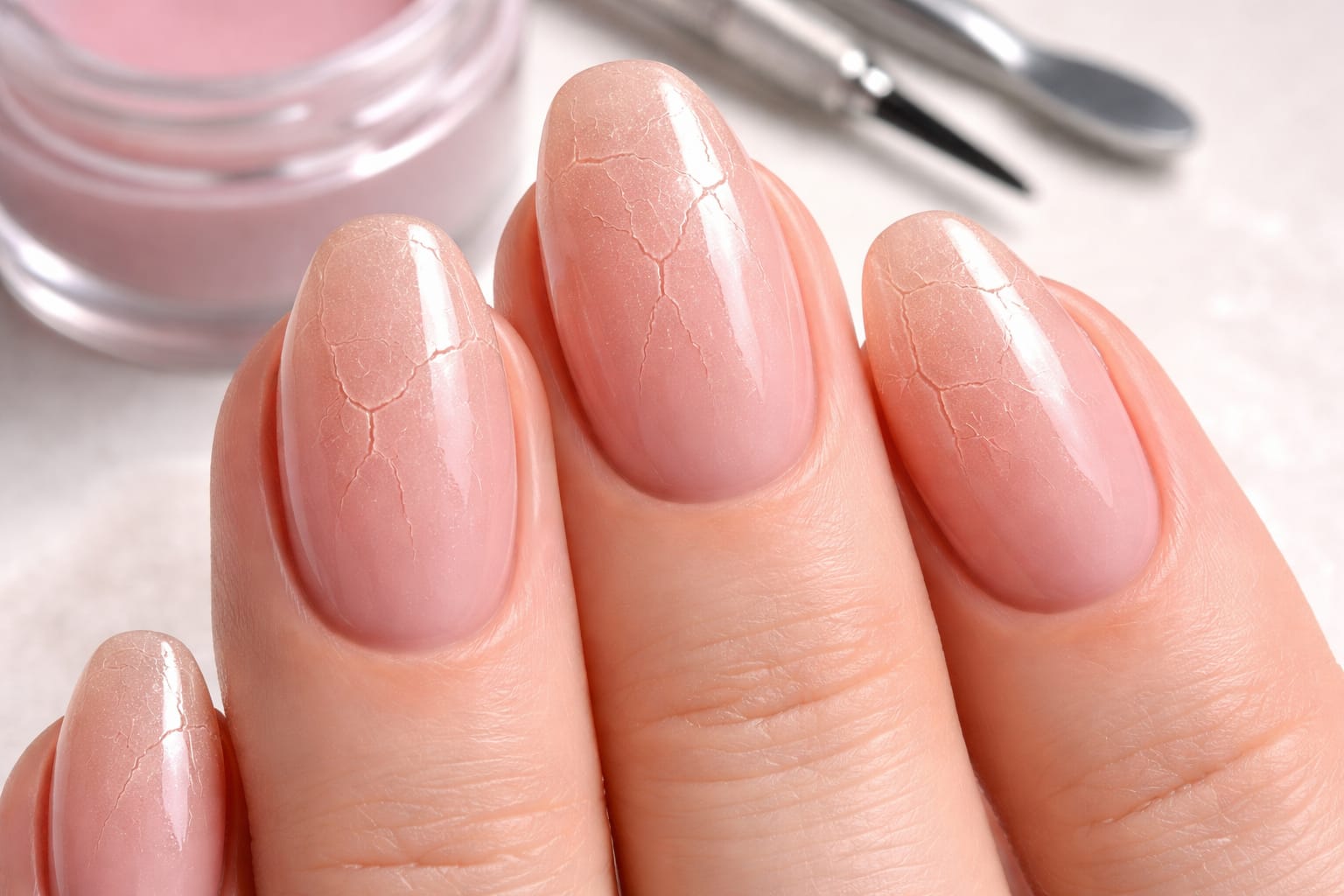
Cracking doesn’t always mean visible breaks or chips. In many cases, it starts as microscopic fractures within the gel structure. These tiny cracks weaken the enhancement over time until they become visible lines or splits.
Unlike lifting, which separates the gel from the natural nail, cracking happens within the gel itself. This distinction matters because the solution is different. Re-prepping the nail won’t fix a structural imbalance.
Cracking is a sign that the gel cannot properly absorb pressure or movement.
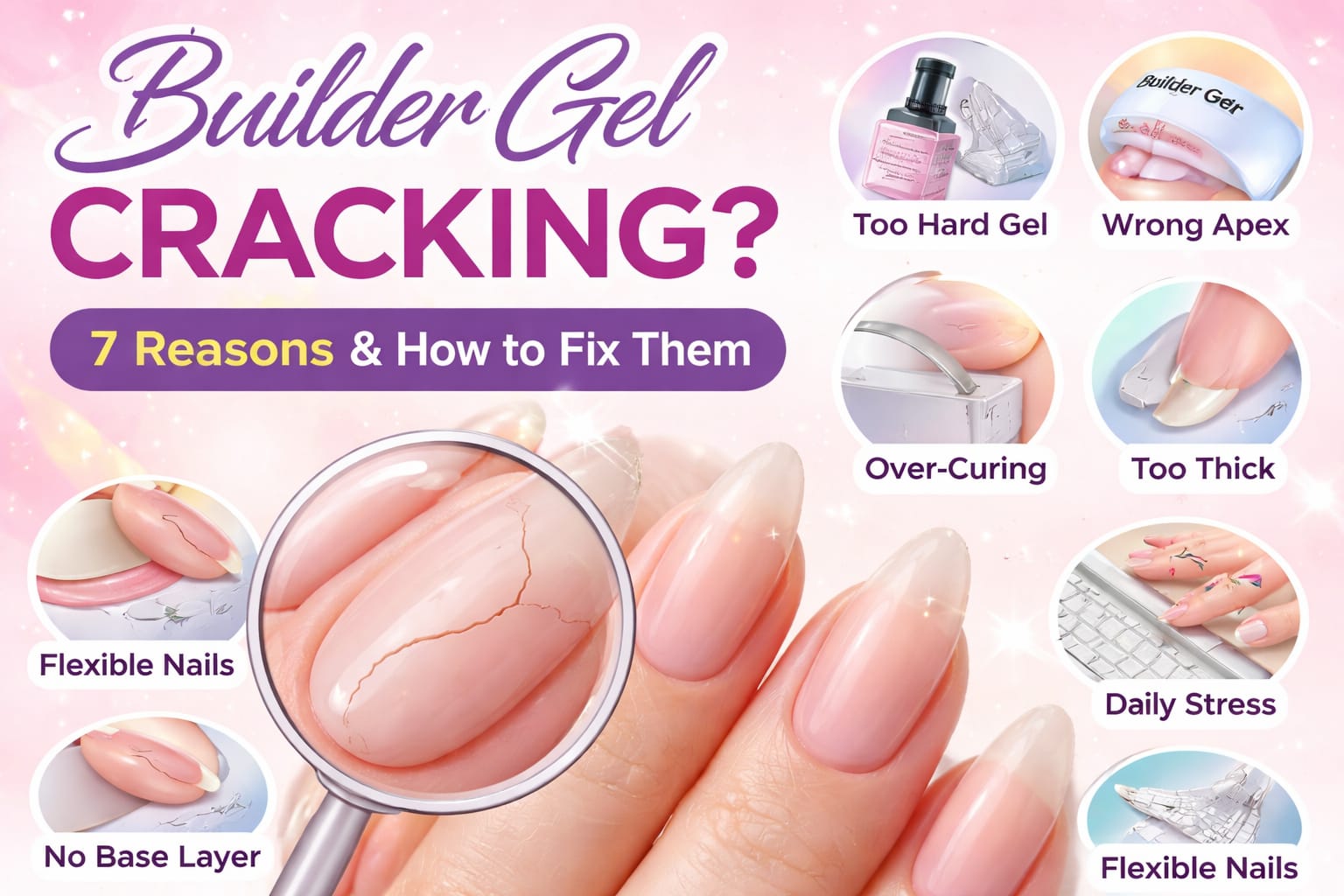
6 Common Reasons Builder Gel Cracks
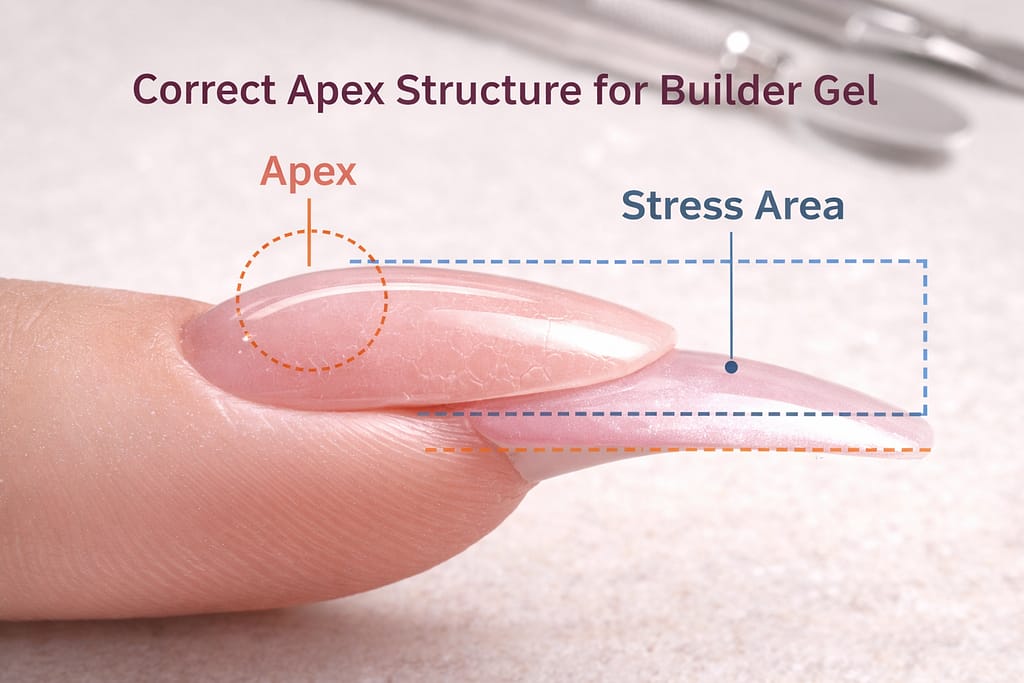
1. Incorrect Apex Placement
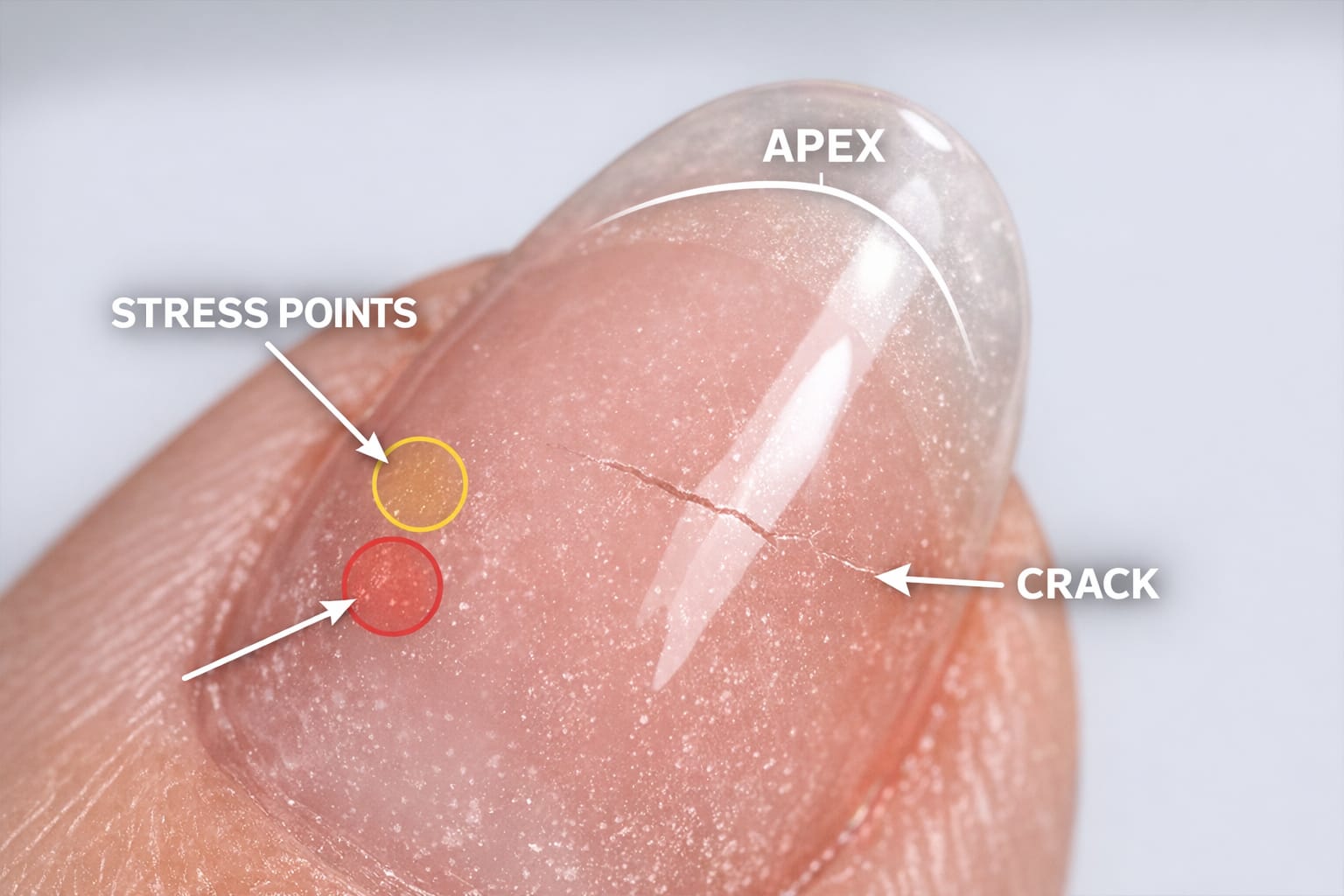
The apex is not just for appearance—it’s the main support point of the nail. Cracking often starts when the nail structure cannot properly support daily pressure. Understanding how the apex and stress area work together is essential for building durable enhancements, especially when working with builder gel.
If the apex is too far back, too far forward, or too flat, pressure distributes unevenly across the nail plate.
When stress concentrates in one weak area, the gel eventually fractures.
2. Builder Gel Applied Too Thin in Stress Areas
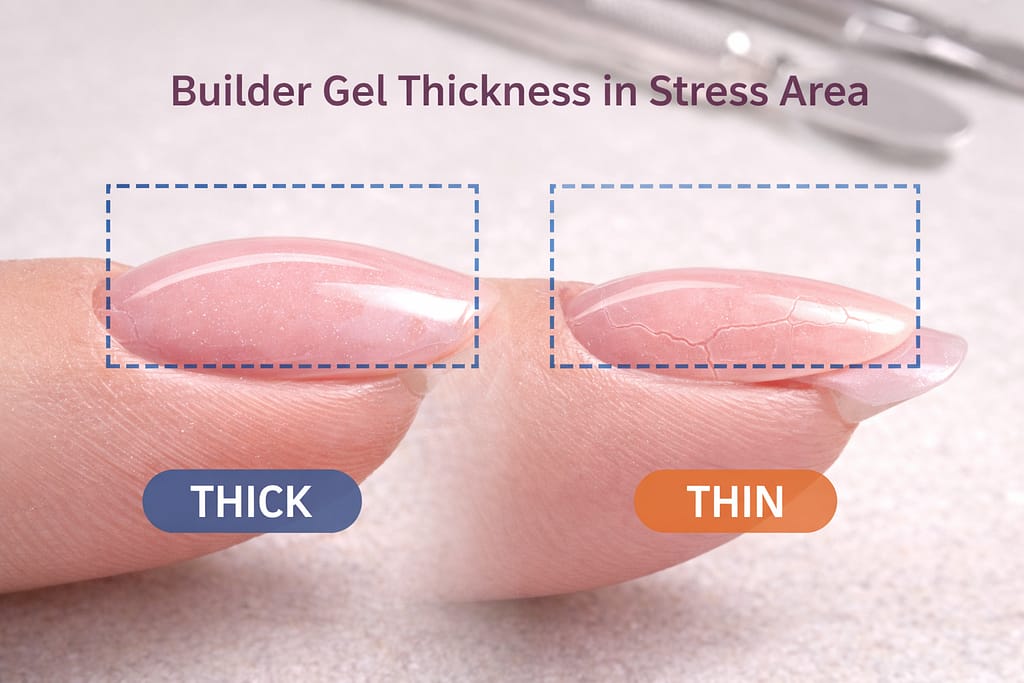
Many cracking issues come from nails that look good but lack material where it matters most.
The stress area (near the apex and sidewalls) must have enough thickness to absorb daily impact.
Builder gel that’s too thin behaves like glass instead of armor.
3. Over-Curing or Incorrect Lamp Power
Using a lamp that’s too strong—or curing longer than recommended—can make builder gel overly rigid.
When gel becomes too hard, it loses its ability to tolerate natural nail movement.
A brittle structure doesn’t bend. It breaks.
4. Ignoring Natural Nail Flexibility
Not all natural nails behave the same.
Clients with flexible or thin nail plates require adjusted structure and thickness.
Applying builder gel with the same approach on every nail type often leads to cracking on flexible nails, especially at the free edge and stress points.
5. Old or Degraded Builder Gel
Builder gel that has been exposed to excessive heat, UV light, or air over time may cure improperly.
Even if it looks normal in the pot, its internal chemistry can change.
Degraded gel often cures unevenly, creating weak zones that crack under pressure.
6. Filing Errors After Curing
Aggressive filing—especially over the apex or stress area—can thin the gel without you realizing it.
This creates structural weak spots even if the nail originally had correct thickness.
Cracks often appear exactly where too much product was removed.
How to Prevent Builder Gel Cracking
Preventing cracking isn’t about adding more product everywhere—it’s about placing it strategically.
Focus on:
- Proper apex placement based on nail length
- Adequate thickness in stress zones
- Correct curing time for your specific lamp
- Adjusting structure for flexible nails
- Gentle, controlled filing after curing
When builder gel is structured correctly, it distributes pressure instead of resisting it.
Builder Gel vs Hard Gel: Cracking Differences
Builder gel and hard gel respond differently to stress.
Builder gel relies heavily on structure, while hard gel relies more on rigidity.
Cracking with builder gel usually means structural imbalance.
Cracking with hard gel often means over-hardening or improper removal.
Understanding which system you’re working with helps you diagnose the problem faster.
Final Thoughts
Builder gel cracking is not a random issue, and it’s rarely the product’s fault.
It’s a signal that the nail structure isn’t supporting real-life movement.
When you approach builder gel with a structural mindset—not just an aesthetic one—cracking becomes one of the easiest problems to eliminate.
Strong nails aren’t about hardness.
They’re about balance.