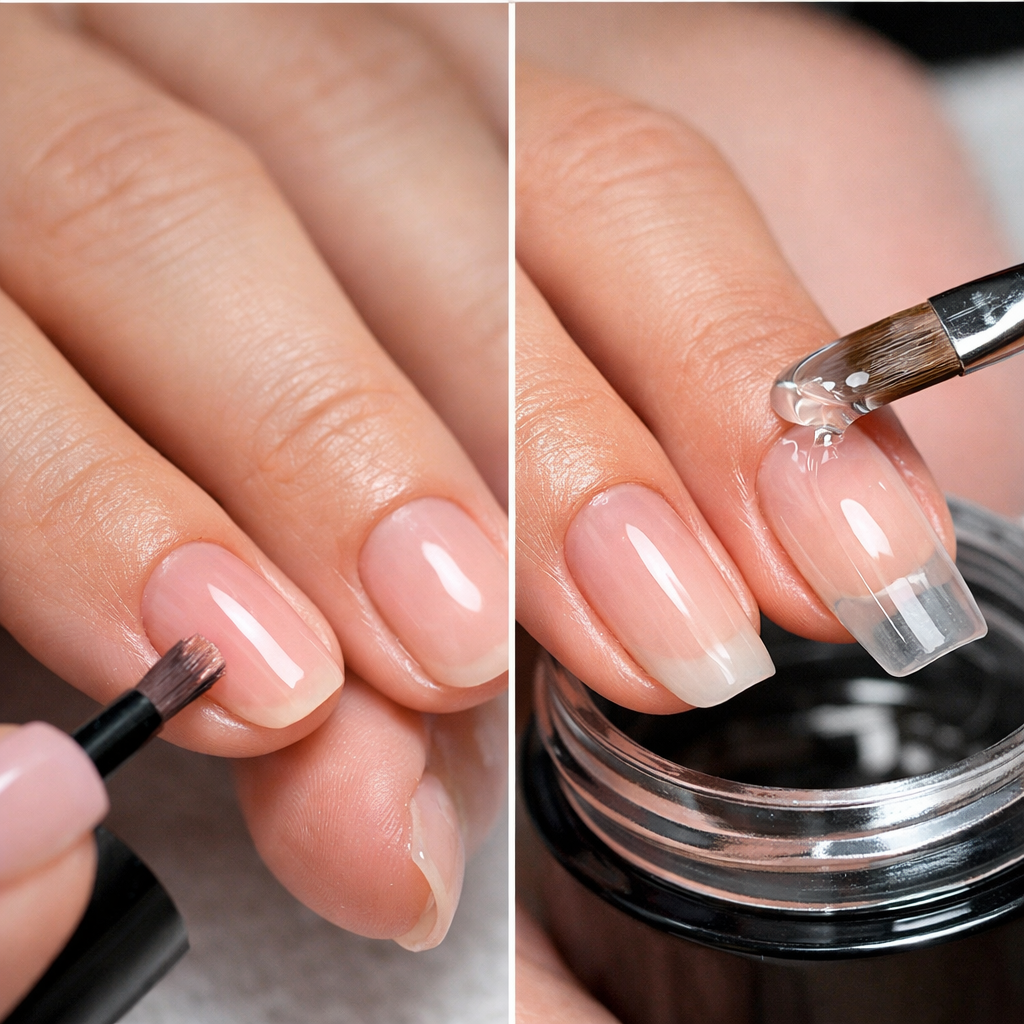

Introduction
Builder gel and rubber base are often recommended for weak or flexible nails, yet they serve different purposes. Many people switch between the two hoping to solve issues like lifting, breakage, or short wear time, without fully understanding how each system works.
Choosing the right option isn’t about trends or brand names. It’s about how your nails behave and what kind of support they actually need.
What Is Builder Gel?

Builder gel is a structured gel designed to reinforce the natural nail. Its main function is to add strength and shape while controlling how the nail responds to daily stress.
Builder gel allows for:
- Apex creation
- Stress point support
- Structural balance across the nail
Because of this, it’s often used on nails that bend, break, or struggle to grow past a certain length.
What Is Rubber Base?

Rubber base is a flexible base gel with added elasticity. Unlike builder gel, it doesn’t focus on structure. Instead, it moves with the natural nail.
Rubber base is typically used to:
- Improve adhesion on flexible nails
- Reduce minor lifting
- Provide light reinforcement
It’s thinner than builder gel and doesn’t significantly alter nail shape.
The Key Difference: Structure vs Flexibility
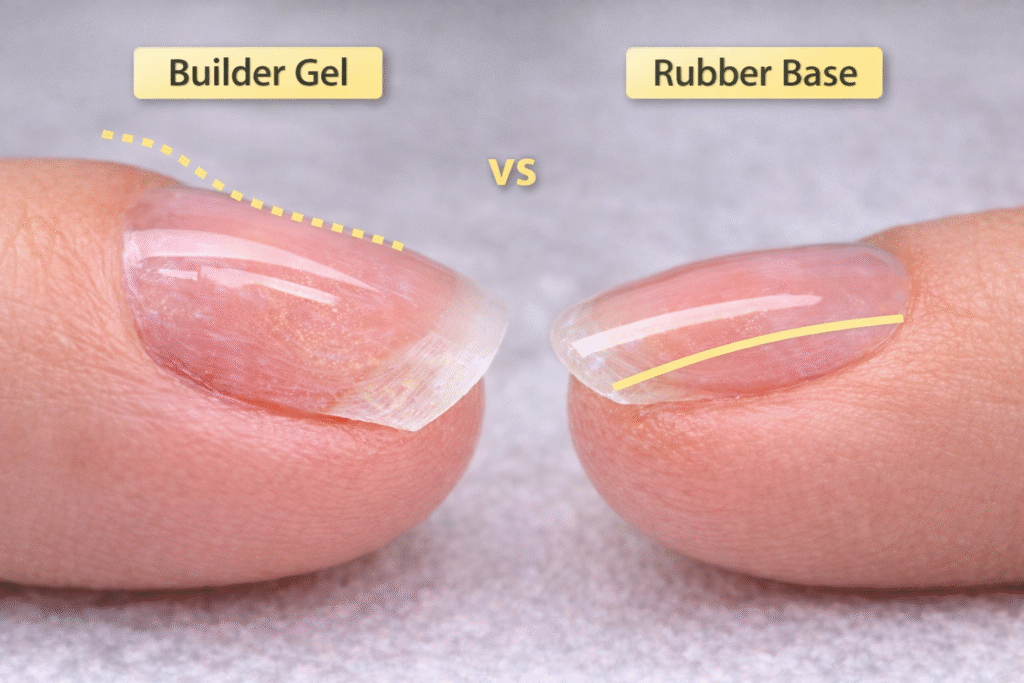
This is where confusion usually starts.
Builder gel controls the nail’s architecture.
Rubber base follows the nail’s movement.
If a nail bends excessively, rubber base can help by absorbing movement. But if a nail lacks strength or collapses at the stress point, rubber base alone often isn’t enough.
We previously explained how structure impacts durability when comparing gel nails vs builder gel, which helps clarify this difference.
When Builder Gel Makes More Sense
Builder gel is usually the better choice if:
- Nails break at the stress point
- Length retention is a problem
- The nail plate is flat or uneven
- Gel polish lifts repeatedly despite good prep
In these cases, structure matters more than flexibility.
When Rubber Base Is the Better Option
Rubber base works well when:
- Nails are flexible but not weak
- Lifting happens mainly at the edges
- A natural, thin finish is preferred
- Minimal reinforcement is needed
It’s often used as a supportive layer under gel polish rather than as a standalone strengthening system.
Can They Be Used Together?
Yes — but carefully.
Some nail types benefit from a rubber base layer for adhesion, followed by builder gel for structure. This approach works best when flexibility and strength both need to be addressed.
However, layering without understanding nail behavior can cause the opposite effect and increase lifting.
Final Thoughts
Builder gel and rubber base are not interchangeable. They solve different problems.
Understanding whether your nails need structure or flexibility makes the choice much clearer. Once the system matches the nail’s behavior, durability improves naturally.
In our previous posts, we covered how nail structure affects longevity and why gel nails lift. Together, these topics explain why the right foundation matters more than the product itself.