Introduction
BIAB (Builder in a Bottle) has quickly become one of the most popular nail systems—but when it comes to BIAB vs builder gel, many nail technicians still don’t fully understand the difference.
Many nail technicians and clients confuse BIAB with traditional builder gel, which often leads to incorrect application, poor retention, and unexpected lifting issues.
Understanding the difference between these two systems is essential—not only for better results, but also for choosing the right product for each client.
If you’re struggling with retention problems, especially around the cuticle area, you may also notice similar issues when comparing biab vs builder gel lifting issues.
BIAB (Builder in a Bottle) has quickly become one of the most popular nail systems—but when it comes to BIAB vs builder gel, many nail technicians still don’t fully understand the difference.
What Is BIAB (Builder in a Bottle)?
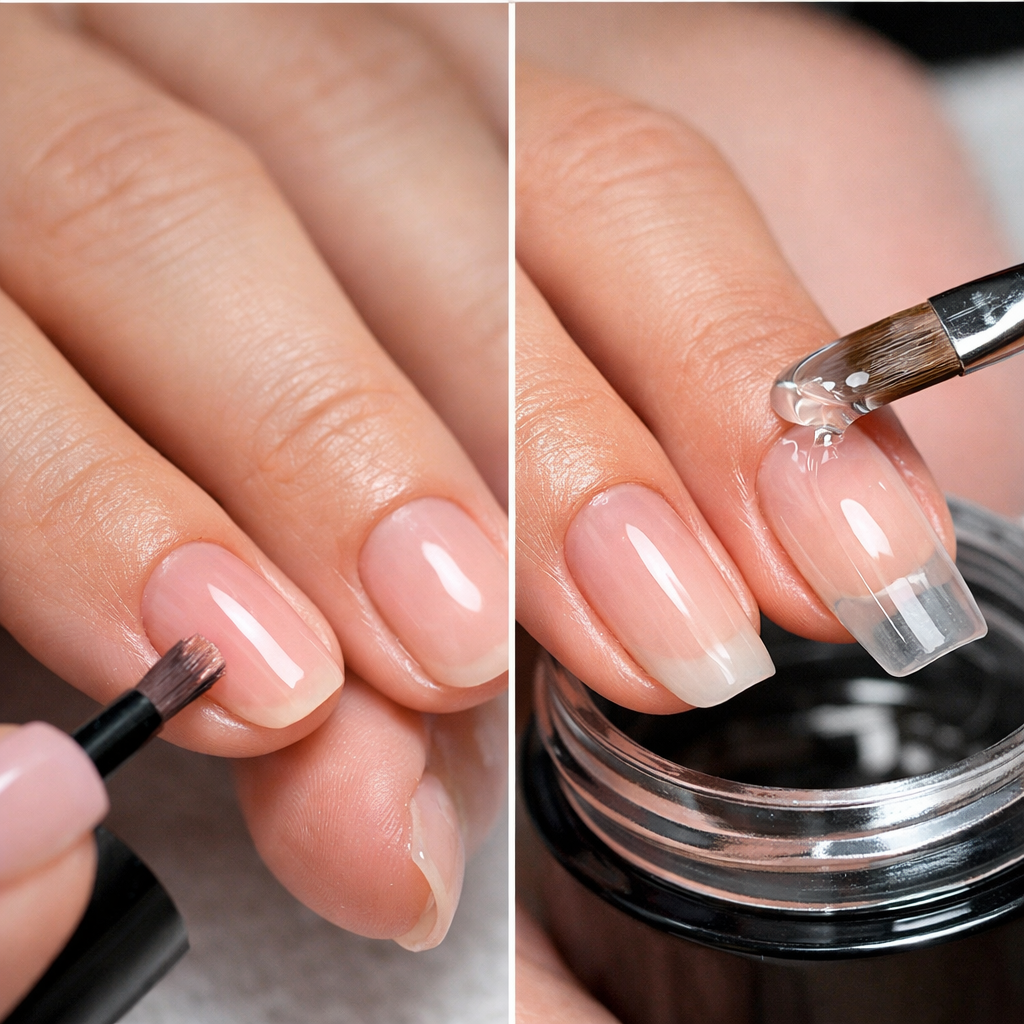
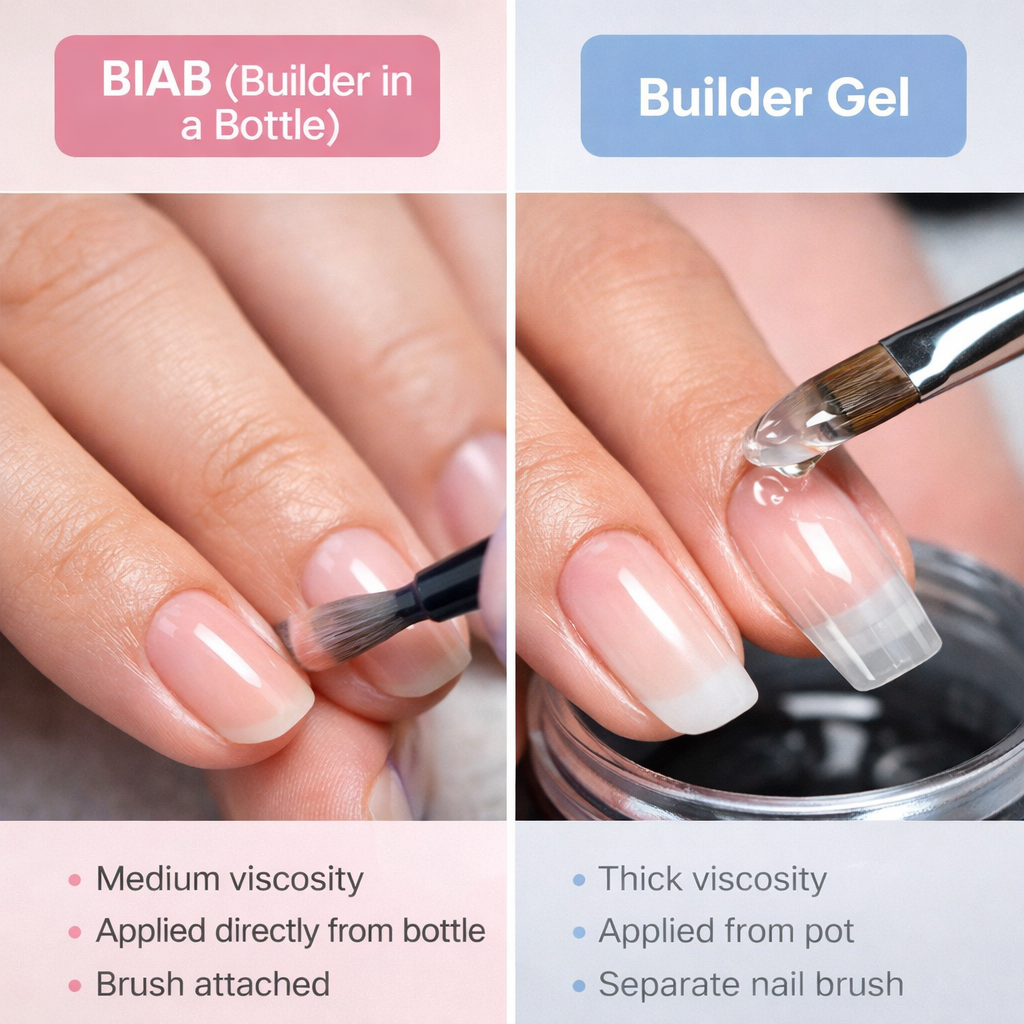
BIAB is a type of builder gel that comes in a bottle with a built-in brush, similar to gel polish. However, unlike regular gel polish, it has a thicker consistency and is designed to add structure to the natural nail.
It is most commonly used as an overlay system rather than for extensions.
Key characteristics of BIAB:
- Medium viscosity (balanced thickness)
- Self-leveling formula
- Flexible structure
- Usually soak-off removal
- Quick and controlled application
Because of its formulation, BIAB is often marketed as a natural nail strengthening system rather than a sculpting product.
What Is Traditional Builder Gel?
Traditional builder gel usually comes in a pot and is applied using a separate nail brush. It is specifically designed to create strong nail structures, including extensions and advanced shaping.
Key characteristics of builder gel:
- Thick viscosity
- High structural strength
- Lower flexibility
- Full control over shaping
- Typically file-off removal
Builder gel is the go-to choice for nail technicians who need maximum strength and precision.
BIAB vs Builder Gel: The Core Differences
Although both products fall under the “builder gel” category, their behavior on the nail is very different.
Application Method
BIAB is applied directly from the bottle, making it faster and more beginner-friendly. Builder gel, on the other hand, requires a separate brush and more technical control.
Flexibility vs Strength
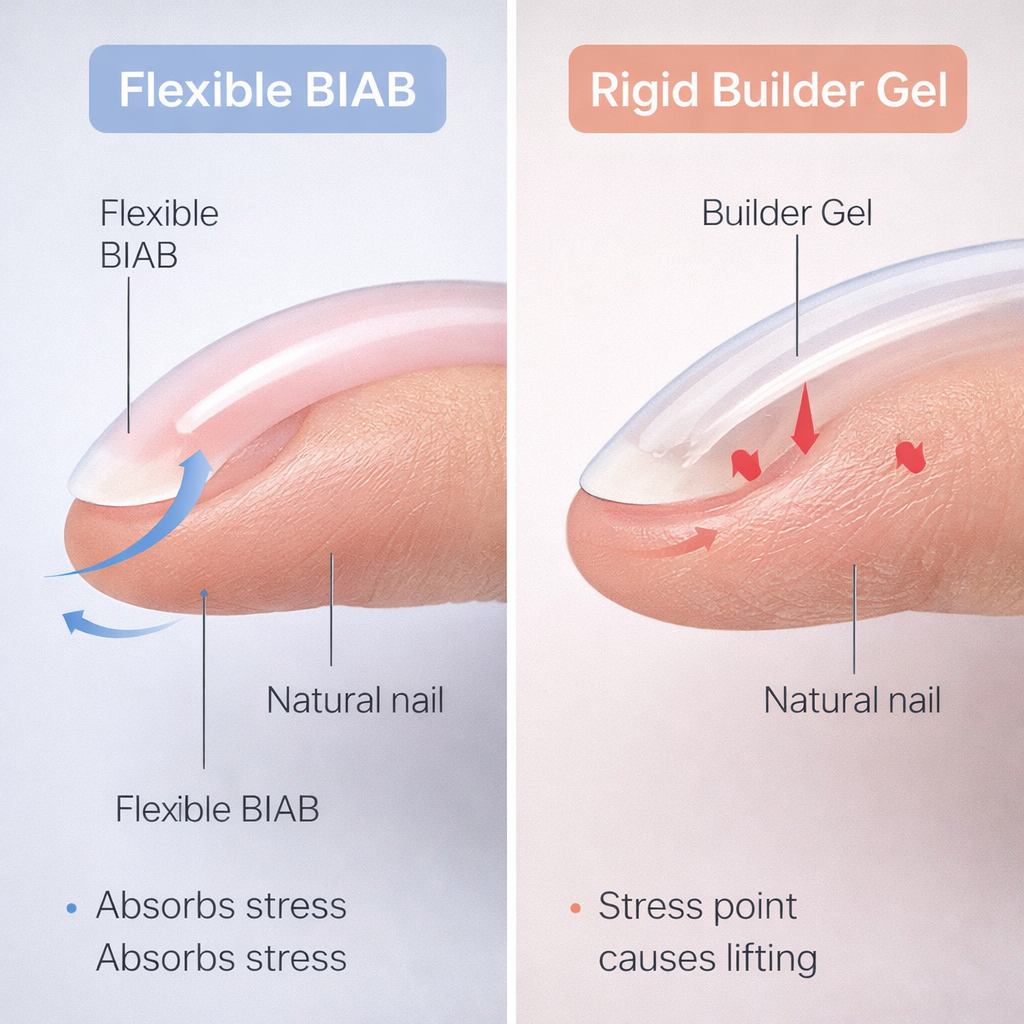
BIAB is flexible and moves with the natural nail. Builder gel is more rigid and provides stronger support, especially for longer nails.
Structure Control
Builder gel allows full control over apex building and structure. BIAB offers limited structural customization due to its thinner, bottle-based format.
Removal Process
BIAB is generally soak-off, making it easier to remove. Builder gel usually requires filing, especially in hard gel systems.
Why BIAB Works Better for Natural Nails
One of the biggest advantages of BIAB is its flexibility.
Natural nails are not completely rigid—they bend slightly during everyday use. When a product is too rigid, it cannot adapt to that movement, which can lead to lifting or cracking over time.
BIAB behaves differently.
Because of its flexible structure, it:
- Moves with the natural nail
- Reduces pressure at the cuticle area
- Minimizes stress points
- Improves retention on short to medium-length nails
This is why BIAB is often the preferred choice for natural nail overlays.
When BIAB Is NOT the Right Choice
Despite its benefits, BIAB is not suitable for every situation.
BIAB may not be ideal when:
- The client wants long nail extensions
- The nail requires major structural correction
- The natural nail is extremely weak or damaged
- Maximum rigidity and strength are required
In these cases, traditional builder gel remains the better option.
Common Mistake: Treating BIAB Like Builder Gel
A common reason for BIAB failure is misunderstanding its purpose.
Some nail technicians attempt to use BIAB as a direct replacement for builder gel, which leads to issues such as:
- Overbuilding thickness
- Lack of proper apex structure
- Reduced durability on longer nails
BIAB is not designed for heavy structure—it is designed for flexibility and natural reinforcement.
Using it incorrectly often results in lifting or premature breakdown.
Which One Should You Choose?
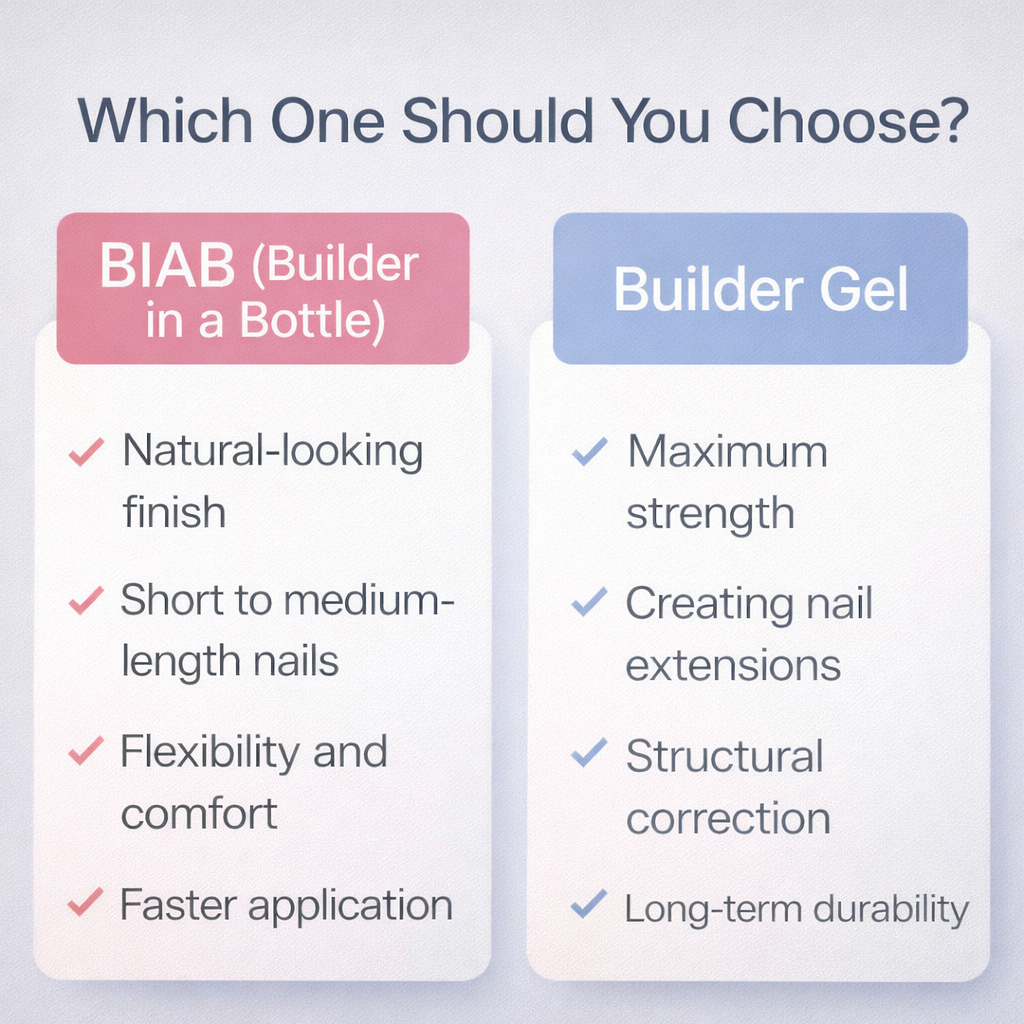
Choosing between BIAB and builder gel depends on the client’s needs.
Choose BIAB if:
- You want a natural-looking finish
- The nails are short to medium length
- Flexibility and comfort are important
- You prefer a faster application process
Choose Builder Gel if:
- You need maximum strength
- You are creating nail extensions
- The nail requires structural correction
- Long-term durability is the priority
Final Thoughts
BIAB and builder gel are not competing products—they serve different purposes.
Understanding how each system behaves allows you to:
- Improve product retention
- Reduce lifting issues
- Customize your approach for each client
Ultimately, knowing when to use BIAB and when to use builder gel is what separates a standard application from a professional result.