Why Builder Gel Lifts Even With Perfect Application
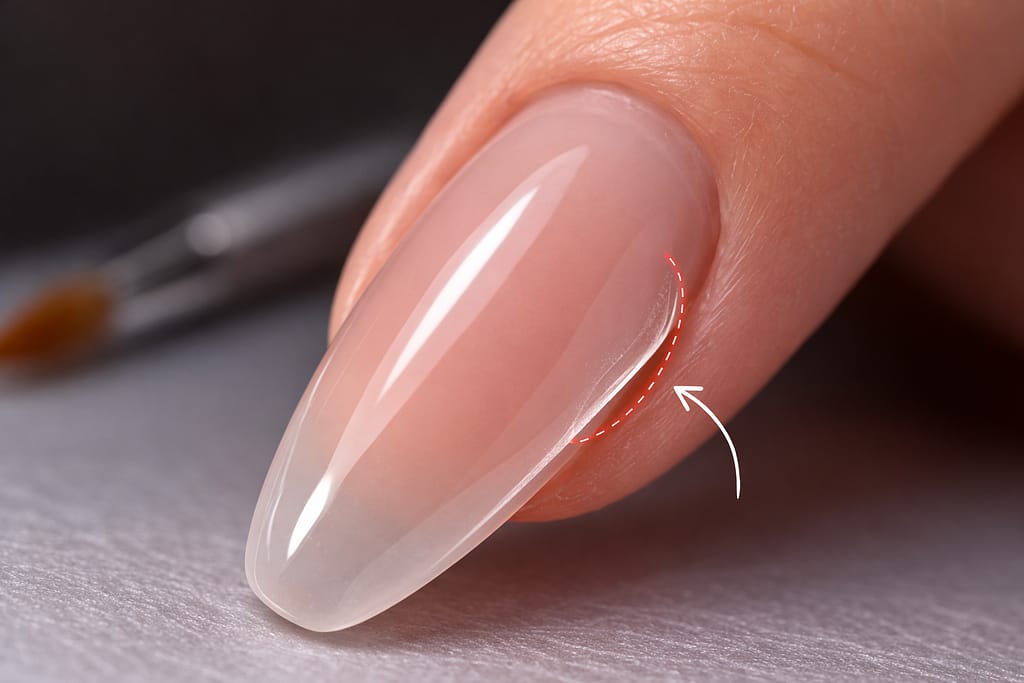
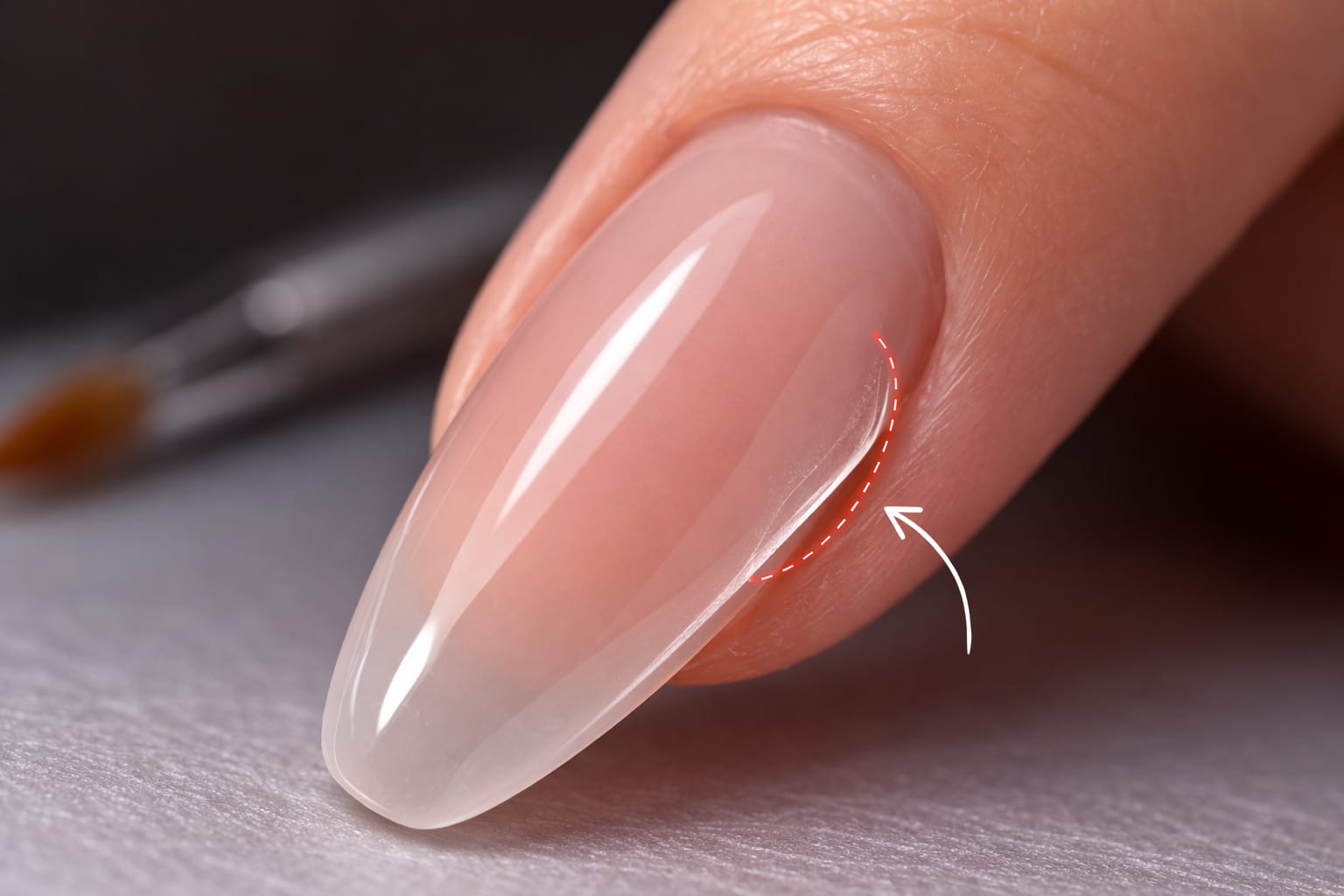
For many nail professionals, one of the most confusing experiences is seeing builder gel lifting even when every step of the application process appears correct.
The nail plate was properly prepped.
The cuticle work was clean.
The structure looked balanced.
The curing process followed the manufacturer’s instructions.
Yet the gel still lifts.
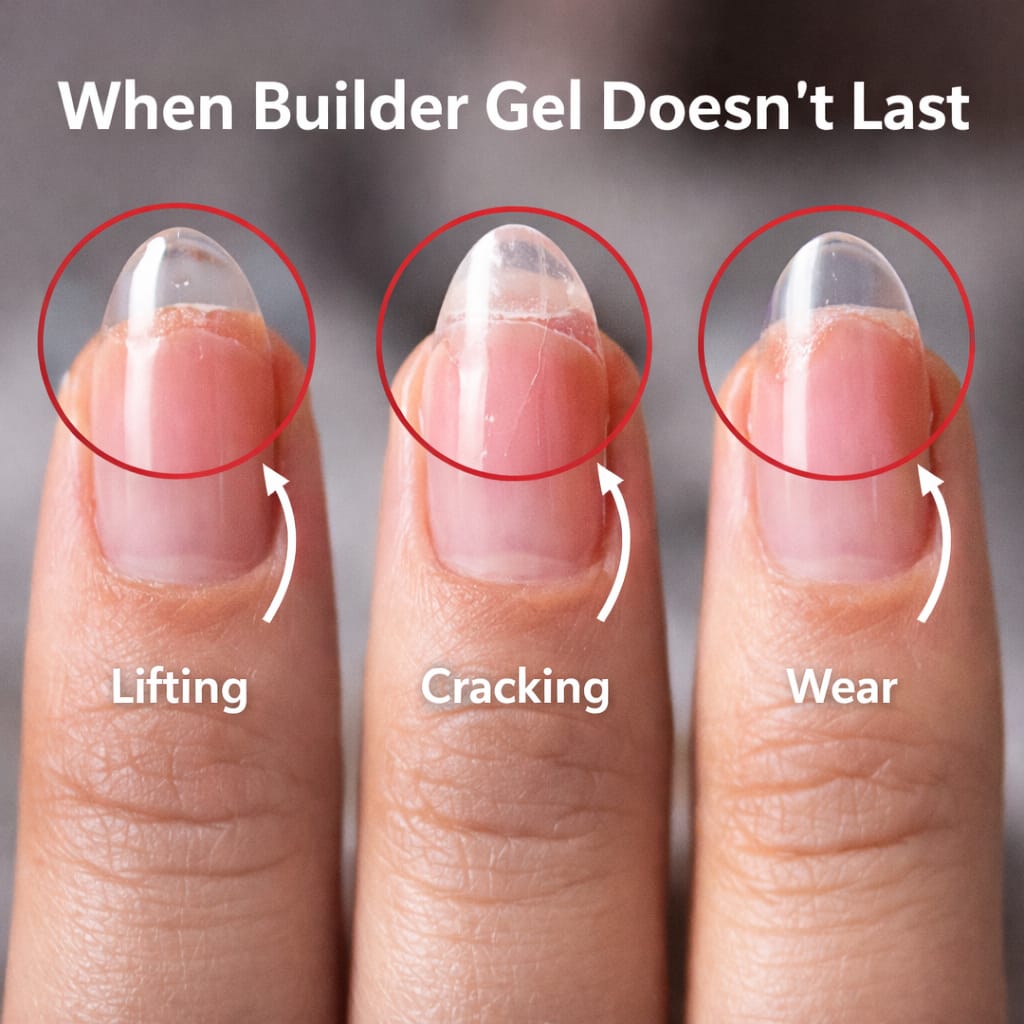
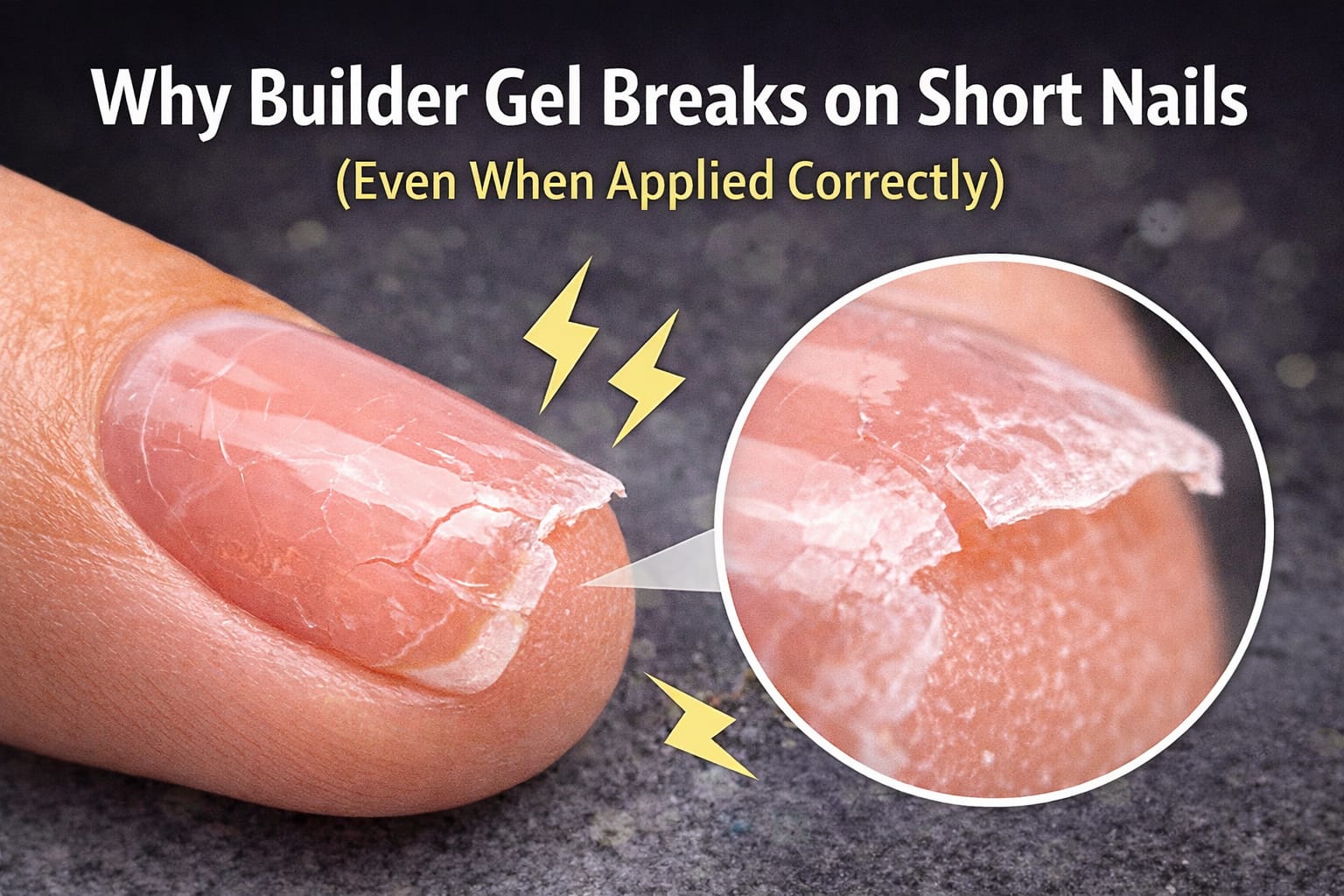
When lifting occurs despite careful technique, the cause is rarely a simple mistake. Instead, it usually points to deeper mechanical factors that affect how the nail system behaves after the service.
Builder gel retention is influenced not only by preparation and application, but also by nail biology, structural design, product compatibility, and environmental stress over time.
Understanding these factors helps explain why lifting can still occur even when the application appears technically perfect.
The Difference Between Technique and Mechanical Behavior
In professional nail services, “perfect application” usually refers to the visible steps of the process:
- Proper cuticle preparation
- Thorough nail plate cleansing
- Balanced builder gel structure
- Correct curing times
These steps are essential. However, they only address the initial bond between the product and the nail.
Long-term retention depends on how the nail system performs under real-world conditions.
After leaving the salon, the nail is exposed to:
- mechanical pressure
- moisture fluctuations
- temperature changes
- natural nail growth
If the structure cannot adapt to these forces, lifting can still occur even when the original application was flawless.
Nail Plate Flexibility and Product Rigidity
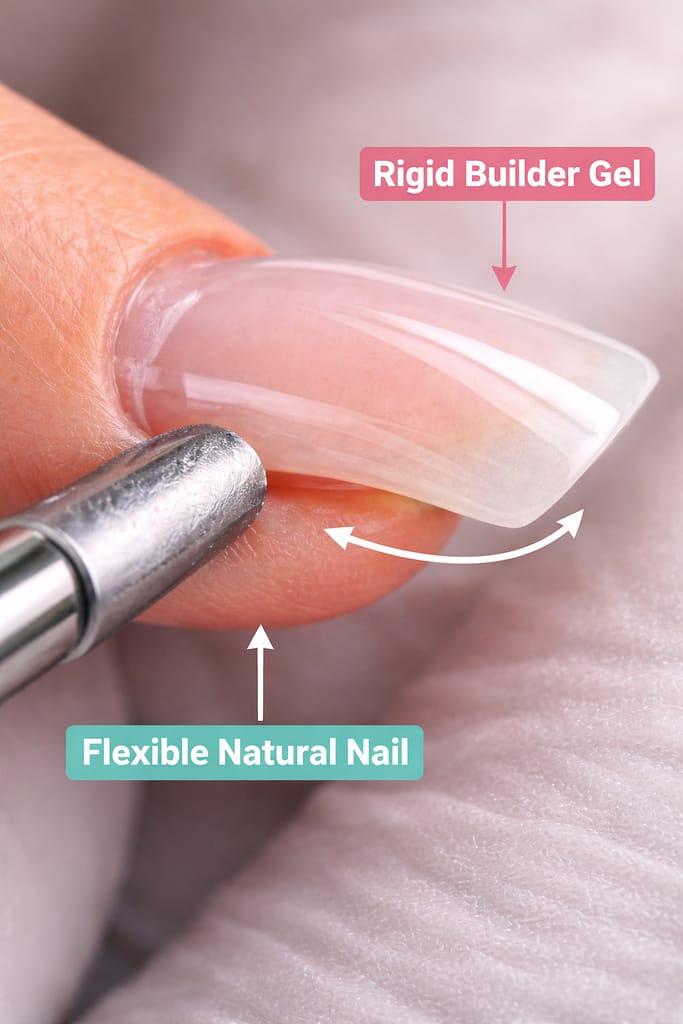
One of the most common hidden causes of lifting is a mismatch between nail flexibility and product rigidity.
Natural nails vary significantly in flexibility. Some clients have firm nail plates that move very little, while others have softer nails that bend slightly during everyday activities.
Builder gels also vary in elasticity.
If a highly rigid builder gel is applied to a flexible nail plate, the nail and the product will move differently when pressure is applied.
The nail may flex slightly.
The gel may resist movement.
This difference creates stress at the adhesion layer. This stress often appears along the base of the nail, which is discussed further in our guide on why builder gel lifts at the cuticle line. Over time, that stress weakens the bond and lifting begins.
In these situations, the application technique may have been perfect, but the product–nail compatibility was not ideal.
Apex Placement and Stress Distribution
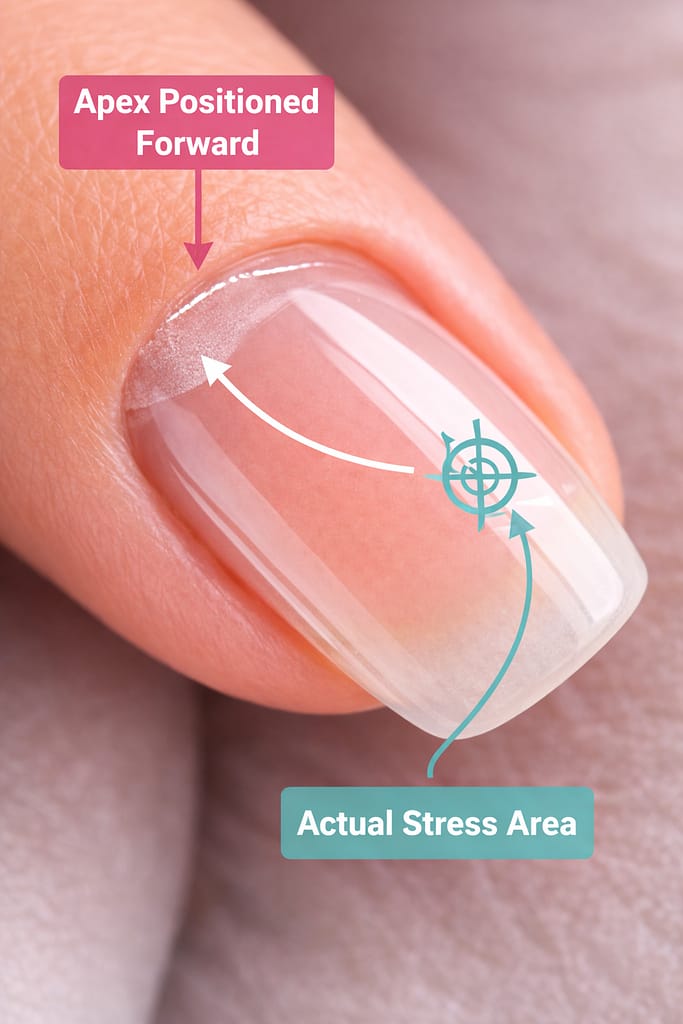
Another reason lifting can occur despite correct technique is subtle structural imbalance.
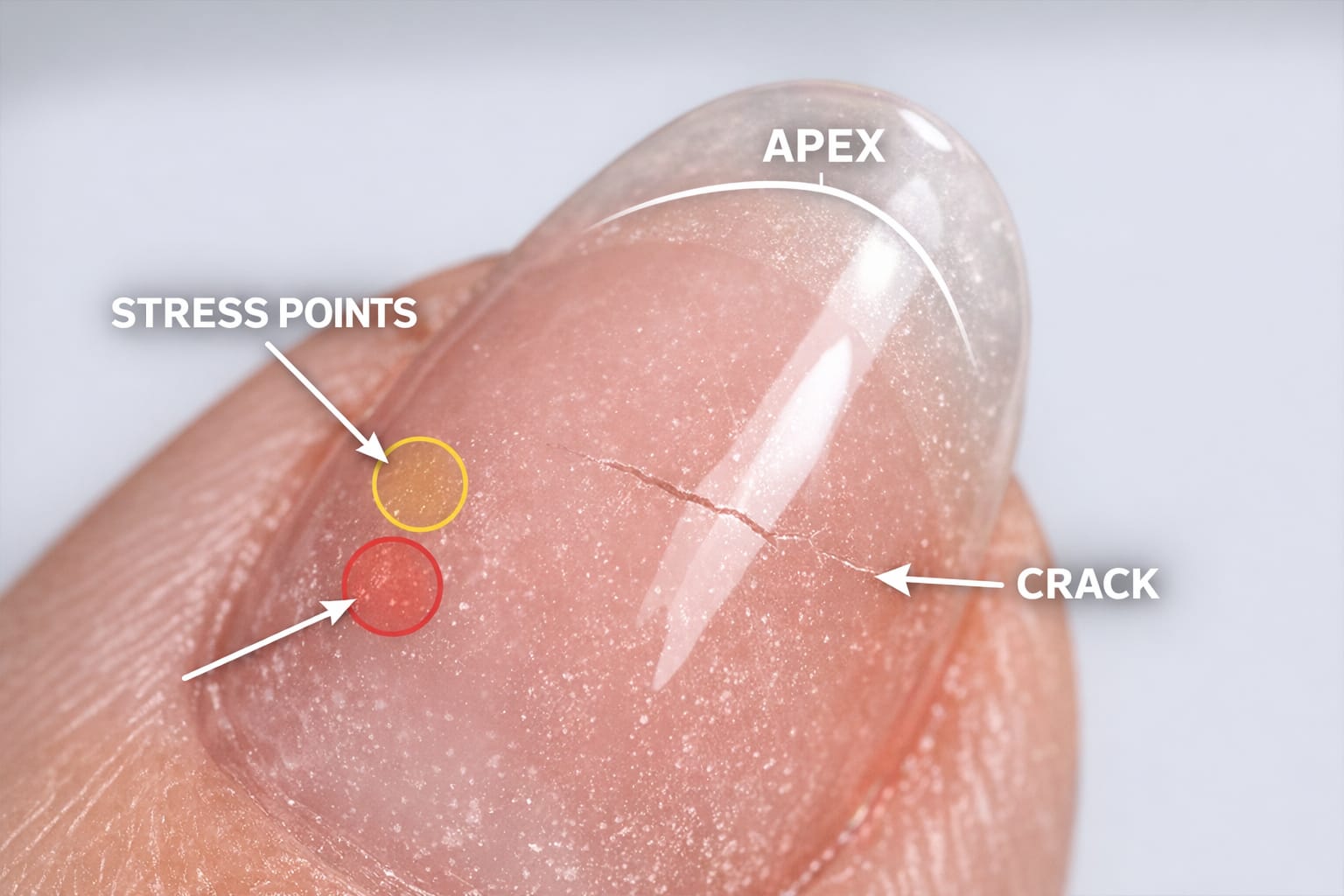
The apex is designed to reinforce the stress area of the nail. If the apex is slightly misplaced, the structure may appear visually balanced but functionally unstable.
For example:
- an apex positioned too far forward
- insufficient support at the stress point
- uneven thickness distribution
These structural details may not cause immediate lifting.
However, as the nail grows and pressure is applied through daily use, stress begins to concentrate in unsupported areas. When that stress exceeds the strength of the bond, lifting begins.
Structural design must anticipate movement, not just create shape.
Natural Nail Growth Changes the Stress Zone
Natural nail growth also plays a role in lifting that occurs after an otherwise perfect application.
The nail plate grows continuously from the matrix. As growth occurs, the entire overlay gradually moves forward.
This movement changes the location of the stress zone.
A structure that was perfectly balanced on the day of application may become less stable as the nail grows. If the apex no longer aligns with the stress area, tension begins to redistribute across the nail.
Over time, this shift can weaken adhesion at specific points, particularly near the cuticle or sidewalls. This pattern is closely related to the mechanisms explained in our article on why builder gel lifts at the cuticle area.
Growth does not break the bond immediately, but it can gradually challenge the structure. In many cases, lifting becomes visible later, a delayed pattern explained in our article on builder gel lifting after 2 weeks.
Environmental Stress and Daily Wear
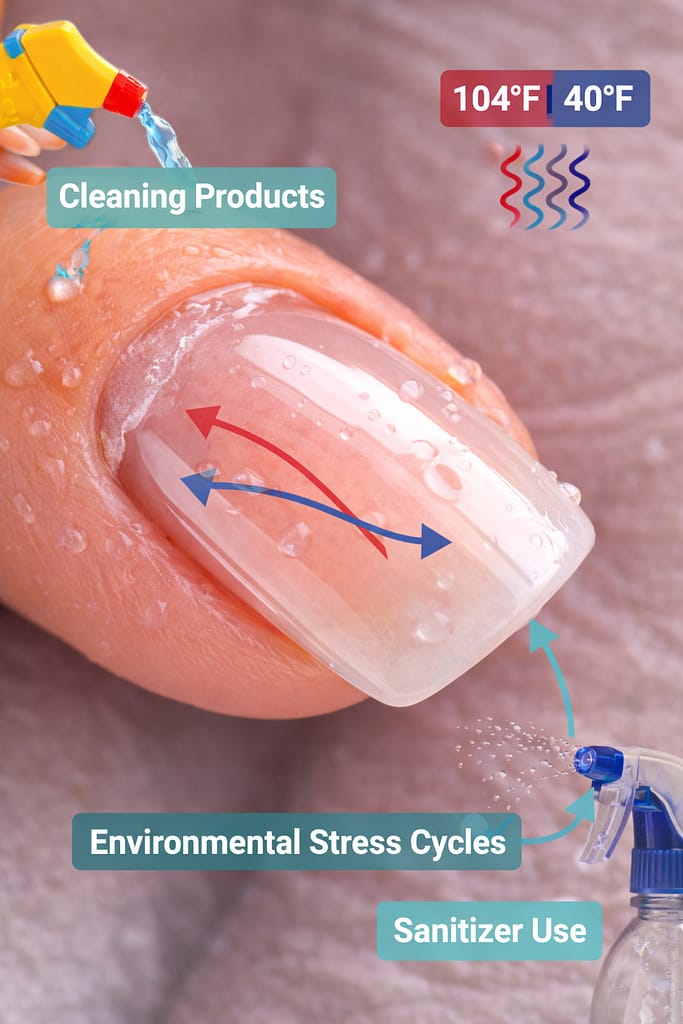
The nail system is also constantly exposed to environmental stress.
Daily activities introduce repeated cycles of expansion and contraction within the nail plate. These cycles are caused by:
- frequent hand washing
- exposure to cleaning products
- sanitizer use
- temperature fluctuations
When the nail absorbs moisture, it expands slightly. When it dries, it contracts again.
These micro-movements place continuous pressure on the bond between the natural nail and the builder gel.
If the structure cannot accommodate these movements, small separations may begin to develop at the edges of the overlay.
Even a well-executed application must withstand these environmental changes.
Hidden Curing Issues
Curing is another factor that can influence long-term retention.
Even when curing times follow the manufacturer’s instructions, certain conditions can lead to uneven polymerization.
Examples include:
- fingers tilted inside the lamp
- thumbs positioned incorrectly
- shadowing from other fingers
- lamps with inconsistent LED output
If part of the gel does not receive sufficient light exposure, it may cure partially rather than fully.
Partially cured gel often appears firm but lacks full polymer stability. Over time, these areas are more likely to detach from the nail plate.
This is why proper hand positioning inside the lamp is essential for consistent curing.
Product Layering and System Compatibility
Modern nail systems often involve multiple layers:
- base gel
- builder gel
- color layers
- top coat
Each layer contributes to the overall behavior of the nail system.
If these products differ significantly in flexibility or curing characteristics, stress can develop between the layers themselves.
For example:
- a rigid builder gel combined with a flexible base
- incompatible brand systems
- layers cured under different lamp specifications
These differences may not cause immediate problems, but they can weaken the structural unity of the system.
Over time, separation can occur between the natural nail and the overlay.
Client Lifestyle and Mechanical Pressure
Another factor that cannot be controlled entirely in the salon is client lifestyle.
Some activities place significantly more stress on the nails than others. This kind of lateral pressure is also one of the main reasons explained in our article on why builder gel lifts at the sidewalls.
Examples include:
- intensive typing
- opening packages
- lifting objects
- using nails as tools
When nails are repeatedly exposed to mechanical pressure, the overlay must absorb and distribute that force.
If the structure cannot distribute the stress effectively, lifting may develop even when the original application was technically flawless.
This is why client education is also an important part of long-term retention.
Preventing Lifting After a Perfect Application
Preventing lifting in these cases requires a broader approach than simply refining application technique.
Several principles help improve retention:
- Select builder gels with elasticity suited to the client’s natural nail type.
- Position the apex precisely within the stress zone.
- Ensure consistent lamp positioning during curing.
- Maintain balanced thickness across the nail structure.
- Educate clients about avoiding excessive pressure on the nails.
Retention is the result of multiple factors working together.
Perfect application is only the beginning.
When Lifting Is Not a Prep Problem
One of the most important lessons for nail professionals is recognizing when lifting is not caused by preparation mistakes.
If lifting occurs despite careful prep, the underlying issue often lies in:
- mechanical stress
- structural design
- product compatibility
- environmental conditions
Understanding these factors allows technicians to troubleshoot more effectively and adjust their approach when necessary.
Final Thoughts
Builder gel lifting even with perfect application can feel frustrating, especially for experienced technicians who follow every step carefully.
However, lifting is not always a reflection of poor technique.
It is often the result of complex interactions between nail biology, structural mechanics, product properties, and environmental stress.
When these elements are considered together, lifting becomes easier to predict and prevent.
Perfect preparation creates the foundation.
But long-term retention depends on how well the entire nail system works as a unified structure.