
Builder gel not lasting is a common frustration, especially when the product itself seems fine but the results don’t hold up.
Builder gel is often described as a “solution product.” It’s marketed as stronger, more durable, and more reliable than standard gel polish. So when it starts lifting, cracking, or wearing down too quickly, the first reaction is usually frustration — and often blame.
But in many cases, builder gel itself isn’t the problem.
What actually goes wrong is more subtle, and it usually has less to do with the product and more to do with how the nail behaves underneath it.
When builder gel is not lasting, the issue is usually structural rather than product-related.
Why Builder Gel Is Not Lasting as Expected

One of the biggest issues with builder gel is the expectation that it will automatically fix weak or problematic nails.
In reality, builder gel doesn’t replace good prep, correct structure, or an understanding of nail movement. It enhances what’s already there. When expectations are higher than what the system can realistically deliver, disappointment is almost guaranteed.
This is why two people can use the exact same builder gel and have completely different results.
Nail Flexibility Is Often Overlooked
Not all nails bend the same way. Some nails flex easily, others are rigid, and some appear strong but actually move under pressure.
Builder gel performs best when it’s used in harmony with that natural movement. When flexibility isn’t considered, the gel layer can become a point of resistance rather than support. Over time, that resistance turns into lifting or micro-cracks that slowly spread.
This is often mistaken for poor adhesion, when in reality it’s a structural mismatch. This type of stress is also closely connected to why gel nails lift, especially when flexibility is not properly considered.
Structure Matters More Than Thickness
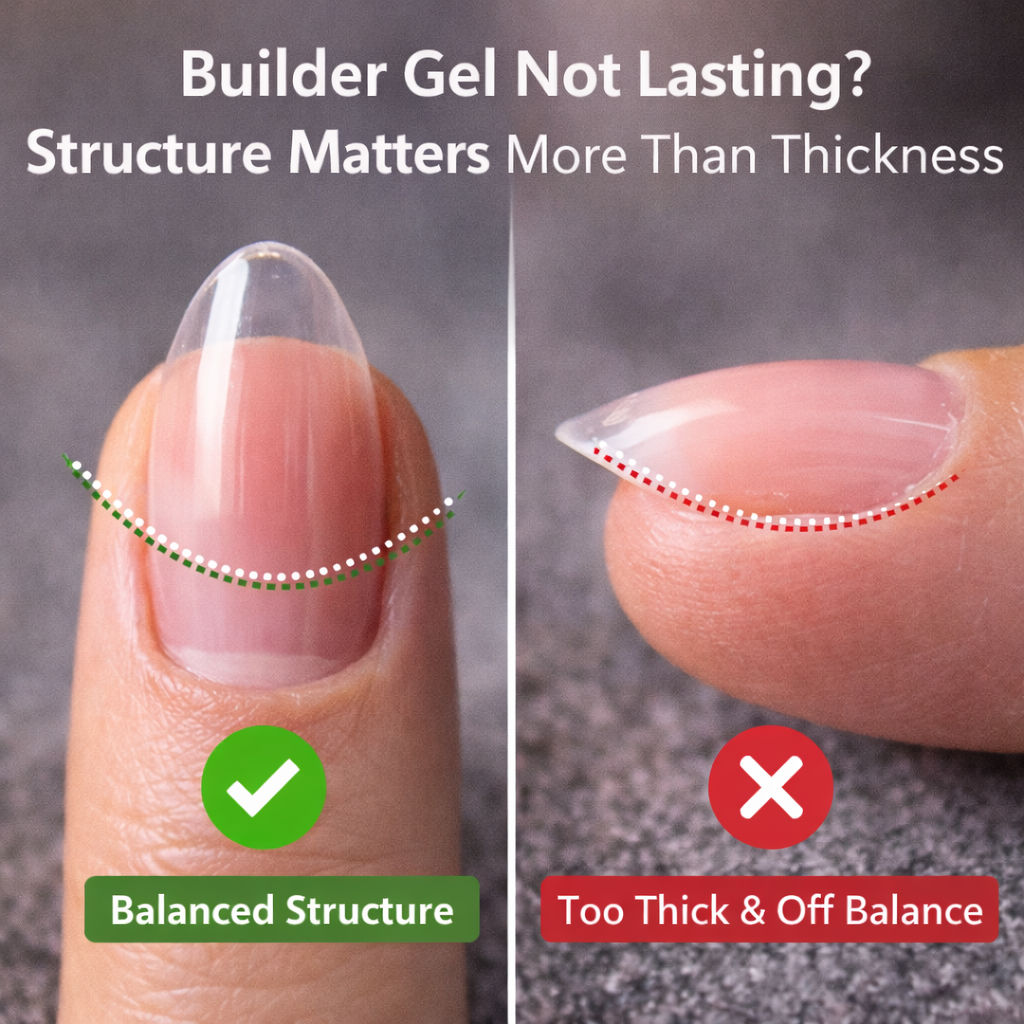
Another common misconception is that durability comes from adding more product.
Thicker layers don’t always mean stronger nails. In some cases, they make the nail feel heavy and unnatural, increasing stress at the cuticle and free edge.
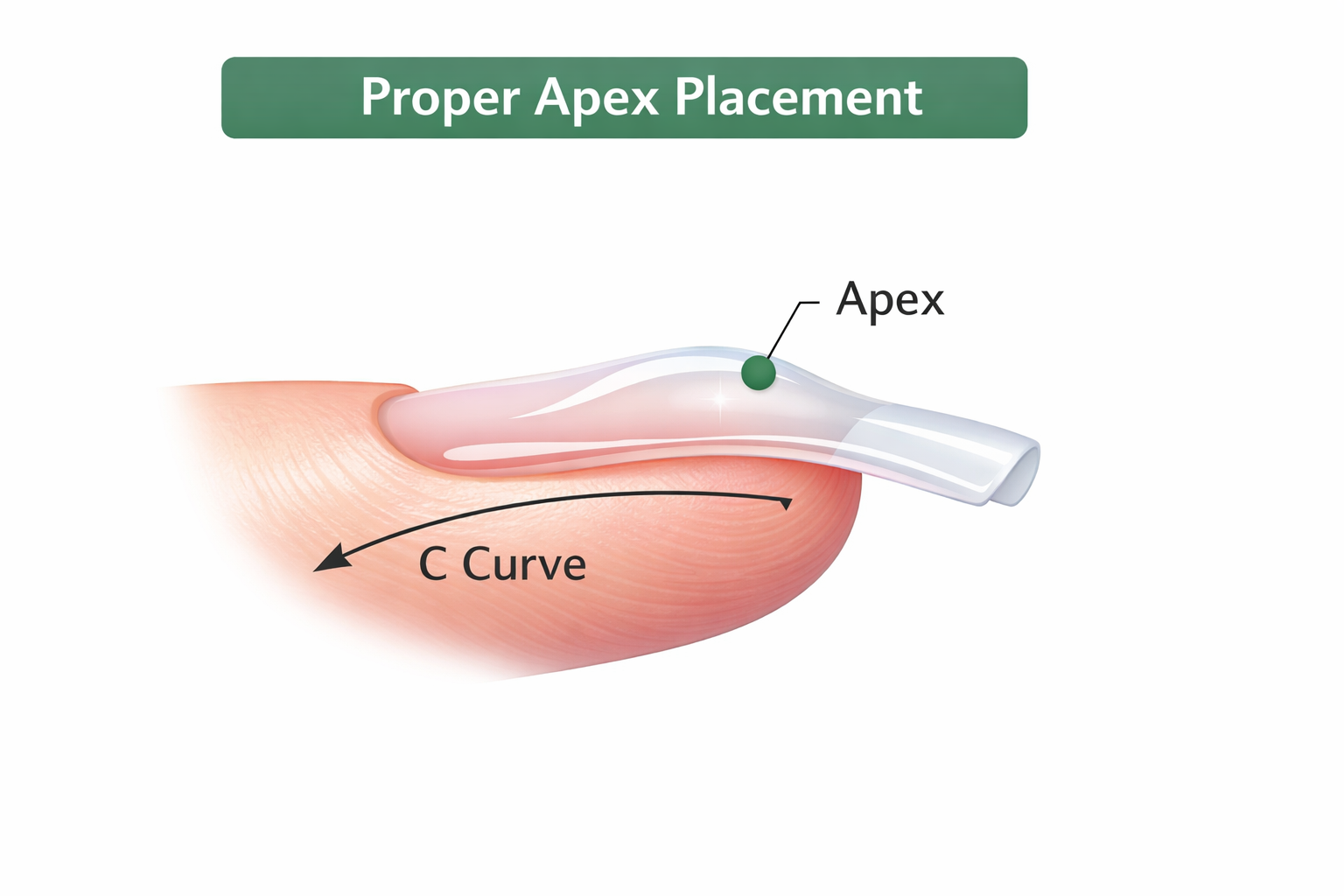
Builder gel works best when structure is intentional. Supporting the stress point properly matters far more than simply adding bulk. When structure is balanced, even a relatively thin application can outperform a thick, uneven one.
Many of these issues are caused by common builder gel application mistakes that affect structure and long-term durability.
Prep Is Important — But Overdoing It Backfires
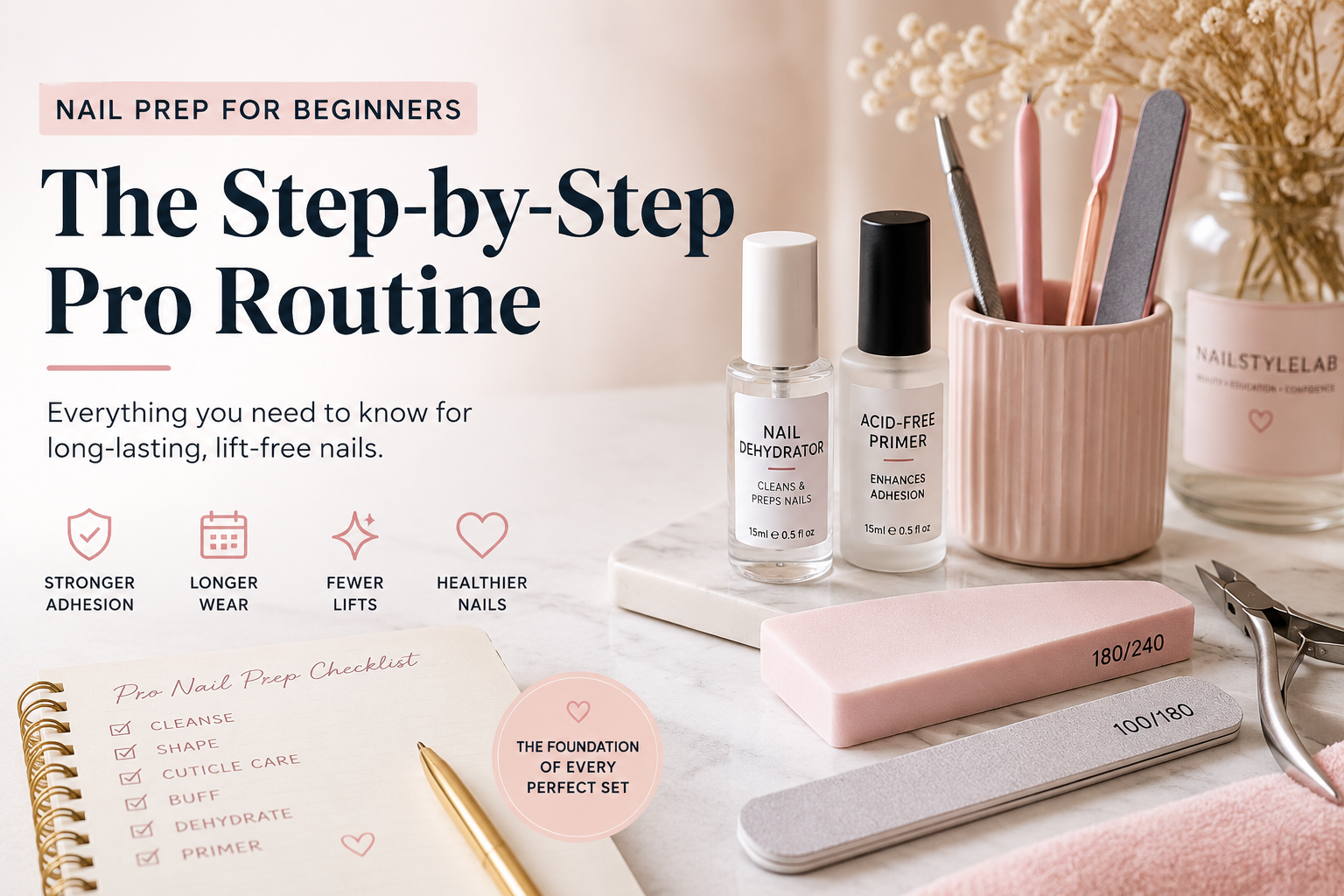
Proper nail prep is essential, but aggressive filing often causes more harm than good.
When the nail plate is over-filed, it becomes weaker and more flexible. Builder gel placed on top of a compromised surface is forced to compensate for that weakness, which it’s not designed to do.
Instead of creating durability, over-prep often shortens wear time.
A clean, controlled prep that respects the natural nail usually leads to better long-term results.
Many professionals expand their knowledge through professional nail education resources that focus on nail anatomy and product behavior.
Lifestyle Plays a Bigger Role Than We Admit
Builder gel doesn’t exist in isolation. Daily habits matter.
Frequent exposure to water, repetitive pressure on the nails, and lack of maintenance all influence how long builder gel lasts. These factors are often ignored when wear issues appear, even though they can be just as important as application technique.
Understanding how nails are used day to day helps set realistic expectations — and prevents unnecessary product changes.
It’s Rarely Just One Thing
When builder gel fails, it’s almost never because of a single mistake.
More often, it’s a combination of small factors:
- Slightly incorrect structure
- Nail flexibility not accounted for
- Over-prep or inconsistent prep
- Lifestyle stress on the nails
Individually, these issues may seem minor. Together, they can significantly reduce durability.
Final Thoughts
When builder gel not lasting becomes a recurring issue, reviewing structure, prep, and nail behavior usually reveals the real cause.
Builder gel is a powerful tool, but it isn’t a shortcut. It works best when applied with an understanding of nail behavior, structure, and real-world use.
When results fall short, stepping back and looking at the entire system — rather than just the product — usually reveals what needs to change.
Durability isn’t about using more gel. It’s about using it with intention.